
Best Daypacks for Hiking: 5 Picks That Fit Your Body and Your Day
Affiliate Disclosure: Some links on this page are affiliate links. If you buy through one, I may earn a commission at no extra cost to you. Commission never decides which products I recommend. Read the full disclosure.
You figured a daypack was simple, something you grab like a tote bag. Then two hours up the trail your shoulders are burning, the thin belt is doing nothing, and your shirt is soaked where the foam presses against your back.
That’s a very common mistake, and it isn’t your fault. Many daypacks now come in one size, and the torso range that decides whether the belt reaches your hip bones sits in a size chart most buyers never see.
What you need from the best daypacks for hiking is a pack that carries water, layers and food on your hips all day, fits your body, and saves you from buying a second pack that hurts the same way.
Below are five picks sorted by your body and the kind of day you hike, each with its published torso and hip range. With a tape measure, you can rule packs in or out before you read a single review.
TL;DR: Best Daypacks for Hiking
- Most day hikers: the Osprey Talon 22 (men’s) or Tempest 22 (women’s), with the widest fit range here. For a real hip belt at a lower price, the Osprey Sportlite 25.
- Hot or humid trails: the Deuter Futura 27, or the Futura 25 SL for shorter backs, built around a suspended mesh back.
- Longer days with more to carry: the Gregory Zulu 28 LT or Jade 28 LT.
- Plus-size hikers: the Gregory Maya 20 Plus Size or Miko 20 Plus Size, with a belt cut for 41 to 60-inch hips.
Here are the five picks at a glance, sorted by the hiker each one suits.
Product Name
Best For
Key Strength
Main Tradeoff
Price Tier
Most day hikers
Widest fit range, 14 to 22 in torsos
Heavier than it looks
$$
Hot or humid trails
Suspended mesh back
Top-loading, little US owner evidence
$$
Longer days, heavier loads
Most room, 25 lb stated limit
One size (16 to 21 in torso), top-loading
$$
A real hip belt for less
Padded belt at the lowest price here
Unisex only, no rain cover
$$
Osprey Talon 22 / Tempest 22
Best For: Most day hikers
Key Strength: Widest fit range, 14 to 22 in torsos
Main Tradeoff: Heavier than it looks
Price Tier: $$
Deuter Futura 27 / Futura 25 SL
Best For: Hot or humid trails
Key Strength: Suspended mesh back
Main Tradeoff: Top-loading, little US owner evidence
Price Tier: $$
Gregory Zulu 28 LT / Jade 28 LT
Best For: Longer days, heavier loads
Key Strength: Most room, 25 lb stated limit
Main Tradeoff: One size (16 to 21 in torso), top-loading
Price Tier: $$
Osprey Sportlite 25
Best For: A real hip belt for less
Key Strength: Padded belt at the lowest price here
Main Tradeoff: Unisex only, no rain cover
Price Tier: $$
Gregory Maya 20 Plus / Miko 20 Plus
Best For: Plus-size hikers
Key Strength: Belt for 41 to 60 in hips
Main Tradeoff: Only 20 L
Price Tier: $$
Price tiers: $ under $100 | $$ $100 to $249 | $$$ $250 and up
If you already know your torso length, check it against the fit table in the buying guide below, then jump to the pick that matches your day.
What Makes the Best Daypacks for Hiking Comfortable All Day
A good hiking daypack moves the weight onto your hips instead of your shoulders. That only works when the pack’s torso range includes your torso and the belt closes around your hips. After that, ventilation, capacity, weight and price decide which of these five suits the way you hike.
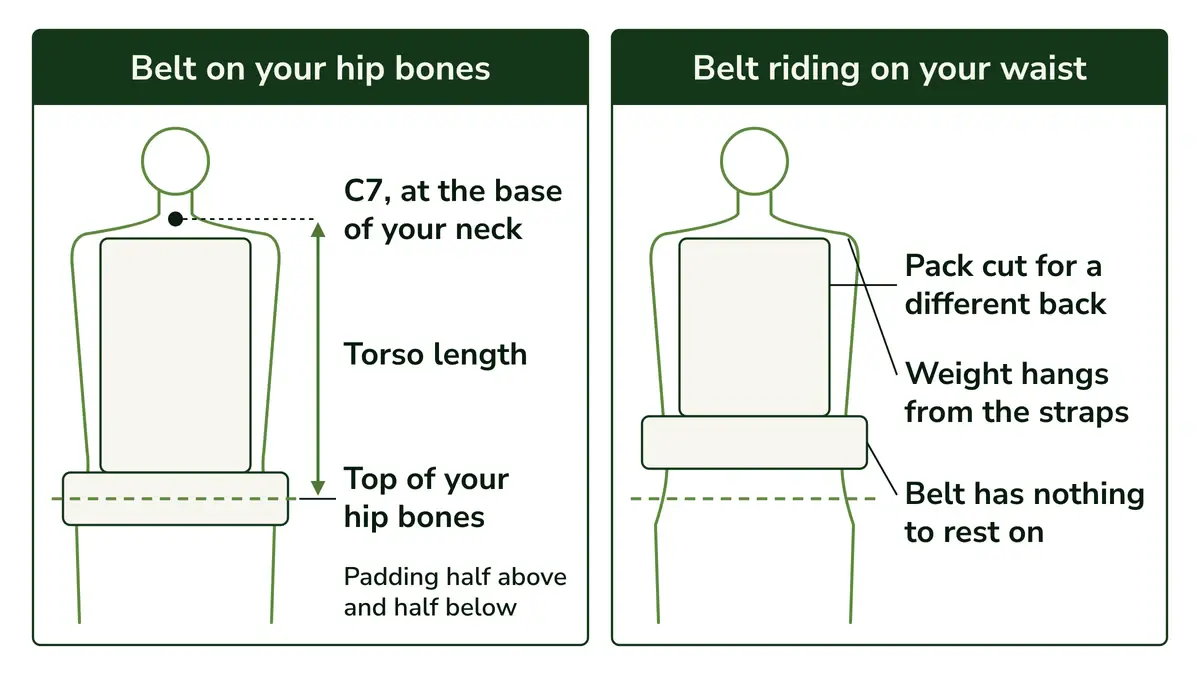
Those burning shoulders have a plain cause. When the belt sits above your hip bones or hangs loose, it has nothing to rest on, so the weight hangs from the straps. Get the fit right and the same load is easier to carry, because your hips are doing the work.
The sections below are the criteria every verdict in this list uses, in this order, so you can follow each judgment and check it against your own body.
Who This List Is For (and Where to Go Instead)
This list is for day hikes from a few hours to a full day, with water, layers and food on board. Every pick has a padded hip belt. If you’re new to hiking, commuting with a laptop or hiking in steady rain, a different list fits you better.
- New to hiking: my picks of daypacks for first-time hikers are simpler and lighter, which makes sense before you know what you’ll carry.
- Office and weekend: if one bag has to do both, my list of hybrid daypacks for city and trail covers packs built around a laptop and a commute.
- Steady rain: if your hikes are mostly wet, the guide to waterproof backpacks deals with keeping gear dry when the weather won’t let up.
A Hip Belt That Actually Carries the Weight
A hip belt only carries weight when its padding sits on your hip bones. REI’s daypack buying advice says a belt makes a real difference once a pack passes about 15 pounds. Water alone weighs about 2.2 pounds per liter, so water, layers and food add up fast.
Two liters of water is about 4.4 pounds before you add a rain jacket, a warm layer and lunch. The packs here weigh roughly two to three pounds empty, so a full day can reach 15 pounds sooner than most people expect.
A lot of hikers notice their shoulders aching even with a light load in a pack that has no belt. The reason is the same: with nothing on the hips, every ounce hangs from two straps.
That’s the line this list draws. Every pick has a padded belt with pockets, so the belt can take the load and you can reach a snack without stopping.
If you’re coming back to hiking with a sore back in mind, fit and load are the parts this list can help with. Get the belt onto your hip bones, and keep the pack no heavier than the day needs.
A Torso Range That Includes Yours
Even a one-size daypack has a torso range. Osprey measures torso from the bony bump at the base of your neck (C7) down to the top of your hip bones. If your number falls outside a pack’s range, the belt can’t reach your hip bones and your shoulders take over.
This is how a pack can feel fine in the store and wrong on the trail. Empty, almost anything feels comfortable. With water and layers inside, a pack cut for a different back leaves the belt riding on your waist.
Osprey’s newer one-size packs still have a range. An adjustable harness slides the shoulder straps up or down your back, but only within limits, so the number on the size chart still decides.
To measure, have someone run a soft tape from the C7 bump down your spine to the line between the tops of your hip bones (the iliac crest). Doing it alone rarely works, because you can’t see or reach your own spine well.
My guide on how to measure your torso walks through it in more detail. Once you have the number, compare it with Osprey’s size and fit chart or the brand’s own chart, since ranges vary from brand to brand.
REI makes a useful point about women’s packs: they generally have shorter torsos and narrower straps, and they often suit shorter or narrow-shouldered hikers of any gender. If your torso is short, don’t rule out the women’s version.
Each pick’s range is in the fit table in the next section, and it’s the first number to check.
A Hip Belt That Closes Around Your Hips
The belt has to close around your hips, measured at the top of the hip bones rather than your waist. Standard belts here run about 27 to 50 inches, Osprey’s Extended Fit versions reach 70 inches, and Gregory’s Plus Size packs are cut for larger bodies from the start.
Measure your hips where the belt will actually sit, not around your waist where you’d measure for pants. The two numbers can differ, and a belt sized for the wrong one either won’t close or won’t cinch tight enough to hold anything.
If you’ve spent years with belts that stop short, you’re far from alone. Plus-size reviewers of the Gregory Maya 20 Plus Size on REI who mention fit say its belt closes, and there’s more on that in its section below.
Here’s every version’s published fit side by side, so your two numbers can rule packs in or out.
Pack
Torso Range
Hip Range
Capacity
Weight
Osprey Talon 22
17 to 22 in
29 to 50 in (Extended Fit 40 to 70 in)
22 L
2 lbs 6.1 oz
Osprey Tempest 22
14 to 19 in
27 to 50 in (Extended Fit 40 to 70 in)
22 L
2 lbs 6.1 oz
Deuter Futura 27
44 to 54 cm back length (about 17.3 to 21.3 in, converted)
Not published
27 L
1,250 g
Deuter Futura 25 SL
38 to 48 cm back length (about 15 to 18.9 in, converted)
Not published
25 L
1,210 g
Gregory Zulu 28 LT
16 to 21 in, one size
28 to 48 in
28 L
2.46 lbs
Gregory Jade 28 LT
14 to 19 in, retailer figure
Not confirmed
28 L
Not confirmed
Osprey Sportlite 25
16 to 21 in (REI lists 15 to 20 in)
28 to 50 in (Extended Fit 40 to 70 in)
25 L
2 lbs 4 oz
Gregory Maya 20 Plus Size
14 to 19 in, adjustable
41 to 60 in
20 L
2 lbs 2.9 oz
Gregory Miko 20 Plus Size
15 to 21 in, adjustable, retailer figure
41 to 60 in, retailer figure
20 L
2.24 lbs
Osprey Talon 22
Torso Range: 17 to 22 in
Hip Range: 29 to 50 in (Extended Fit 40 to 70 in)
Capacity: 22 L
Weight: 2 lbs 6.1 oz
Osprey Tempest 22
Torso Range: 14 to 19 in
Hip Range: 27 to 50 in (Extended Fit 40 to 70 in)
Capacity: 22 L
Weight: 2 lbs 6.1 oz
Deuter Futura 27
Torso Range: 44 to 54 cm back length (about 17.3 to 21.3 in, converted)
Hip Range: Not published
Capacity: 27 L
Weight: 1,250 g
Deuter Futura 25 SL
Torso Range: 38 to 48 cm back length (about 15 to 18.9 in, converted)
Hip Range: Not published
Capacity: 25 L
Weight: 1,210 g
Gregory Zulu 28 LT
Torso Range: 16 to 21 in, one size
Hip Range: 28 to 48 in
Capacity: 28 L
Weight: 2.46 lbs
Gregory Jade 28 LT
Torso Range: 14 to 19 in, retailer figure
Hip Range: Not confirmed
Capacity: 28 L
Weight: Not confirmed
Osprey Sportlite 25
Torso Range: 16 to 21 in (REI lists 15 to 20 in)
Hip Range: 28 to 50 in (Extended Fit 40 to 70 in)
Capacity: 25 L
Weight: 2 lbs 4 oz
Gregory Maya 20 Plus Size
Torso Range: 14 to 19 in, adjustable
Hip Range: 41 to 60 in
Capacity: 20 L
Weight: 2 lbs 2.9 oz
Gregory Miko 20 Plus Size
Torso Range: 15 to 21 in, adjustable, retailer figure
Hip Range: 41 to 60 in, retailer figure
Capacity: 20 L
Weight: 2.24 lbs
Back Ventilation for Hot or Humid Hikes
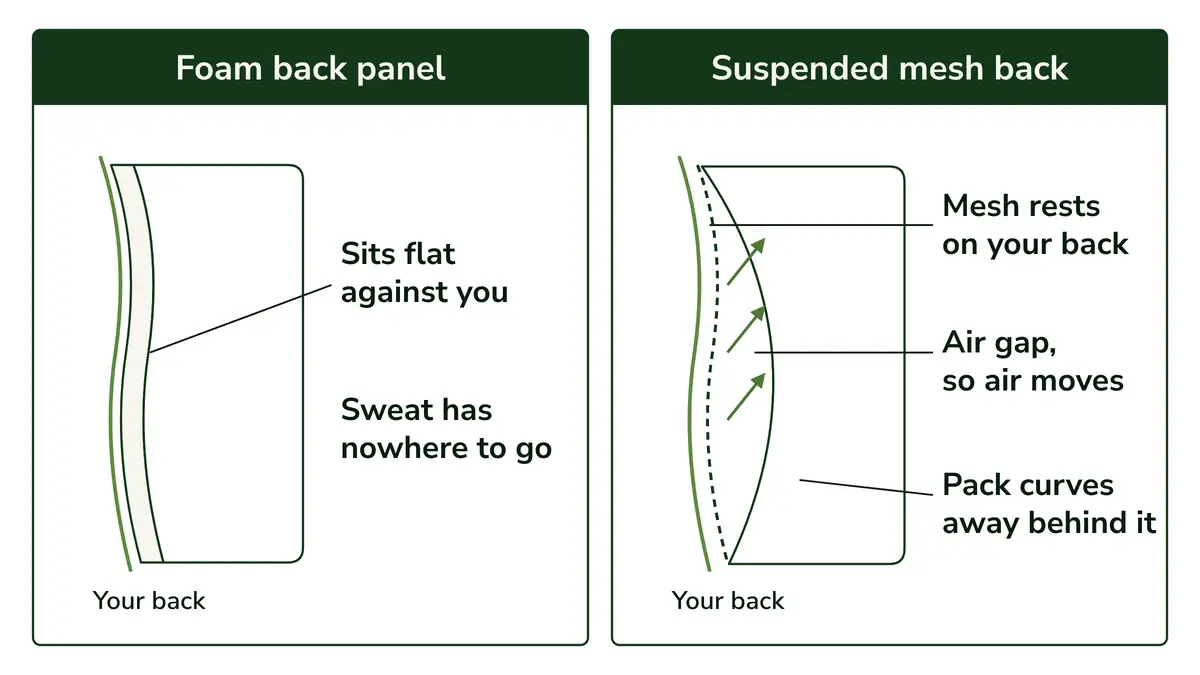
On a hot or humid hike, the back panel decides much of how wet your shirt gets. Foam that sits flat against you traps sweat, while a suspended mesh panel holds the pack a short distance off your back so air moves. The Deuter Futura is built around that idea.
That soaked patch on your shirt by midday is the foam’s doing. Pressed flat against you, it leaves sweat nowhere to go, so it soaks into your shirt instead of drying.
The Talon and Tempest back is different again: close-fitting and stable, and owners disagree on how warm it runs. The tradeoff with suspended mesh, covered in the Futura section, is that it holds the load slightly farther from your back.
Enough Room for a Full Day, and Not Much More
REI puts the sweet spot for hiking daypacks at 21 to 35 liters. That room matters even on a short hike, because the National Park Service’s Ten Essentials need space beyond water and snacks.
The picks here run from 20 liters (the Maya and Miko Plus) to 28 liters (the Zulu and Jade LT). If you’re unsure which end you need, my guide on what size pack a day hike needs breaks liters down by trip length.
For the gear that fills those liters, my list of what to pack for a day hike goes item by item.
A common question is whether a backpacking pack you already own would do. I’d skip it for day hikes. A bigger pack weighs more empty, and the spare room tends to fill with things you don’t need, so you carry more for no gain.
Weight and Price: What You Trade for Support
Support costs weight. Every pick here weighs between roughly two and three pounds empty, because a structured back, a padded belt and pockets add up. All five sit in the middle price tier, with the Sportlite 25 at its low end, so fit and features should decide before price does.
The middle tier here means roughly $100 to $249. It’s tempting to save on weight or price, and I understand why, but a pack that fits and costs a little more is still cheaper than buying two.
Given the choice, I’d take a few extra ounces sitting on your hips over a lighter pack that leaves every ounce on your shoulders. A belt that fits hands the load to your hips and legs, which handle it far better than two straps can.
Best for Most Day Hikers: Osprey Talon 22 and Tempest 22
The Osprey Talon 22 and Tempest 22 suit most day hikers because together they cover the widest fit range here: torsos from 14 to 22 inches, and hips up to 70 inches in Extended Fit. REI owners rate both highly for long-day comfort, and the cost is weight.
Who This Pair Is For
These suit day hikers who want one pack for most hikes, with a real hip belt, belt pockets and pole storage. The Tempest 22 covers torsos from 14 to 19 inches and the Talon 22 from 17 to 22 inches, with Extended Fit versions for hips up to 70 inches.
I’d match the pair to your tape measure rather than to the label on the tag. If your torso falls between 17 and 19 inches, both fit on paper, and the strap shape is what’s left to decide.
Why It Stands Out
No other family here covers as many bodies. Between the two versions and the Extended Fit option, the Talon and Tempest reach torsos from 14 to 22 inches and hips from 27 to 70 inches.
Everyone seems to recommend the Talon, so it’s fair to ask whether it’s here out of habit. It earns its place on the criteria above: a belt that wraps your hips, a wide torso range, and pockets you can use while walking.
Owners back that up. When I read the listings, the Talon 22 had nearly a hundred REI reviews and the Tempest 22 had 81, both averaging 4.7, with comfort over long days the theme that kept coming up.
On Amazon, owners describe the current Talon as comfortable on long mileage days, and one calls it “my go-to day hike bag.”
How It Carries: Features and What They Mean
Here’s what the main features do once the pack is loaded:
- BioStretch harness with a continuous lumbar-to-hipbelt wrap: the belt and lower-back padding are one piece, so the pack stays put when you step up onto rocks instead of swaying.
- Micro-adjustable sliding yoke: the shoulder straps slide up or down your back, which is how one size covers a 5-inch torso range.
- Two zippered hipbelt pockets: snacks, phone and lip balm without taking the pack off.
- Stow-on-the-Go pole attachment: poles go on the front without stopping, handy on a descent when you want both hands free.
- Stretch mesh side and front pockets: a bottle you can reach on the move and a place to stuff a damp layer.
- 22 liters with an internal reservoir sleeve: room for a full day, though the reservoir itself isn’t included.
Osprey’s main fabric is bluesign approved recycled 100D nylon ripstop. The D number is denier, the weight of the thread: lower is lighter, higher stands up better to rock and brush.
Its DWR is made without PFAS, the long-lasting chemicals once common in water-repellent finishes. DWR helps light rain bead off. It isn’t waterproofing, so a long downpour can still soak through.
One Amazon owner says the frame does what it should and puts the weight on the hips. That’s one person’s experience, but it lines up with how the belt is built.
Talon vs Tempest Fit
On Osprey’s size chart, the Talon 22 fits torsos of 17 to 22 inches and the Tempest 22 fits 14 to 19 inches. REI lists hips of 29 to 50 inches (Talon), 27 to 50 (Tempest) and 40 to 70 (Extended Fit).
The Extended Fit versions add longer shoulder straps, belt pockets moved forward and a longer sternum strap, and Osprey says they cost no more than the standard ones. REI also notes, from its reviews, that the pack runs slightly large.
Owner comments show how much one size still depends on your body. A 5’2″ owner says the Tempest suits a small frame, and a 5’11” owner says the Talon “fits my long torso really well.” Another owner says the one size simply didn’t fit him, and he returned it.
One owner bought the Extended Fit by mistake and found it too big for a 35-inch waist. Check which version is in your cart before you order.
If you’re a man with a torso under 17 inches, look at the Tempest. REI’s point about women’s packs suiting shorter or narrow-shouldered hikers applies here, whatever the label says.
Where It Falls Short
Start with the weight. REI lists the standard version at 2 lbs 6.1 oz, which is mid-weight for 22 liters, and two REI owners call it heavy for its size. Osprey describes it as lightweight, and the number doesn’t really back that up.
The back is close-fitting and stable, which helps it stay put, but don’t count on it to keep you cool. One owner says the new back doesn’t breathe and another says the airflow is excellent. If heat is your main problem, the Futura further down is built for it.
Owners also report the hydration sleeve is awkward with other brands’ reservoirs. The most helpful critical Tempest review on REI is titled “Bad hydration pack compatibility” and says the clip doesn’t suit non-Osprey bladders. If you already own a bladder, check the fit before a hot day depends on it.
There’s also no rain cover in the box, so if you hike where showers roll in, plan on adding one. My roundup of backpack rain covers has picks that stay put in wind.
Pros and Cons
Pros
The widest torso and hip range of the five, so more bodies can get the belt onto their hip bones.
Hipbelt pockets and pole storage you can use without stopping, which adds up over a long day.
A consistent pattern of owners saying it stays comfortable on long days.
Cons
Heavier than it looks for 22 liters, which you’ll notice if you count ounces.
A fussy hydration sleeve and no rain cover included, so check your bladder fits and budget for a cover.
Look Elsewhere If
Skip this pair if you’re a man with a torso under 17 inches who doesn’t want the Tempest, since the Talon starts at 17. The same goes if you want the lightest pack you can find, because these extra ounces will bother you.
If a cool back matters most on hot days, the Futura suits you better.
My Read
For most day hikers, this is the safest pick on the list. The fit range is wide enough that a lot of bodies land inside it, and owners keep describing long days in comfort. Just know it carries a few extra ounces and the sleeve can be fussy.
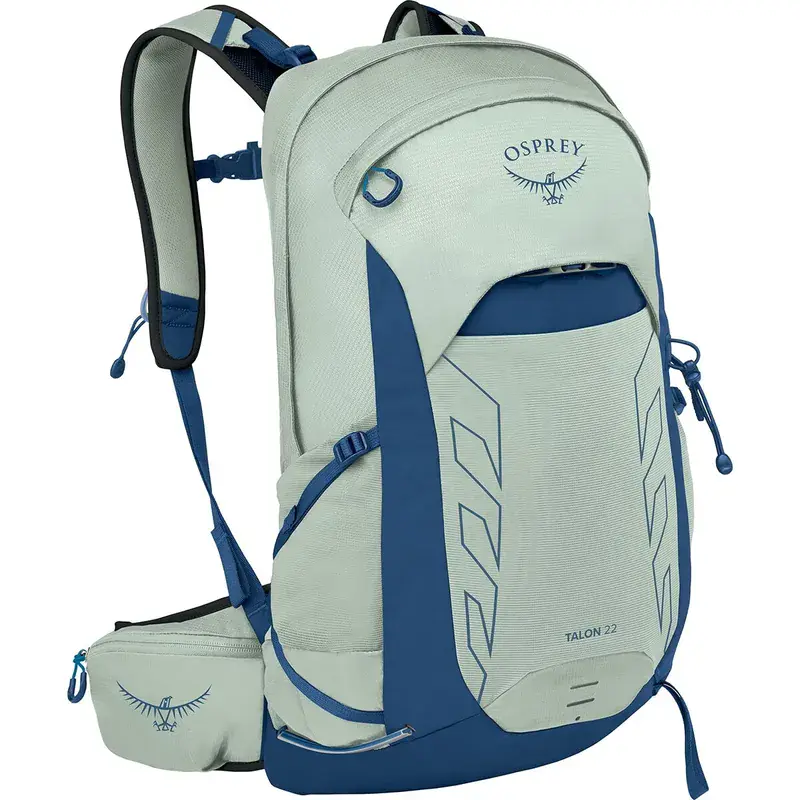 Osprey Talon 22
The widest torso range here for men, with a belt that wraps your hips and pockets you can reach while walking.
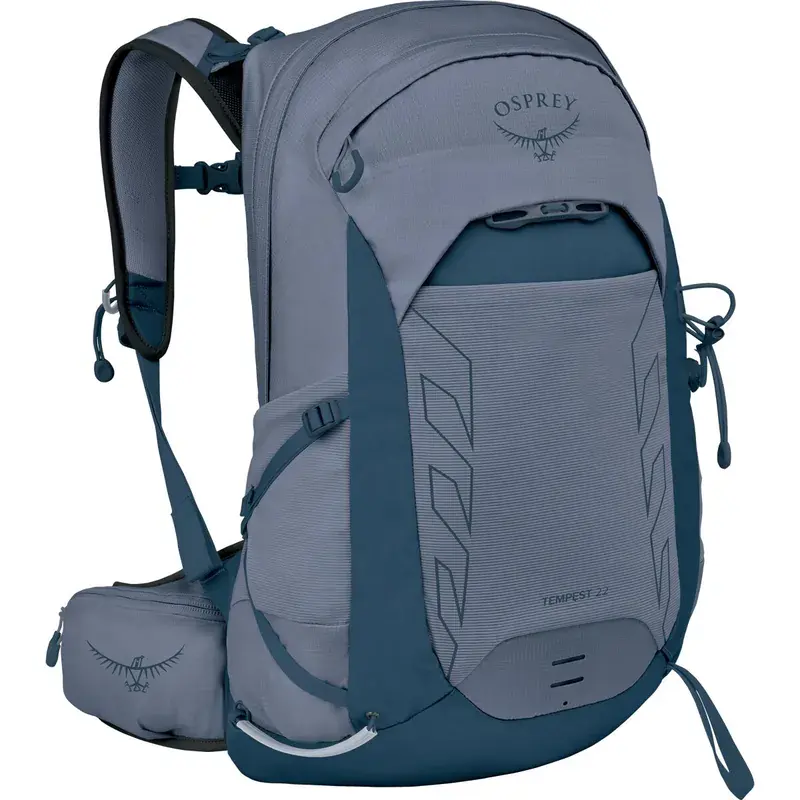 Osprey Tempest 22
The women's version, for torsos of 14 to 19 inches, with the same hip belt and pockets as the Talon.
For Hot, Sweaty Trails: Deuter Futura 27 and Futura 25 SL
Deuter’s Futura 27 and the shorter-backed Futura 25 SL are the picks for hot or humid trails. Their Aircomfort mesh back sits on a steel frame, leaving an air gap behind you, and both include a rain cover. The catch is very little US owner evidence so far.
Best For
These suit hikers in heat or humidity who sweat through foam-backed packs. The Futura 27 fits average to tall hikers, and the Futura 25 SL fits women and shorter hikers.
If your summer hikes end with a shirt you could wring out, this is the design I’d look at first, because it gives your back somewhere for the heat to go.
What Sets It Apart
This is the only pick on the list built first for ventilation. The mesh is stretched across a spring steel frame, so it rests against your back while the pack body curves away behind it, and that gap is where the air moves.
Is suspended mesh actually cooler, or is it marketing? The mechanism holds up: sweat dries when air can reach it, and flat foam doesn’t let it. Deuter promotes the gap for a dry back but doesn’t publish a test behind it, so treat the cooling as the design’s promise.
I’ll be plain about the evidence. There are almost no US owner reviews of either version yet, so this pick rests on the design, not on an owner pattern. One Amazon reviewer of the 25 SL praises its “very good weight spreading structure,” a start rather than a verdict.
Key Features and What They Mean
Deuter publishes its figures in metric, so I’ve given them as published, with my inch and pound conversions in parentheses.
- 27 liters, 1,250 g (about 2 lbs 12 oz, converted): a weight that includes the steel frame holding the mesh off your back.
- Recommended load of 4 to 8 kg (about 9 to 18 lbs, converted): enough for a full day’s water, layers and food.
- Back length and body height: Deuter’s Futura 27 page lists a back length of 44 to 54 cm and a body height of 170 to 195 cm, so it’s cut for longer backs.
- Rain cover included: both Futura versions have one in the box, the only picks here with that confirmed, so there’s no cover to buy separately.
- Hydration compatible up to 3 liters: room for a big reservoir on a hot day.
- Padded hip fins with pockets and Pull-Forward adjustment: you tighten the belt by pulling forward, which is easier when the pack is already loaded.
- Wet compartment and pole attachment: a damp layer stays away from dry gear, and poles ride on the outside.
- Top-loader with a zipper: you reach in from the top, so it opens less like a suitcase than the panel-loading Sportlite.
The fabric is 210D recycled polyamide, bluepass certified and made without intentionally added PFAS. Deuter lists a lifetime warranty and a repair service.
Futura 27 vs Futura 25 SL Fit
The Futura 27 is cut for longer backs. Deuter lists a body height of 170 to 195 cm, which starts at about 5’7″, so many women and shorter men fall below its range.
The Futura 25 SL is the answer for many of them. Deuter’s Futura 25 SL page lists a back length of 38 to 48 cm and a body height of 158 to 178 cm (about 5’2″ to 5’10”, converted).
Deuter designs the SL for smaller frames, with a shorter back and a carrying system adapted to women.
Converted to inches, those back lengths come to about 17.3 to 21.3 inches for the 27 and about 15 to 18.9 inches for the 25 SL. Those are my conversions, not Deuter’s figures, so compare your measurement in centimeters too.
I didn’t find an extended hip belt for either version, which matters if standard belts don’t close on you.
The Honest Part
Here’s the part I don’t want to hide: there’s almost no US owner evidence on either version. In what I read, there’s no owner pattern on heat, comfort or durability, so the cooling benefit rests on the design and on Deuter’s own claim.
The design has a cost too. The suspended back curves slightly and holds the load a little farther from your body, which matters more as the pack gets heavier. The main compartment also loads from the top, and the 27 is cut for longer backs.
Pros and Cons
Pros
The only pick designed around back ventilation, which is the point if heat is your problem.
Both versions include a rain cover, so you don’t need to buy anything extra.
A women’s SL version with a shorter back, so the design isn’t limited to tall hikers.
Cons
Very little US owner evidence, so you’re trusting the design more than owner reports.
Top-loading, with a slightly curved back that holds the load a little farther from you.
Not the Right Fit If
This isn’t your pack if you want a panel-loading opening that unzips like a suitcase. It’s also a risky order if you haven’t measured, because the 27 and the SL are cut for different backs and the wrong one puts the belt in the wrong place.
If you’re plus-size, I didn’t find an extended belt for either version, so Osprey’s Extended Fit packs or Gregory’s Plus Size packs are a safer bet.
Verdict
If heat is your main problem on the trail, this is the pack I’d pick. The suspended mesh gives your back an air gap that a flat foam panel doesn’t, and both versions include a rain cover. I’m choosing it on the design, because US owner evidence is still thin.
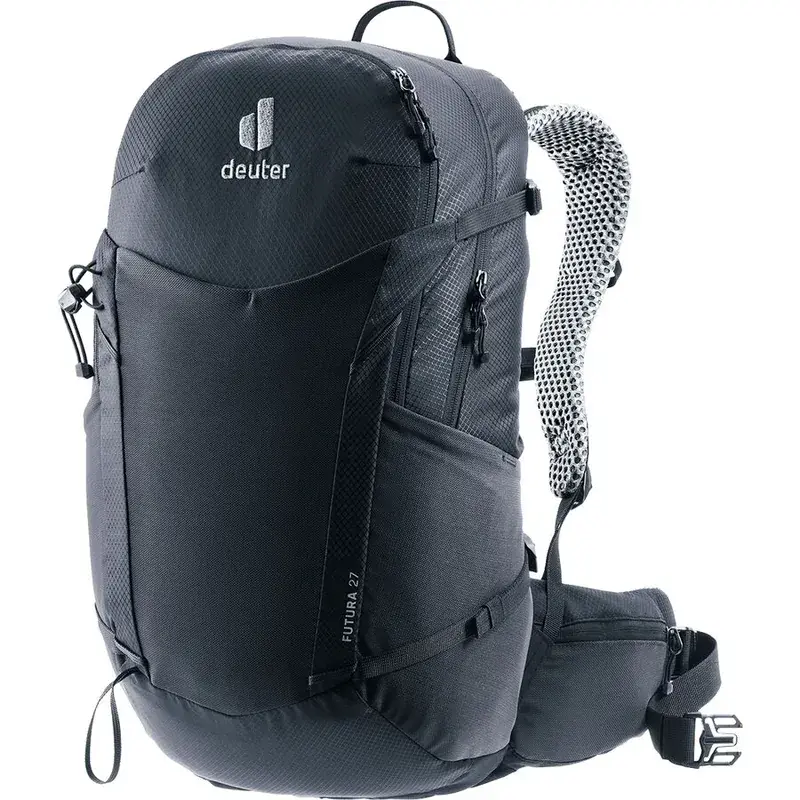 Deuter Futura 27
A suspended mesh back that leaves an air gap behind you, with a rain cover in the box.
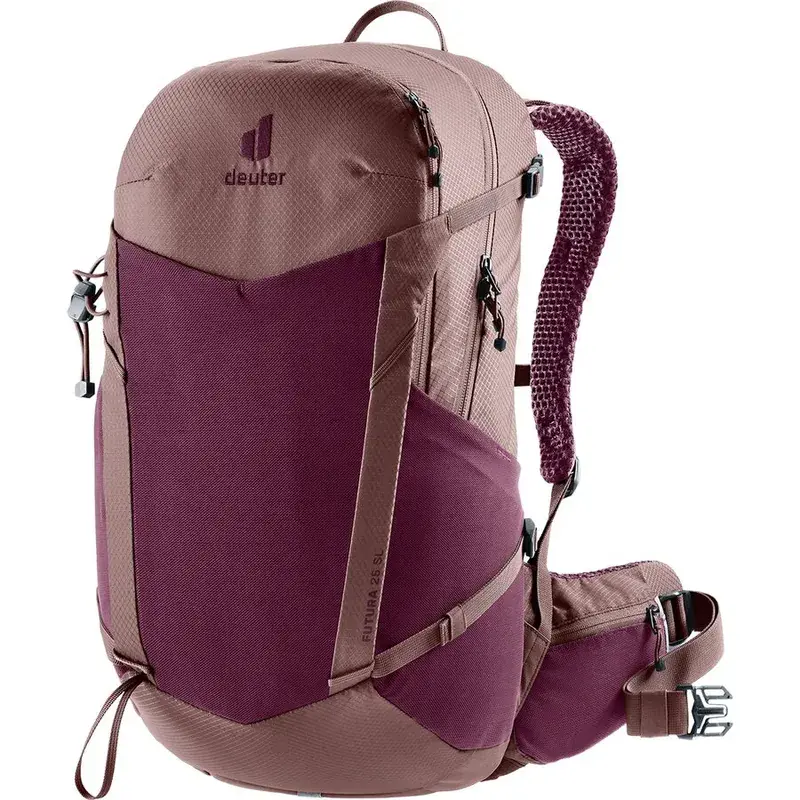 Deuter Futura 25 SL
The shorter, women's-fit version of the Futura, with the same ventilated back and rain cover.
Gregory Zulu 28 LT and Jade 28 LT: Room for Longer Days
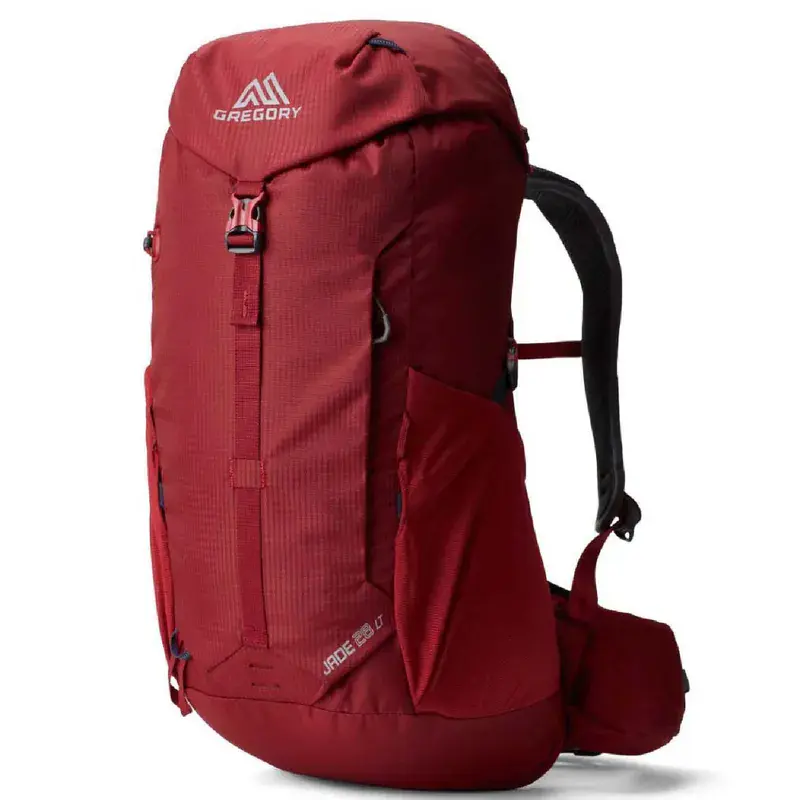
Gregory’s Zulu 28 LT and Jade 28 LT are for longer days with more water, layers or a child’s gear. They have the most room here and the highest stated limit, 25 pounds by Gregory’s figure. The tradeoff is one torso size each and a top-loading lid.
Ideal For
These suit long days when you’re carrying more, like extra water, extra layers, or a child’s snacks and jacket on top of your own. The Jade fits women with torsos of 14 to 19 inches, by a retailer’s figure.
If you’re plus-size and want more than 20 liters, Gregory also makes a Zulu 28 LT Plus Size and a Jade 28 LT Plus.
Picture a hot day with three liters of water on board. At about 2.2 pounds a liter, that’s around 6.6 pounds of water alone, and with layers, lunch, a child’s extras and a pack of about 2.5 pounds, you can pass the 15-pound mark quickly.
The Case for It
Two numbers make the case: 28 liters, the most room of the five, and a 25-pound maximum carry by Gregory’s figure, the highest stated limit here. That headroom matters on the days your load is heavier than usual.
Do you need 28 liters for a day hike? Most days you can get by with less, which is why the other picks sit at 20 to 27 liters. It pays off when you’re carrying for two, hiking in heat with extra water, or packing layers for a long climb.
How It Carries
Gregory publishes the Zulu’s main figures, and I’ve marked the few that come from a retailer instead.
- Comfort cradle hipbelt with phone-size zippered pockets: shaped to wrap around the hips, which is what moves a heavier load off your shoulders.
- VaporSpan ventilated back with mesh panels: some airflow, plus a structured back that keeps a heavier load steady.
- Top-loading lid with a single buckle and a quick-access front pocket: quick to open for a jacket, though less organized than a panel loader.
- Large stretch side pockets: room for the big bottles a long or hot day needs.
- Reservoir sleeve for Gregory Hydro reservoirs: a sleeve built around Gregory’s own reservoirs.
Gregory lists the Zulu 28 LT at 28 liters and 2.46 lbs, with a 25-pound maximum carry. A retailer lists the fabric as 40% recycled 400D polyester ripstop with a 420D nylon bottom and a DWR designed without PFAS. Gregory lists a limited lifetime warranty.
Zulu vs Jade Fit
Each comes in one torso size. Gregory lists the Zulu 28 LT for torsos of 16 to 21 inches, and a retailer lists the Jade 28 LT at 14 to 19 inches.
Gregory lists hips of 28 to 48 inches for the Zulu 28 LT. For the Plus Size versions, Gregory describes the fit as comparable to 2X to 6X apparel sizing, with torso sizing consistent with its other packs.
With no size to step up or down to, your tape measure decides. If your torso falls outside the range, the belt can’t reach your hip bones, and your shoulders end up carrying the load.
The Main Limitation
The real limit is fit. Each pack comes in one torso size, and Gregory lists the Zulu for torsos of 16 to 21 inches. If yours is under 16 or over 21 inches, this pack can’t put the belt on your hip bones.
That 16-inch floor matters if you’re shorter, and the Jade’s 14 to 19 inch range is a retailer’s figure, so check it against your number. The lid is the other tradeoff: it loads from the top, which is slower to dig through than a panel that unzips wide.
Pros and Cons
Pros
The most room of the five, for long days and shared loads.
The highest stated carrying limit, 25 pounds by Gregory’s figure.
A hip belt shaped to wrap the hips, which is what a heavier load needs.
Cons
One torso size, so if your torso is under 16 or over 21 inches, the Zulu won’t fit.
A top-loading lid, so reaching gear at the bottom takes more digging than a panel loader.
Skip It If
Skip the Zulu if your torso is under 16 or over 21 inches, because its one size can’t put the belt on your hip bones. The same goes for the Jade outside its 14 to 19 inch range.
If you want a panel-loading opening, the Sportlite 25 suits you better.
The Bottom Line
For longer, heavier days, this pair is worth a look if your torso fits its one size. It has the most room and highest stated load here, with a belt shaped to carry it. Measure first, since there’s only one size, and expect to dig from the top.
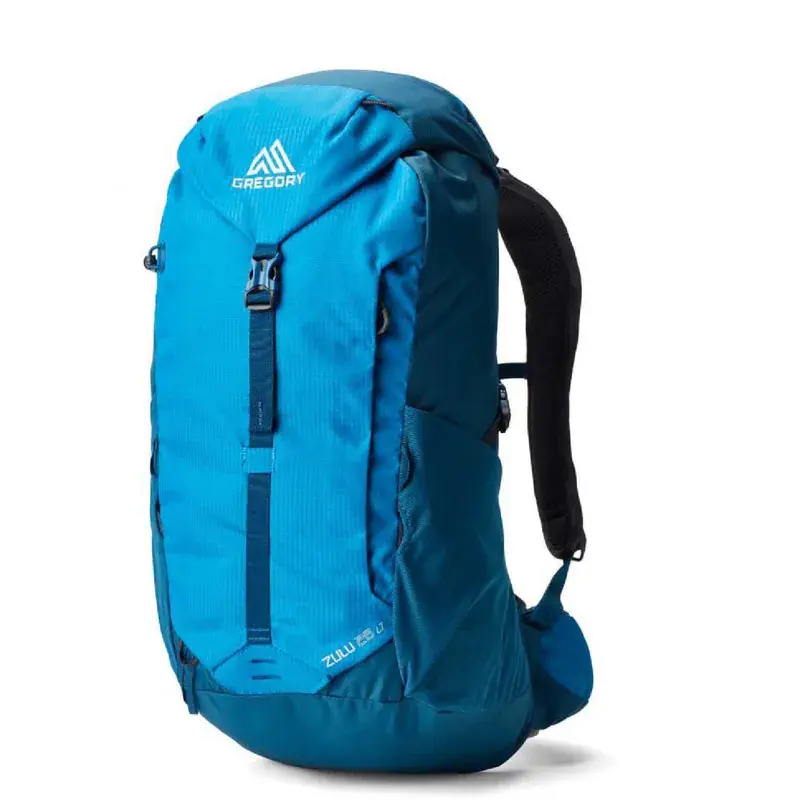 Gregory Zulu 28 LT
The most room and the highest stated load of the five, for torsos of 16 to 21 inches.
 Gregory Jade 28 LT
The women's version of the Zulu, with the same room and a belt shaped to carry a heavier load.
Best Value With a Real Hip Belt: Osprey Sportlite 25
The Osprey Sportlite 25 is the value pick: a padded hip belt with pockets at the lowest price here. It’s one size, for torsos of 16 to 21 inches on Osprey’s chart, with an Extended Fit version for hips up to 70 inches. It’s unisex, with no women’s version.
Who It’s For
This is for hikers who want a real padded hip belt without paying for everything else. It fits torsos of 16 to 21 inches by Osprey’s chart, and the Extended Fit version opens it up to larger bodies, with hips up to 70 inches.
Why It Stands Out
What you get is a padded hip belt with one zippered and one stretch pocket, at the lowest price of the five. That belt is what moves weight onto your hips, and one owner says it’s far sturdier than the belts on most small daypacks.
Across REI and Amazon, the owner pattern is comfort on long day hikes, from hot summer miles to big mountain days. One REI owner describes “a wide, sturdy, dependable hip belt,” which is the whole point of this pick.
Why not grab one of the under-$100 packs instead? This list is about packs that carry on the hips, and the Sportlite’s belt and fit range are what you’re paying the difference for.
Key Features and What They Mean
- 25 liters, 2 lbs 4 oz (Extended Fit 2 lbs 6.4 oz, per REI): enough room for a full day, and close to the Talon 22’s weight, so Osprey’s “minimalist” label is about features, not ounces.
- Hips of 28 to 50 inches, Extended Fit 40 to 70 (per REI): the same wide belt coverage as the Talon and Tempest.
- Panel loading with a dual-zip middle organizer: the front unzips wide, so you can find things without digging from the top.
- Front shove-it pocket and stretch side pockets: a jacket and two bottles within reach.
- Internal sleeve with a hose port and HydraClip, up to 3 liters (per REI): room for a full reservoir.
- bluepass certified recycled 210D nylon ripstop with a DWR made without PFAS (per REI): recycled fabric with the same kind of water-repellent finish as the Talon.
Retailer listings describe a sliding, adjustable harness, and Osprey’s chart puts the one size at 16 to 21 inches. One owner says the strap height adjusts so the belt can sit properly at the hips.
Where It Falls Short
It’s unisex only, so there’s no women’s harness with shorter, narrower straps. If those details matter for your shoulders, the Tempest is the better fit.
The torso range also depends on who you ask. Osprey’s chart says 16 to 21 inches and REI lists 15 to 20, so I’d go by Osprey’s and check it against your own measurement.
There’s no rain cover in the box, by REI’s listing. One owner also reports zipper pulls that bind and a waist buckle that broke within months, which is one report, not a pattern.
Pros and Cons
Pros
A padded belt with pockets at the lowest price here, so the hips carry the load for less.
Panel loading with an organizer, so things are easy to find.
An Extended Fit version for hips up to 70 inches, so larger bodies aren’t left out.
Cons
Unisex only, with no women’s harness for shorter or narrower shoulders.
No rain cover in the box, so budget for one if your hikes see showers.
Who Should Skip It
Skip it if your torso is under 16 inches by Osprey’s chart, if you want a rain cover in the box, or if a women’s-specific harness matters to you. If your budget is firm under $100, my list of hiking backpacks under $100 respects that limit.
Verdict
If you want the Talon’s main benefit, a belt that actually carries, for less money, this is my pick. Owners describe it as comfortable on long day hikes. Just know it’s unisex, so if you want a women’s fit, the Tempest is worth the step up.
 Osprey Sportlite 25
A padded hip belt with pockets at the lowest price here, in one unisex size.
Built for Plus-Size Bodies: Gregory Maya 20 Plus Size and Miko 20 Plus Size
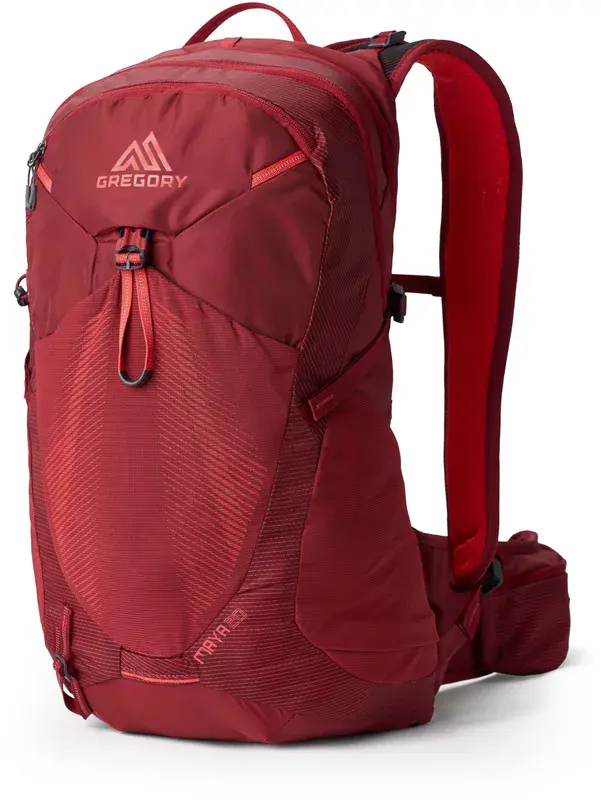
Gregory’s Maya 20 Plus Size and Miko 20 Plus Size suit hikers whose belts never close on standard packs. The Maya fits hips of 41 to 60 inches and torsos of 14 to 19 inches, and one reviewer says it takes weight off her shoulders. The tradeoff is 20 liters.
Best For
These are for plus-size hikers who’ve given up on standard belts that stop short. The adjustable 14 to 19 inch torso makes the Maya, with the Tempest 22 Extended Fit, a pick for shorter plus-size hikers.
For a lot of plus-size hikers, a belt that actually buckles changes the whole day, because it’s the first time the hips get to do the carrying.
What Sets It Apart
This is a real fit for a larger body, with an adjustable torso. Is plus-size gear just a regular pack with a longer belt? Here, the belt and straps are extended, and the torso adjusts 3.5 inches so the belt lands on your hip bones.
Reviewers mostly back that up. On REI, two reviewers who give plus sizes (18 to 20, and 1X to 2X) say the belt fits, though one found the straps too wide and returned it.
Another, who received the pack free, writes that “the hip belt keeps all the weight off my shoulders.”
Several of the REI reviews came from free product, so I’m describing what reviewers say rather than counting them as independent votes. A few reviewers also thank Gregory for making a plus-size pack at all, which says a lot about how rare these still are.
Key Features and What They Mean
- Extended belt and straps, hips of 41 to 60 inches (per REI): a belt that closes, so your hips carry the load instead of your shoulders.
- Adjustable torso, 14 to 19 inches, with 3.5 inches of adjustment: shorter plus-size hikers can set the belt on their hip bones.
- BioSync stretch belt and harness: built to move with your body as you walk.
- Hipbelt pockets that fit a phone, plus large side pockets: your phone on your hip and big bottles at your sides.
- 20 liters, 2 lbs 2.9 oz and a 20-pound maximum carry (per REI): a smaller pack with a lower limit than the Zulu and Jade.
- Channeled foam back and a zippered sleeve for Gregory Hydro reservoirs: no rain cover is included, by REI’s listing.
Gregory describes its Plus Size fit as comparable to 2X to 6X apparel. The reviewers I read confirm the 1X to 2X end, but I didn’t find any at 5X to 6X, so the top of that range is Gregory’s word for now.
Maya vs Miko Plus Fit
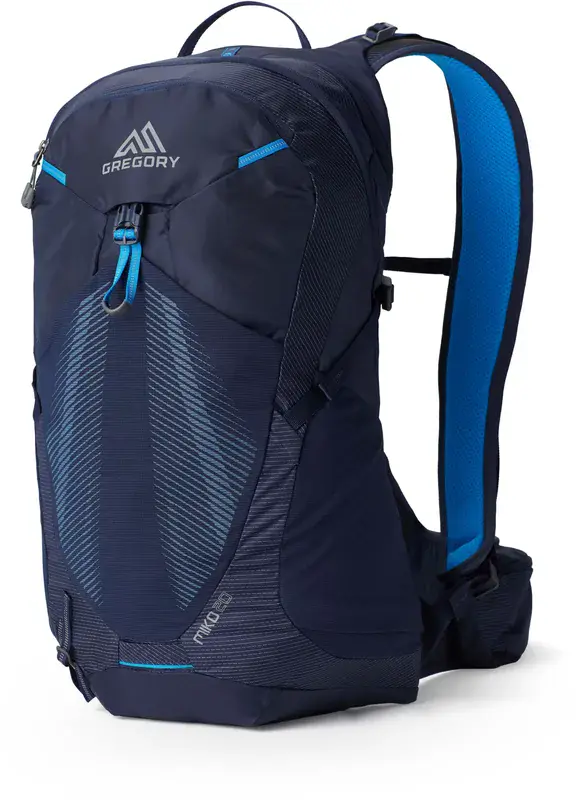
The figures above are for the Maya 20 Plus Size. Gregory lists the Miko 20 Plus Size, the men’s version, at 2.24 lbs, and retailers list an adjustable 15 to 21 inch torso with the same 41 to 60 inch hip range.
REI notes the Maya fits slightly large, based on reviews, and a 5’10” owner found it very comfortable.
It isn’t meant for straight sizes. One reviewer at 5’2″ and 132 pounds didn’t notice it was the Plus Size version and found the belt oversized, which is a good reminder to order the version that matches your hips.
Where It Falls Short
Twenty liters is the real limit. That’s room for water, a layer and lunch but not much more, and one owner says it’s heavier than expected for its size because of dense foam. The same owner notes the belt can’t be tucked away.
One owner says the reservoir sleeve only takes Gregory reservoirs. On the Miko Plus, one Amazon owner reports dye bleeding onto a sweaty shirt, and another a sternum clip that broke on its third use.
The review picture is mixed, too. Some REI reviews came from free product, and Gregory’s own site shows a lower average rating for the Maya than REI does. Neither is a reason to skip it, but both are reasons to check the fit carefully while you can still return it.
Pros and Cons
Pros
A belt cut for 41 to 60-inch hips, so it closes and carries.
An adjustable 14- to 19-inch torso, so shorter plus-size hikers can set it right.
Plus-size reviewers on REI say the belt closes and carries.
Cons
Only 20 liters, which limits long or hot days with extra water.
Mixed review signals, with free-product reviews on REI and a lower average for the Maya on Gregory’s site.
Look Elsewhere If
Look elsewhere if you wear straight sizes, because the belt is cut for larger hips and one smaller reviewer found it oversized. If your torso is over 19 inches, the Maya won’t reach it, though retailers list the Miko up to 21 inches.
If you need more than 20 liters, the Zulu 28 LT Plus Size or Jade 28 LT Plus give you more room.
My Read
If fit has always been the problem, this is the pack I’d start with. The belt is cut for larger bodies and the torso adjusts, and plus-size reviewers on REI say the belt closes. Go in knowing it’s small at 20 liters and the reviews aren’t all independent.
 Gregory Maya 20 Plus Size
A belt cut for 41 to 60 inch hips and an adjustable torso, for plus-size hikers.
 Gregory Miko 20 Plus Size
The men's Plus Size version, with the same belt range and a longer torso range.
Before You Order: Check Your Torso, Your Hips and the Right Version
Before you order, measure your torso and hips and check both against the fit table above. Then pick the right version and load it at home with 10 to 20 pounds, the weight Osprey fits packs with, to see where the belt sits.
The fear of buying twice is fair, and a few minutes of checking at home is what prevents it. Here’s the order I’d do it in:
- Measure your torso and hips. Have someone run a tape from the C7 bump to the top of your hip bones, then measure around your hips at that same height, not at your waist.
- Check both numbers against the fit table. If either one falls outside a pack’s range, that pack can’t put the belt on your hip bones, however good it looks.
- Order the right version. That means Osprey’s standard or Extended Fit, Gregory’s standard or Plus Size, and Deuter’s Futura 27 or Futura 25 SL. One Talon owner and one Maya reviewer both ended up with the wrong version, so it’s an easy mistake.
- Load it at home. Put 10 to 20 pounds inside and check that the belt padding sits about half above and half below your hip bone. Do it while the tags are still on and you can return it.
I’d do this before reading another review, because a pack that passes these checks at home is far more likely to feel right on the trail than one picked on reputation.
So grab a tape measure, take your torso and hip numbers, and check both against the fit table before you click Check Price on any pick.
Founder & Gear Research Editor
Sonia Zannoni
I’m Sonia, the founder of Best Trail Backpacks. I don’t test gear myself. For every pack I cover, I read the manufacturer’s specs and sizing charts and look for what owners report again and again.
Fit comes first, because a pack that doesn’t match your torso and hips will hurt no matter what it cost. My goal is to help you choose a pack that suits your body, your trip and your budget.
About the Founder
