How to Go to the Bathroom in the Woods (Without Stressing Out)
Nobody talks about it before their first overnight hike. But almost every beginner quietly worries about the exact same thing: what happens when nature calls in the middle of nowhere?
That anxiety is completely normal. The logistics are unfamiliar, the stakes feel high, and it is not exactly a topic you want to bring up over coffee with your local hiking group. But going to the bathroom in the woods becomes much less stressful once you know the system. A small pre-packed pouch, a lightweight trowel, and a few basic habits are usually enough to make the whole process feel manageable.
This guide walks you through the physical logistics of backcountry hygiene, step by step, so you can head out with more confidence.
TL;DR: Going to the Bathroom in the Woods
Quick Reference Guide
Rule
Practical Application
Why It Matters
200 Foot Minimum
Take 70 to 80 adult steps from water, trails, and campsites unless local rules say otherwise.
Helps prevent pathogens and waste from reaching shared water sources or busy trail areas.
Dig a Proper Cathole
Use 6 to 8 inches in standard forest soil, or follow local desert guidance where 4 to 6 inches may be preferred.
Places waste where soil biology can break it down, instead of preserving it too deep or exposing it too shallow.
Pack Out Toilet Paper
Treat packing out toilet paper as the cleanest best practice. Always pack out wipes and hygiene products.
Paper breaks down slowly in many environments, and animals may dig it up. Wipes and hygiene products do not belong in catholes.
Use WAG Bags
Use them where soil is too thin, dry, frozen, rocky, sensitive, or crowded for catholes.
Some landscapes cannot safely break down buried waste. In those places, packing it out is the responsible option.
Surface Choice for Peeing
In most areas, aim for durable surfaces like rock, gravel, or bare soil instead of live plants.
Wildlife can be attracted to salts in urine and may disturb soil or vegetation to reach them.
Hand Hygiene
Use sanitizer right away, and wash with biodegradable soap and water when possible.
Sanitizer helps, but soap and water are more reliable when hands are dirty or norovirus is a concern.
200 Foot Minimum
Practical Application: Take 70 to 80 adult steps from water, trails, and campsites unless local rules say otherwise.
Why It Matters: Helps prevent pathogens and waste from reaching shared water sources or busy trail areas.
Dig a Proper Cathole
Practical Application: Use 6 to 8 inches in standard forest soil, or follow local desert guidance where 4 to 6 inches may be preferred.
Why It Matters: Places waste where soil biology can break it down, instead of preserving it too deep or exposing it too shallow.
Pack Out Toilet Paper
Practical Application: Treat packing out toilet paper as the cleanest best practice. Always pack out wipes and hygiene products.
Why It Matters: Paper breaks down slowly in many environments, and animals may dig it up. Wipes and hygiene products do not belong in catholes.
Use WAG Bags
Practical Application: Use them where soil is too thin, dry, frozen, rocky, sensitive, or crowded for catholes.
Why It Matters: Some landscapes cannot safely break down buried waste. In those places, packing it out is the responsible option.
Surface Choice for Peeing
Practical Application: In most areas, aim for durable surfaces like rock, gravel, or bare soil instead of live plants.
Why It Matters: Wildlife can be attracted to salts in urine and may disturb soil or vegetation to reach them.
Hand Hygiene
Practical Application: Use sanitizer right away, and wash with biodegradable soap and water when possible.
Why It Matters: Sanitizer helps, but soap and water are more reliable when hands are dirty or norovirus is a concern.
Building Your Backcountry Bathroom Kit
The reason this feels overwhelming for most beginners is that they try to figure it out on the fly. When you are miles from a plumbing fixture, a missing trowel or a soggy roll of paper is a genuine hygiene problem. The fix is simple: pack a dedicated trail bathroom kit before you leave home, and keep it packed.
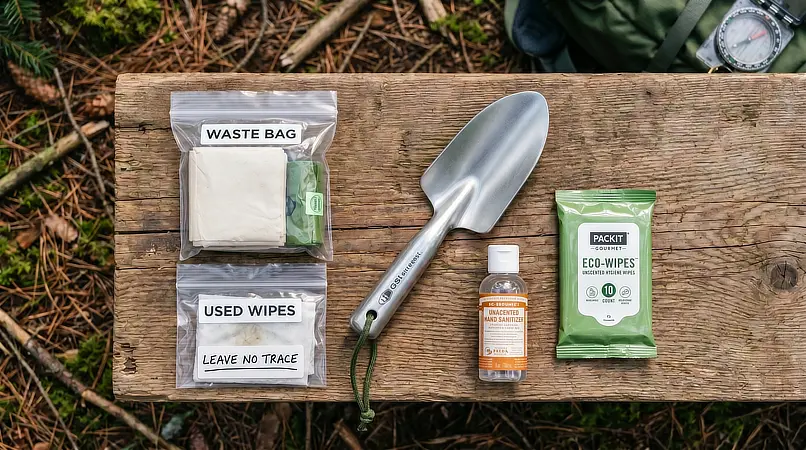
Your kit should live in a small, easy-to-recognize zippered dry bag. Keep it clipped to your pack or tucked into an outer pocket.
Here is what goes inside:
- A lightweight aluminum trowel
- Toilet paper, packed in a sealable bag to keep it dry, with a small buffer amount
- Unscented wet wipes for thorough cleaning when water is not an option
- Travel-size hand sanitizer
- Two heavy-duty sealable plastic bags, one for carrying out used paper and one as a spare backup
The double bag method is exactly what it sounds like. Your used toilet paper goes into the first sealed bag. That bag then goes inside a second sealed bag.
This setup is highly effective at minimizing odors and keeping everything safely contained until you reach a trailhead trash bin. It is not magic, especially on a hot multi-day trip, but it works much better than tossing loose paper into a random side pocket and hoping for the best.
Field Note: Choose Metal Over Plastic
Cheap plastic trowels can snap in rocky, compacted, or rooty soil. A lightweight aluminum trowel weighs very little, but it gives you much better leverage when the ground is stubborn. If you are buying one trail bathroom tool, make it a metal trowel.
The Duct-Tape Baggie Trick
If you are camping with a group and privacy matters to you, wrap your waste paper bag in a few strips of opaque duct tape before you hit the trail. The tape hides the contents and helps the bag feel less awkward to handle around camp.
Small thing. Big peace of mind.
The 200-Foot Rule (and How to Actually Measure It)
The 200-foot rule exists to protect water sources, not to make your life harder. As explained by the Leave No Trace Center for Outdoor Ethics, solid human waste should be deposited in catholes at least 200 feet from water, camp, and trails. That distance helps reduce the chance of waste, toilet paper, or pathogens reaching streams, lakes, springs, campsites, or places other hikers use.
Two hundred feet sounds oddly precise, but you do not need a tape measure. Walk 70 to 80 deliberate adult steps away from water, trails, and camp. If you want a visual, think of it as roughly two-thirds of a football field.
Take those steps before you start looking for your spot. Finding natural privacy is usually easier than beginners expect. Look for a slight slope, a cluster of trees, a large boulder, or a natural dip in the terrain. You do not need total wilderness invisibility. You just need enough separation to feel comfortable and keep other hikers from stumbling into your bathroom zone.
If you want to understand how these distance guidelines connect to broader trail ethics, take a look at our beginner-friendly overview of Leave No Trace principles.
Field Note: Watch the Switchbacks
If you are camped near a zigzagging switchback trail, measure your 200 feet from the nearest visible section of that trail, not just from your tent. The goal is to stay out of sight and well clear of any path hikers might use to cut a corner.
How to Dig (and Use) a Proper Cathole
A cathole is not just a shallow scrape in the dirt. It needs to reach soil that can actually help break waste down.
In standard forest soil, the usual guideline is 6 to 8 inches deep and 4 to 6 inches wide. That depth reaches the active soil layer without burying waste so deep that it sits preserved for years. Look for dark, loose, rich soil under leaf litter, not dry sand, hard clay, or fragile crust. Rich dirt has the microbes needed to help decomposition happen.
Desert soil is different. In arid sandy environments, local guidance may call for a shallower hole, often 4 to 6 inches deep, because heat and limited moisture affect how waste breaks down. In alpine tundra, frozen ground, rocky peaks, very dry terrain, high-use zones, or protected areas, a cathole may not be appropriate at all. That is when you use a WAG bag or another approved pack-out system.
If you are a visual learner, the REI video below makes the cathole process much easier to picture before your first trip. Watch the steps once, then come back to the written instructions so the process feels less awkward when you are actually on the trail.
Always dig your hole before you actually need to use it. Stopping to dig in an urgent hurry is how hikers end up with a useless, shallow scrape. Take out your trowel, choose your spot, and have the hole ready beforehand.
In rocky or compacted soil, work your trowel in at an angle. Use a small back-and-forth rocking motion to loosen the ground before you try to scoop the dirt out. It takes an extra minute, but it helps you reach the right depth without fighting the ground.
Here is a practical tip for balance: look for a sturdy young tree trunk or a low, thick branch. Holding on with one hand while you squat can take strain off your knees and help you stay steady.
Once you are finished, fill the hole completely with the original loose soil. Pack it down lightly with the back of your trowel. Then scatter leaves, pine needles, or small rocks over the surface so the spot blends back into the forest. Your goal is simple: no visible sign that anyone was ever there.
Field Note: Dealing with Frozen, Rocky, or Fragile Ground
If the ground is too frozen, rocky, dry, or fragile to dig the right kind of hole, burying waste is no longer the safe option. Use a WAG bag or follow the local land manager’s pack-out rules instead.
Dealing with Toilet Paper and Wipes (Why Packing It Out Is Usually Best)
Toilet paper takes far longer to disappear in the backcountry than most people assume. In dry, cold, or high alpine environments, paper can sit intact for months or even years. Animals may also dig up buried paper, which creates the ugly “toilet paper bloom” hikers dread finding near a trail.
Packing out toilet paper is the cleanest and most reliable modern best practice. Many land managers require it, especially in desert, alpine, high use, and canyon environments. In some forest areas, plain unscented toilet paper may still be allowed in a properly dug cathole if local rules permit it. But if you want the lowest impact habit, pack it out.
Wipes are different. Even wipes marketed as biodegradable do not break down quickly enough in a cathole to justify burying them. Pack out every wipe, every time.
Drop used paper and wipes directly into your first sealable bag after use. Seal it, place it inside the outer bag, and tuck it back into your trail kit. The double seal helps contain odors and keeps the rest of your pack clean.
Managing Menstrual Hygiene on the Trail
If you are managing your period on the trail, the rules are simple: pack everything out. Tampons, pads, liners, and wrappers do not decompose in a cathole, and they can attract wildlife.
The duct tape baggie trick mentioned earlier is useful here, too. It helps keep these items discreet and manages odors effectively until you can dispose of them properly.
Field Note: Avoid Fragrances
Scented wipes can attract curious wildlife. Stick with fragrance-free options and pack them out every time.
What to Do When You Cannot Dig a Hole (Using WAG Bags)
Catholes only work when the soil can safely help break waste down. Desert environments, exposed alpine zones, frozen ground, rocky peaks, fragile crusts, and crowded trail corridors often do not have the moisture, depth, or biology needed for safe burial. In those places, burying waste does not solve the problem. It just hides it for someone else.
Popular trails in fragile environments often require human waste pack-out bags by regulation. Always check the specific land manager rules for your destination before you go. The National Park Service’s remote waste disposal guidance notes that carryout is often the best technique, and sometimes a requirement, in sensitive areas such as wild river corridors, mountaineering routes, and remote backcountry settings.
WAG bags, often used as a general term for human waste pack-out bags, are specialized double-bag systems with gelling powder. You use the bag, seal it, carry it out, and dispose of it only where the land manager says it is allowed.
How to Use a WAG Bag
- Prepare the system: Open the outer zip bag and locate the inner waste bag. Keep both ready before you squat.
- Position the bag: Hold the wide inner bag securely beneath you, or drape it over a portable toilet seat if you are using one.
- Secure the waste: After finishing, drop any used toilet paper directly into the inner bag. Seal the inner bag completely.
- Double seal it: Place the sealed inner bag inside the heavy-duty outer bag. Squeeze out excess air and seal the outer bag
- Pack and dispose: Store the sealed bag in a designated trash section of your pack. Dispose of it only in a designated receptacle or standard landfill-safe trash where local rules allow.
Important: Never throw a used WAG bag or sealed pack-out waste system into a vault toilet unless a land manager specifically says that system is accepted there. These bags can damage pumping equipment and create major maintenance problems.
Field Note: Practice Once at Home
If using a WAG bag makes you nervous, open one at home before your trip and walk through the steps in your bathroom. Practicing once before you are cold, tired, or standing in the wind makes the whole process feel much less intimidating.
Field Note: Pack Enough Bags
WAG bags have a finite capacity. On multi-day trips where they are required, plan for one bag per person per day, and pack a spare just in case.
The Number One Rule: Peeing in the Woods
Urination is simpler than solid waste, but it still deserves a little care. The general rule is to move at least 200 feet away from water sources, trails, and campsites. That keeps busy areas from smelling like a backcountry bathroom and reduces the chance of urine concentrating near water or camp.
There are local exceptions. In some narrow, high-volume river corridors, such as parts of the Grand Canyon, land managers may tell visitors to urinate directly into the river or wet sand instead. That sounds strange until you understand the setting: in dry canyon camps, urine on shore can build up quickly and create strong odors. Always check the rules for your specific destination.
In most forest, alpine, and desert hiking settings, choose a durable surface when you can. Rock, gravel, or bare soil is usually better than live plants. Wildlife can be attracted to salts in urine and may chew vegetation or disturb soil to reach those minerals.
If you want to reduce the amount of paper trash you carry, consider using a reusable pee cloth. This is a small cloth used instead of toilet paper for urination. Some versions use antimicrobial fabric and clip to the outside of your pack so they can dry in the sun between uses.
Reusable pee cloths are not required, but they can be a low-trash option for hikers who want less paper to pack out.
Field Note: Hand Sanitizer vs. Soap
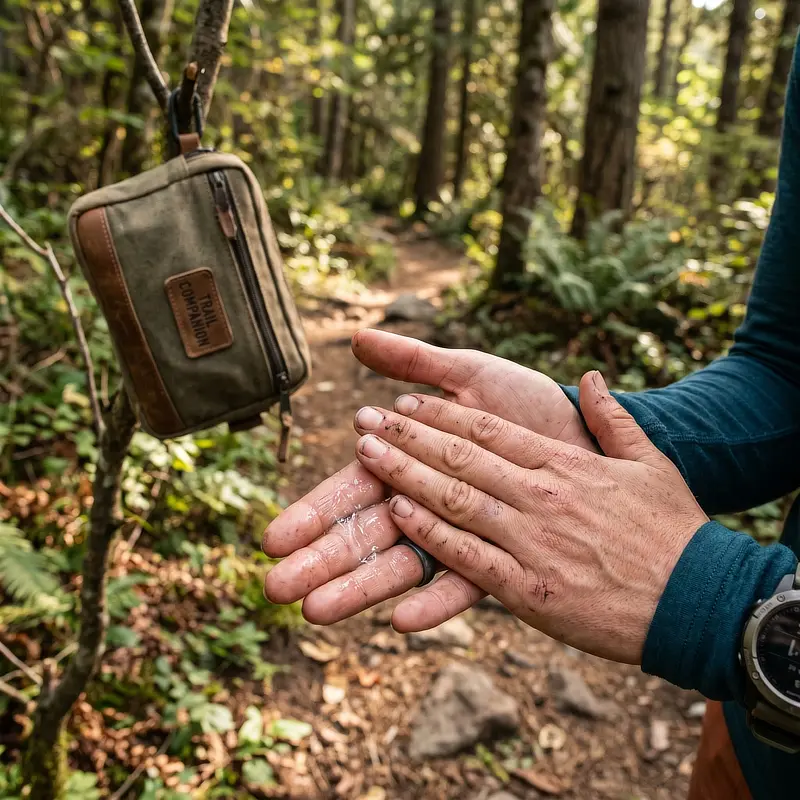
Hand sanitizer is useful when soap and water are not available, so keep it in an easy-to-reach pocket and use it right away. But sanitizer does not work well against norovirus, and it is less effective when your hands are visibly dirty. When possible, wash with biodegradable soap and water at least 200 feet away from natural water sources.
You’re Ready for This
There is no part of backcountry bathroom hygiene that requires specialized athletic skill or expensive equipment. For standard forest trail conditions, a small organized pouch, a quality metal trowel, a couple of heavy-duty baggies, and the 200-foot habit cover most beginner scenarios. For desert, alpine, frozen, rocky, or high-use areas, add WAG bags and check the local rules before you go.
The hikers who worry the most about this before their first trip are almost always the ones who realize afterward that it was not nearly as big or scary as it felt beforehand. The kit takes five minutes to assemble at home, and the habits take just one or two trips to feel natural.
If you are still pulling your gear list together, our guide to hiking essentials for beginners covers everything you need to feel fully prepared before your first night under the stars.
What is the one trail hygiene item you would not hike without? Leave a comment and share your tip with the community. Someone out there is planning their first overnight trip right now, and your experience might be exactly what they need to read.
Founder & Gear Research Editor
Sonia Zannoni
I'm Sonia, the founder of Best Trail Backpacks. I don't test gear myself. For every pack I cover, I compare the published specs and sizing charts, read what independent testers found, and look for what owners report again and again.
Fit comes first, because a pack that doesn't match your torso and hips will hurt no matter what it cost. My goal is to help you choose a pack that suits your body, your trip and your budget, and to tell you plainly where the evidence runs out.
About the Founder
Hello there, I have been pleased with how you have made this article fun to read because there is so much we would be willing to learn.
I have to say learning these guidelines about how to go to the bathroom in the woods is essential, and eventually, it would be beneficial for me someday when I least expect it. Cheers.
Nowadays, with the Leave no Trace initiative, I would say that my guide on how to go to the bathroom in the woods is a must-have in your hiking backpack. Otherwise, you might get into trouble, especially in the areas where it is forbidden to leave human waste of any kind.
Thank you so much
I found this article interesting and did not quite know what to expect initially. It would be best if you relieved yourself, and I know that I am always apprehensive about going to the bathroom in the woods. However, thanks to this article, I will be better prepared and will not feel embarrassed at all. I really like the idea of the Ziploc bags, which are so simple and yet hugely useful.
Lots of useful information here, some of which I had never considered at all.
Great information
Thanks again
I am glad that you found value in my post about going to the bathroom in the woods. I learned the hard way that it’s not a good idea not to void your bladder in the woods, as I ended up with a urinary infection, after a weekend hike, not the most enjoyable experience! Don’t wish that to anyone.
Thanks for stopping by.