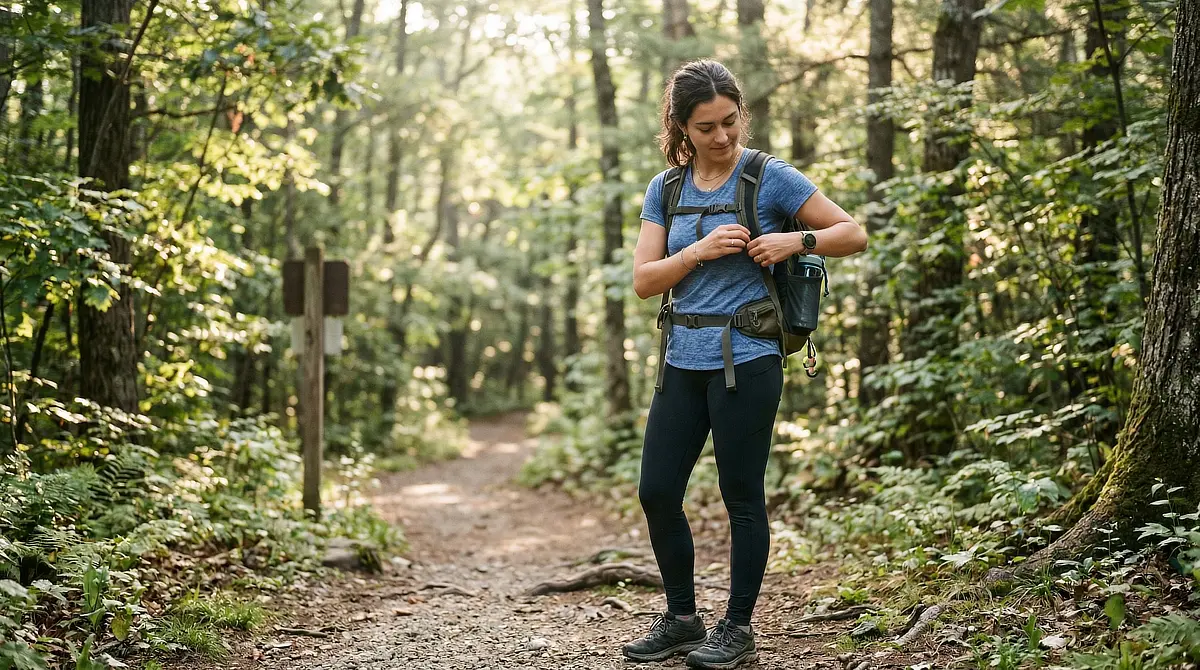
Hiking Backpacks for Beginners: What Size and Features Actually Matter
You walked into the outdoor gear store with one simple question: “I just need a backpack for hiking.” Forty-five minutes later, you are still standing in the aisle. You are holding a pack with six attachment loops and a price tag that would cover a weekend hotel stay, wondering why this got so complicated.
Here is the honest answer: for a Saturday morning trail, you do not need an expedition pack. You probably need something you already own, or something that costs less than $80. Choosing a hiking backpack for beginners is mostly about ignoring what you do not need, not hunting down the perfect technical spec.
TL;DR: Hiking Backpacks for Beginners
If you are skimming, here is the short version before the full breakdown:
Situation
Bag Size
Key Feature
Quick 1 to 2 hour hike
10L to 15L
Water bottle pocket, basic straps
Full day hike (4 to 8 hours)
20L to 30L
Room for the Ten Essentials
Daily commute that doubles as a trail bag
20L to 28L crossover
Laptop sleeve, clean aesthetic
Back pain or heavy loads (15 pounds or more)
Any size with a padded hip belt
Hip belt transfers weight off the shoulders
Quick 1 to 2 hour hike
Bag Size: 10L to 15L
Key Feature: Water bottle pocket, basic straps
Full day hike (4 to 8 hours)
Bag Size: 20L to 30L
Key Feature: Room for the Ten Essentials
Daily commute that doubles as a trail bag
Bag Size: 20L to 28L crossover
Key Feature: Laptop sleeve, clean aesthetic
Back pain or heavy loads (15 pounds or more)
Bag Size: Any size with a padded hip belt
Key Feature: Hip belt transfers weight off the shoulders
The golden rule is straightforward. A typical beginner load for a two-hour hike often sits in the 5 to 8-pound range, where a padded hip belt is usually not necessary.
As a practical rule of thumb, if your loaded pack weighs more than 15 pounds, you will likely benefit from a hip belt. Without one, your shoulders carry the entire load, which can catch up with you quickly on a long descent.
Decoding the Numbers: What Do “Liters” Actually Mean?
Most people hear “20-liter backpack” and picture a very specific-sized container. It is a reasonable reaction. But liters, in the backpack world, just tell you how much total volume fits inside the bag. It is roughly the same way you would measure a pot or a fuel tank.
The number is not about the physical size of the bag so much as the usable space inside it. A 20L pack looks like a standard daypack. A 40L pack starts to look like you are moving out of your house.
10L to 15L: The Pack for a 2-Hour Hike
This is the sweet spot for casual morning walks, short nature trails, or an easy 3-mile loop with a friend.
A 10L to 15L bag comfortably holds a 1-liter water bottle, a light rain jacket, your phone and wallet, a snack or two, and a small first-aid kit.
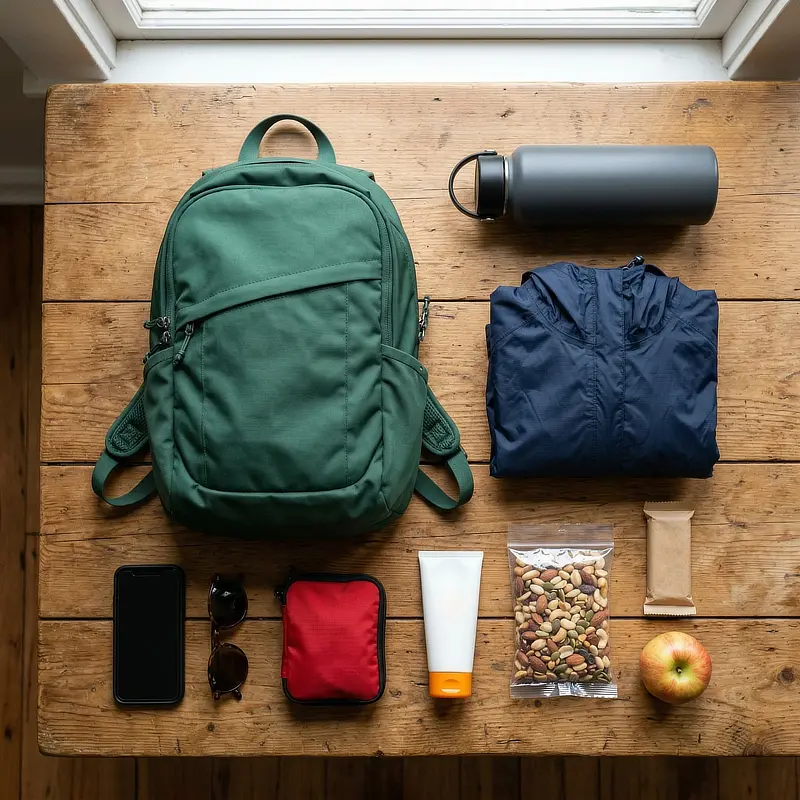
That is genuinely all you need for a couple of hours on the trail. You are not going to suffer from under-packing on a short hike. The real mistake is over-packing, which we will address in a minute.
Trail Story: Many hikers start out packing for every possible “what if” on a short afternoon walk, turning a simple trail into a freight-hauling chore.
Downsizing to a streamlined 12-liter bag with just water, a light shell, and a phone changes the entire experience. It makes the hike feel like a walk in nature rather than a physical endurance test.
20L to 30L: The Full-Day Hike Bag
Step up to a 20L to 30L bag when you are planning a full day out, meaning 5 to 8 hours on the trail. A 25L pack can easily hold a puffy jacket, a rain shell, your lunch, two liters of water, and still leave plenty of room for the Ten Essentials.
The Ten Essentials are a classic safety checklist designed to help hikers prepare for common trail problems. The list includes navigation, a headlamp or light, sun protection, first aid, a knife or repair kit, fire starter, emergency shelter, extra food, extra water, and extra clothes. Do not let the list trigger gear anxiety. Most of these can be simple items you may already own, like a flashlight, snacks, and a trash bag for emergency rain protection.
At this size, you also start carrying enough weight that fit becomes a real factor. You might hear gear heads talk about load lifter straps, but these are actually quite rare on packs under 30 liters.
For load lifters to work, a pack needs a tall internal frame that rises at least an inch or two above your shoulder line so the straps can pull forward at a functional 45-degree angle.
Standard daypacks in the 20L to 25L range are simply too short to have them, so you do not need to worry about hunting down this technical feature.
Field Note: Packing a 30L bag to its full capacity for a day hike is almost always a mistake. Fill it to about 60-70 percent capacity, and your back will thank you on the way down.
What About 40L and Up?
Ignore these for now. A 40L or larger pack is designed for overnight trips when you are carrying a sleeping bag, a tent, or two to three days of food. Buying a 40L bag for a day hike is like renting a moving van to bring home groceries. It works technically, but you will feel the difference in your shoulders by noon.
Ready to narrow it down? Take a look at our Best Daypacks for Beginners guide for a list based on beginner-friendly fit, comfort, and trail-use criteria.
The Lifestyle Question: Trail-Only vs. Everyday Use
Not everyone needs a gear-specific hiking pack. This is worth saying clearly, because the outdoor industry does not always say it.
If you are a casual hiker who also commutes to an office or works from coffee shops a few days a week, a trail-only technical pack might actually be the wrong choice. Those packs are built for airflow and load transfer, which is great on the trail, but they look like you just returned from Everest base camp when you set them down next to your laptop at a café table.
A crossover daypack solves this. These bags are designed to work in both environments. They have padded laptop sleeves and cleaner silhouettes for weekday use, and they still have enough structure and pockets to carry trail gear comfortably on Saturday. You trade a little back ventilation for versatility, and for most casual hikers, that is a fair deal.
Field Note: If you are buying your first hiking pack and you are not sure how often you will actually use it on trails, start with a crossover bag. It removes the pressure of committing to a serious hiker identity before you have figured out what kind of hiker you are.
For crossover options that look good on both Monday and Saturday, see our Best Hybrid Daypacks guide.
Comfort and Fit: The Absolute Basics
The most common comfort myth about backpacks is that thicker shoulder padding solves everything. It does not. Padding helps, but it is not the thing that determines whether you finish a hike feeling fine or arrive at the trailhead parking lot already stiff.
The real key to comfort is weight distribution. A well-fitted pack moves the load from your shoulders down to your hips, which are a much stronger platform for carrying weight.
The most critical element of backpack fit is torso length, not your total height, since backpacks are sized to the length of your spine. All it takes to find yours is a friend and a soft tape measure, and our complete guide to measuring your torso for a backpack walks through exactly how.
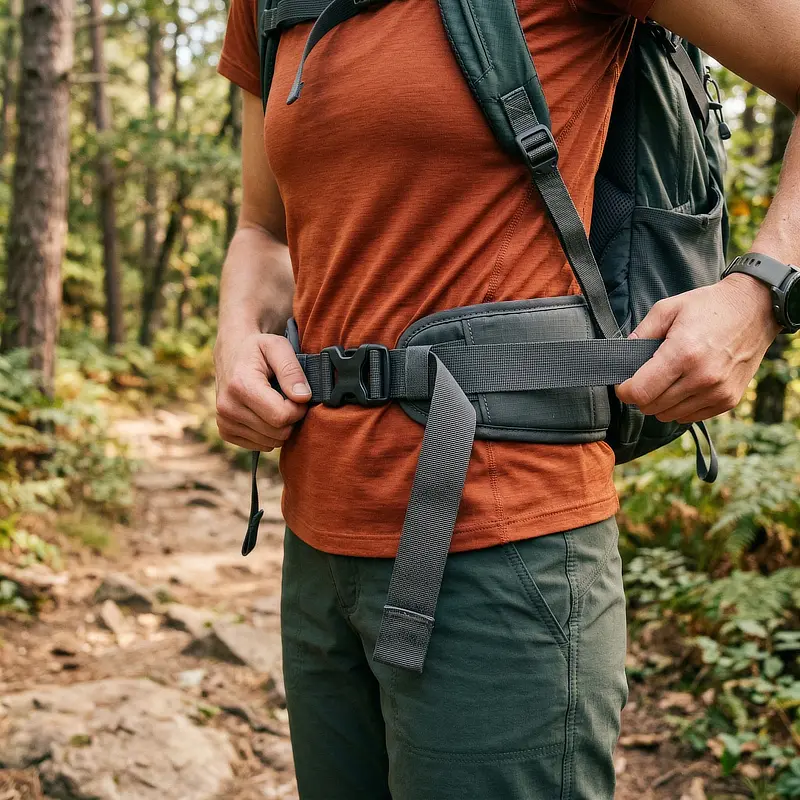
A pack will not transfer weight to your hips if the torso length is wrong, regardless of how padded the belt is.
Field Note: It is incredibly common to carry an entire day’s load on the shoulders simply because the pack’s torso length is too short. When the weight cannot transfer to the hips, even a moderate 15-pound load begins to strain the upper back and neck by hour three.
Using an accurately sized pack with a functional hip belt transfers that load to the legs, allowing the shoulders to serve as stabilizers rather than structural pillars.
Field Note: When trying on a pack, load it with at least 10 pounds before testing the fit. An empty pack in a store tells you almost nothing useful about how it will feel on a trail.
If back comfort is a particular concern for you, our guide to Best Hiking Backpacks for Back Pain goes deeper on what to look for in the fit system.
See It In Action: How to Fit Your Pack
If you are still struggling to get the fit right and avoid shoulder pain, take two minutes to watch this visual breakdown of how a backpack should actually sit on your body.
Features You Actually Need (and What to Ignore)
Gear manufacturers love adding features. More zippers, more loops, more attachment points. From a marketing perspective, more features look like more value. From a trail perspective, most of those extras add weight and complexity without adding much usefulness.
As a first-time buyer, focus on three practical features and let everything else be a bonus.
- Side water bottle pockets: These matter more than most beginners realize. A dedicated side pocket lets you grab your water bottle with one hand while walking, without stopping or removing the pack.
- An exterior mesh pocket: This is for the damp jacket you peeled off at mile two. Stuffing wet or sweaty gear back into the main compartment affects everything else in the bag. An exterior pocket solves this quickly and without any drama.
- A rain cover: Some packs come with one tucked into a bottom pocket, while others you buy separately. It is a small addition that protects everything inside during a sudden downpour. If you hike anywhere with temperamental afternoons, keep one in the bag.
Editor’s Note: Hydration bladders are popular, but a single pinched hose or leaky connection can quickly soak critical insulation like a dry fleece inside the pack. This is why many experienced trail guides rely on deep, stretchy side water bottle pockets instead. They are simple to monitor, easy to refill, and far less likely to soak gear inside the pack.
What to Ignore
Avoid ice axe loops, specialized helmet carries, and anything that sounds like it belongs on an alpine expedition. These features exist for a reason, but that reason is not a 6-mile trail loop on a Sunday morning.
Field Note: Hydration bladder compatibility is a nice feature to have available, but do not let its absence disqualify a pack you otherwise love. A side-pocket water bottle setup works just as well for most day hikers, and it is far easier to clean and refill.
The Most Common Beginner Mistake: Packing Your Fears
There is a pattern that shows up with almost every new hiker, and it is completely understandable. You are a little nervous about being on the trail, maybe you are not sure what you will need, and the result is a backpack stuffed with “just in case” items that adds up to 30 pounds before you leave the parking lot.
A spare pair of shoes. Three extra layers. A massive first aid kit. A rain poncho, a backup rain jacket, and an umbrella. An entire book, because what if you get bored? Sound familiar?
The problem is not the caution. The problem is that a heavy pack makes every mile harder, and harder miles make hiking feel like a punishment rather than the stress-clearing activity it is supposed to be. New hikers with heavy packs often do not come back.
A smaller daypack is actually a useful forcing function here. A 15L bag makes it much harder to stuff in 30 pounds of “just in case” gear. It makes the editing decision for you. Pack your Ten Essentials, carry what matters, and leave the rest in the car. You will not need the spare shoes.
Field Note: A good packing rule for day hikes is that if you have not needed it on your last three outings, leave it at home. Trail snacks and an extra water bottle will serve you far better than a third backup layer.
Which Type of Hiker Are You? Start Here
Before you start browsing packs, it helps to know which of these three categories fits your situation. Most beginners fall clearly into one.
- The Standard Day Hiker: Heads out for a few hours on a nature trail, maybe once or twice a month. A 15L to 20L pack with padded straps, a side water bottle pocket, and a basic exterior pouch is everything you need. Keep it simple, keep it light.
- The Hybrid Commuter: Wants one bag that works Monday through Friday and then earns its keep on the trail Saturday morning. A crossover daypack in the 20L to 28L range, with a laptop sleeve and a clean enough profile to not look out of place at an office, is the right call.
- The Ergonomic-First Hiker: Has back or shoulder concerns, plans to carry heavier loads, or just knows from past experience that a poorly fitted bag ruins the whole outing. Prioritize a padded hip belt, an adjustable torso length, and a back panel with some ventilation.
Pick your category, then go narrow. The fastest way to stop feeling overwhelmed is to stop shopping for every type of hiker and start shopping for yours.
What kind of hiker are you starting out as? Drop it in the comments. I would also love to hear if you have already made the “giant pack, gentle trail” mistake, because honestly, you are in good company.
Founder & Gear Research Editor

Sonia Zannoni
I'm Sonia, the founder of Best Trail Backpacks. I don't test gear myself. For every pack I cover, I compare the published specs and sizing charts, read what independent testers found, and look for what owners report again and again.
Fit comes first, because a pack that doesn't match your torso and hips will hurt no matter what it cost. My goal is to help you choose a pack that suits your body, your trip and your budget, and to tell you plainly where the evidence runs out.
About the Founder