
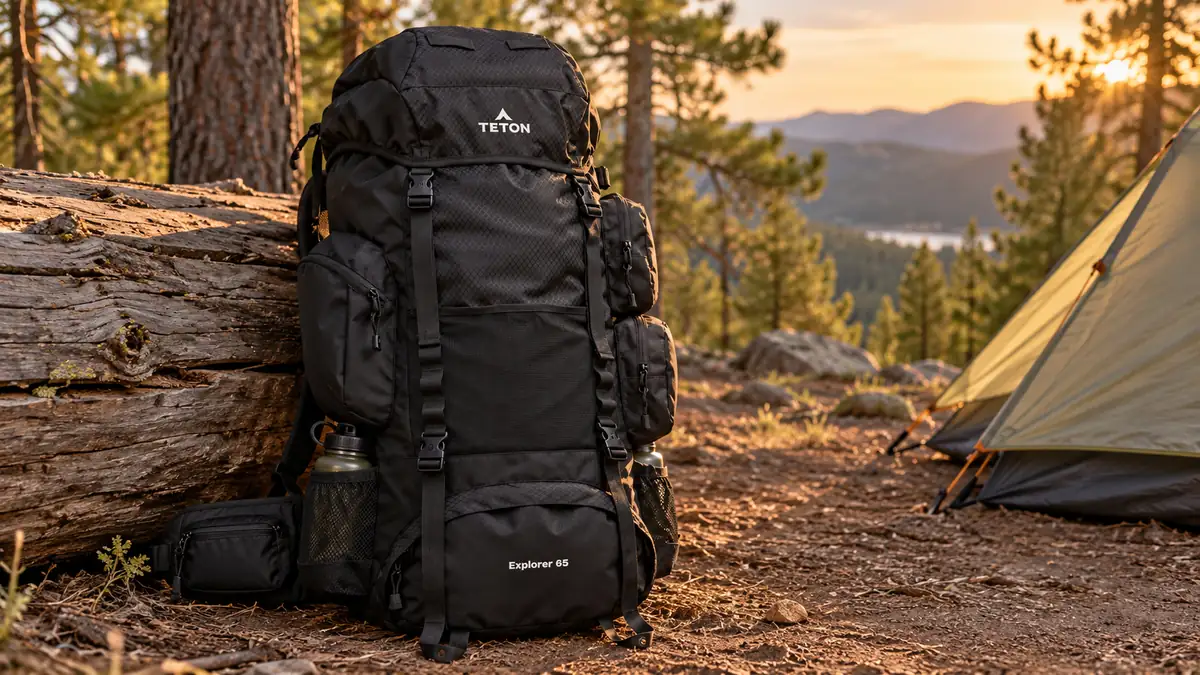
Teton Explorer 65L Review (Formerly the Explorer 4000): Who It Fits on a Multi-Day Trip
Affiliate Disclosure: Some links on this page are affiliate links. If you buy through one, I may earn a commission at no extra cost to you. Commission never decides which products I recommend. Read the full disclosure.
Your first three to five day trip is booked, a $250 pack is out of reach, and the Teton Explorer is cheaper, with thousands of good ratings.
Then the listings disagree on who it fits, and one Amazon chart prints an impossible torso range.
Being stuck here is normal and not your fault. The ratings pool three sizes and years of the older Explorer 4000, and the fit wording covers more than one pack. Nobody wants a pack that hurts by day two.
This Teton Explorer 4000 review answers what you came for, on the pack Teton now sells as the Explorer 65L: whether it fits your torso and hips, carries three to five days of gear comfortably and lasts more than a couple of trips.
By the end you’ll know whether your torso and hips are in range, what owners report about comfort and durability, what Teton’s lifetime warranty really covers, which size to buy, and when to look elsewhere.
TL;DR: Teton Explorer 4000 Review
- Best For: first three to five day trips on a budget, torsos of 19 to 23 inches, larger hips
- Key Strength: a full aluminum frame, a belt to 70 inches, a hip belt pocket and an integrated rain cover at a budget price
- Main Weakness: 5 lb empty, with a torso range that starts at 19 inches
- Verdict: a sensible first multi-day pack if your torso is in range and you can carry the extra weight
- Buy if: a mid-tier pack is out of budget and you can measure your torso first
- Skip if: you sleep in a bulky winter bag you want in the bottom compartment; for a torso under 19 inches, Teton’s Scout fits shorter backs
What a Budget Pack Has to Get Right for Three to Five Days
Before judging a budget multi-day pack, check four things in order: does the torso range include your back, does the hip belt close around your hips, can the frame move the load onto them, and will it hold three to five days of gear? Weight, warranty and price come after.
If this is your first longer trip and money is tight, the real fear is a pack that looks right online and hurts on the trail. That’s why I put fit ahead of features: no pocket makes up for a belt sitting in the wrong place.
Torso Range and Hip Belt: The Two Numbers That Decide Fit
A pack fits when its torso range includes your torso length and its hip belt closes around your hips. Set the torso too long or too short and the belt lands above or below your hip bones, so your shoulders end up carrying the load.
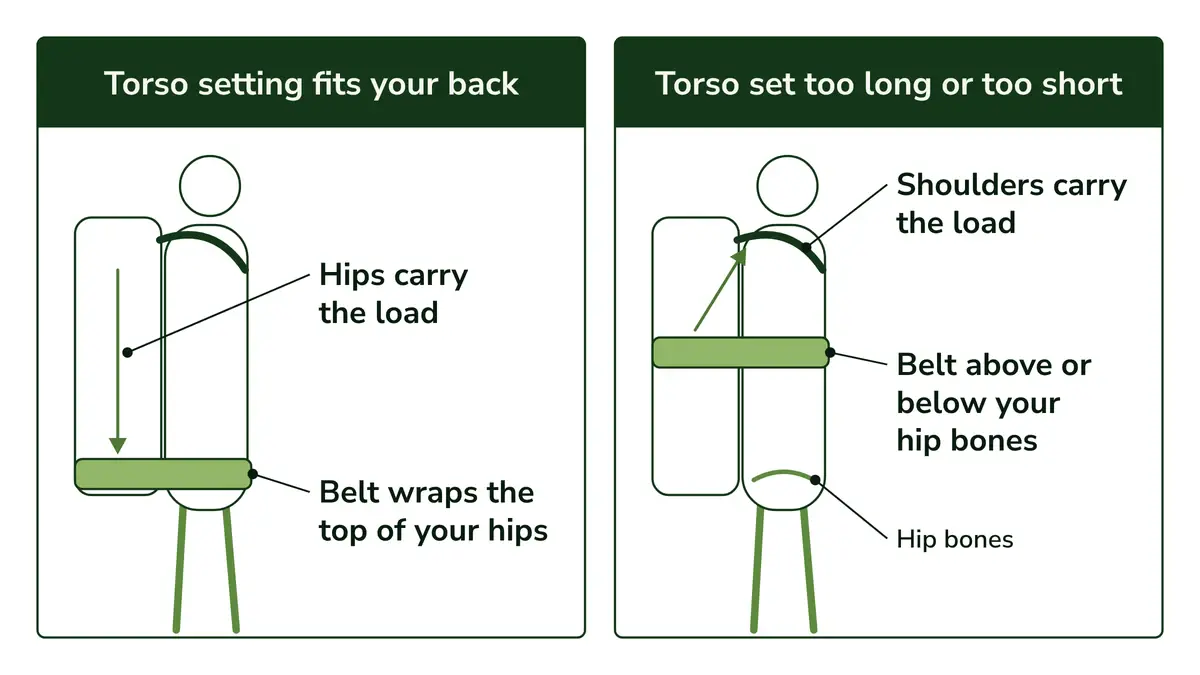
The pack looked fine in the listing, but by midafternoon your shoulders ache and the belt has crept toward your waist. A belt only carries weight when it wraps the bony top of your hips. With nothing to rest on, the load slides back onto the straps.
Height doesn’t tell you torso length. Two hikers of the same height can have quite different torso lengths, which is why listing wording like “medium and tall” can steer you wrong.
The belt range matters at both ends. If your hips are wider than the belt’s maximum, it won’t close, and if they’re slimmer than its minimum, you’ll run out of strap before it’s snug.
Why a Full Frame Matters Once the Pack Gets Heavy
A multi-day load is heavier than a day hike’s, and a pack without a real frame sags under it. A full-length frame keeps the pack upright and moves the weight down to the hip belt, so your hips carry it instead of your shoulders.
The cost is weight. A frame, thick padding and heavy fabric all add pounds before you pack a single thing, so a well-built budget pack is rarely a light one.
On a budget, that’s usually the trade I’d take: a bit more weight on a frame that keeps the load on your hips, rather than a lighter pack that sags once it’s full of food and a sleeping bag.
Capacity, Weight and Warranty: What a Longer Trip Asks of a Cheaper Pack
Three to five days means carrying a sleeping bag, shelter, food and a few comfort extras, so capacity matters. Room comes with pack weight, though, and on a budget the honest questions are what that weight buys you and whether the maker stands behind the pack.
If you’re the kind of hiker who packs a camp chair, a pillow or a small coffee setup, that’s a fair choice for a trip you want to enjoy. It also means you’ll want the room, and a frame that can carry it.
The warranty is part of the value too, not small print. A cheaper pack that the maker repairs or replaces when something fails from a defect can work out better than it first looks, as long as you know what the terms actually cover.
Teton Explorer 4000 Review: How the Explorer 65L Fits, Carries and Holds Up
The Explorer 65L is the current Explorer 4000: the same 65 liter, full-frame Teton pack, now sold beside 75L and 85L sizes. Teton lists it at 5 lb, with a 28 to 70 inch belt, an integrated rain cover and a torso range of 19 to 23 inches.
Teton’s product page promises “exciting new features” without naming them. What I could check against the old Explorer 4000 pages is narrower: two bigger sizes, a 65L belt range that moved from 26 to 70 inches to 28 to 70 inches, and a rain cover now described as integrated.
To judge it, I compared Teton’s own product page and help center with the retailer listings and what owners report, then held what I found against the same four questions as above, in the same order.
Here’s how the three sizes compare on the numbers that decide fit and price, all from Teton’s product page.
Size
Torso Range
Waist Belt
Weight
Price Tier
65L
19 to 23 in (48 to 58 cm)
28 to 70 in
5 lb
$$
75L
19 to 23 in (48 to 58 cm)
30 to 65 in
5.5 or 5.6 lb (Teton lists both)
$$
85L
19 to 23 in (48 to 58 cm)
30 to 65 in
5.5 or 5.8 lb (Teton lists both)
$$
65L
Torso Range: 19 to 23 in (48 to 58 cm)
Waist Belt: 28 to 70 in
Weight: 5 lb
Price Tier: $$
75L
Torso Range: 19 to 23 in (48 to 58 cm)
Waist Belt: 30 to 65 in
Weight: 5.5 or 5.6 lb (Teton lists both)
Price Tier: $$
85L
Torso Range: 19 to 23 in (48 to 58 cm)
Waist Belt: 30 to 65 in
Weight: 5.5 or 5.8 lb (Teton lists both)
Price Tier: $$
Price tiers: $ under $100 | $$ $100 to $249 | $$$ $250 and up
The product box at the end of the review shows the current price.
Who the 19 to 23 Inch Torso Range Actually Fits
Teton’s Explorer product page lists one torso range for every size: 19 to 23 inches (48 to 58 cm). If your back falls in that range, you can set the hip belt on your hip bones. Under 19 inches, no setting gets it there, so go by that number, not the listing wording.
The listings muddy this. The “medium and tall” bullet on Amazon is shared copy from Teton’s Scout listings, and Amazon’s comparison chart misprints the Explorer’s torso range, so Teton’s own page is the one to trust.
If you’re 5 ft 6 in and unsure whether “medium and tall” includes you, the label can’t answer that. A 5 ft 6 in hiker could measure 18 inches or 20, and only the second fits, so measure your torso first.
Owner comments show why height won’t settle it. One 6 ft owner says it fits on the Large setting, and another at 6 ft 1 in, with a 21.5 inch torso, calls it a great pack. One owner at 5 ft 3 in found it “super large” (the owner’s words).
Only one of those owners gives a torso length (21.5 inches, inside Teton’s range), and that’s the number that actually explains the fit. Measure yours before you trust anyone’s sizing advice, including mine.
In Amazon’s review summary, 285 of the 387 owners who mention fit are positive. The summary doesn’t show whether the negative ones had short torsos, slim waists or simply more gear than room, so I can’t sort them by body type.
The belt is where larger hikers do well. On the 65L it closes from 28 to 70 inches, and the 6 ft 1 in owner above has a 44 inch waist.
Slim waists sit near the bottom of the range. One owner of the older Explorer 4000 with a 32 inch waist had the belt cinched tight, so if your waist is slimmer than that, check it against the 28 inch minimum before you order.
Once the torso length is set, the straps come next, and the order you tighten them in decides whether the weight stays on your hips. Here’s how to adjust your hiking backpack straps in that order.
How It Carries a Multi-Day Load, and What the 5 Pounds Buys
Owners mostly rate the carry comfortable: in Amazon’s review summary, 459 of the 501 who mention comfort are positive. The full aluminum frame is what lets the padded belt take that load. The cost is 5 lb empty, 1 to almost 2 lb more than lighter backpacking packs.
The comfort comments keep coming back to the same parts: padded shoulder straps, a padded hip belt and adjustments that are easy to get right. Teton describes the pack as “built for long-haul comfort and reduced strain”, and on this point the owner pattern backs the brand up.
One single report goes further: an owner describes carrying about 70 lb for 4 miles in comfort. That’s one person’s load, not a load rating, so treat it as a story rather than a limit to aim for.
The fair objection is the weight. At 5 lb empty, it’s heavy for 65 liters. The three packs in my roundup of backpacking packs matched to your torso and load weigh about 3.2 to 4 lb, so the Explorer carries 1 to almost 2 lb more.
Those lighter packs cost more, though. What the extra weight buys here is a full frame, thick padding and 600D fabric at a budget price.
One owner who mentions the weight puts it in perspective: slightly heavier than similar packs at “a third of the price” (the owner’s words).
Whether 5 lb is worth it comes down to your budget and your trip. For three to five days on a first trip, I’d accept the extra pound or two for a frame that works. If you’re counting ounces or planning a trip of a week or more, I wouldn’t.
Room and Pockets for Three to Five Days
The 65L has a separate sleeping bag compartment, a hip belt pocket, a front mesh pocket, three side pockets with a pass-through and a reservoir sleeve (reservoir not included). The weak spot is the bag compartment, which suits compact sleeping bags better than bulky ones.
Here’s what each part does for you on a longer trip:
- Hip belt pocket: snacks or your phone within reach without stopping. Teton lists it in its help center rather than on the product page.
- Separate sleeping bag compartment: the bag goes in last at camp and comes out first, without unpacking everything above it.
- Three side pockets with a pass-through: tent poles and other long items ride outside, so they don’t eat room in the main bag.
- Front mesh pocket: a wet rain layer or a sit pad stays out of the main compartment, where it would dampen everything else.
- Four attachment loops and gear loops: somewhere to clip things that don’t fit inside.
- Reservoir sleeve: room for a hydration bladder, bought separately, so you can drink without taking the pack off.
If you’re bringing a few comfort extras on your first longer trip, this is where 65 liters earns its keep. The chair or pillow goes inside, the poles go outside and the wet layer stays in the mesh.
Owners are mostly happy with the room. In Amazon’s review summary, 425 of the 453 who mention capacity are positive, and 460 of the 544 who mention pockets.
If you’re wondering what the maximum load is, Teton doesn’t publish one. So plan the load from your own body and trip, and my guide on how heavy your pack should be gives you a starting point.
Where the weight sits inside a 65 liter pack matters as much as how much there is. Heavy items kept close to your back and centered stop the pack from pulling you backward, and there’s more on that in how to pack a hiking backpack.
The bottom compartment is where some owners run into trouble. One owner says anything bigger than a summer bag is too much for it and warns the lining can tear, and another expects winter gear to be “a tight squeeze” (the owner’s words).
If you sleep in a bulky or winter bag, plan to carry it in the main compartment instead.
Fabric, Rain and Durability: Is It Cheap for a Reason?
The shell is 600D polyester ripstop with a water-repellent finish: thick and abrasion-resistant, but not waterproof, so the integrated cover does the work in steady rain. Most owners who mention durability say it holds up, about three in four, and build quality scores higher still.
The 600D figure measures the weight of the yarn, which tracks how thick it is. A higher denier usually means a heavier, tougher fabric, which helps against rock and brush and adds to that 5 lb.
Water-repellent fabric sheds a passing shower, but steady rain eventually works through, which is why the cover matters. One owner points out a catch: the built-in cover fits only when nothing is strapped to the outside.
If you’ll carry a pad or a tent on the outside, it’s worth knowing when a rain cover is enough and when a pack liner does the job better.
Here’s the durability record in full, from Amazon’s review summary. Quality comes out 94 percent positive (1,414 of 1,503 mentions). Durability comes out 74 percent positive (492 of 663), so about one in four owners who mention durability are unhappy with it.
The summary doesn’t show which parts fail, so I can’t tell you. Two single reports name a part: a side pocket zipper pull came off an older Explorer 4000, and a strap frayed on a 75L, which Teton replaced the next day.
So is it cheap for a reason? Going by owners, mostly not: most report it lasting, but a real minority don’t, and that’s worth weighing. The warranty section below covers what Teton does when a defect shows up.
Where the Explorer 65L Stands Out, and Where It Falls Short
Its strongest point is how much pack the price buys: a full frame, a belt to 70 inches, a hip belt pocket and a rain cover in the box. Its main limitation is 5 lb empty, with a torso range that starts at 19 inches.
What Sets It Apart
At a budget price, you’d expect a cut you’ll feel on day two, such as a shorter frame or a narrow belt. The Explorer gives you both: a full-length aluminum frame that moves the load onto your hips, and a belt to 70 inches with a pocket on it.
Add the integrated rain cover and the side and front pockets, and it’s a pack you can take on a first multi-day trip with one less thing to buy.
The owner record backs this up in volume. The Amazon listing shows 8,169 ratings at a 4.6 average, though that count covers all three sizes and years of the older Explorer 4000, not the 65L alone.
One thing I’d ignore is older listing copy saying the adjustment fits “men, women and youth” and “a wide range of body sizes”. Teton’s own page now says full-size torsos, 19 to 23 inches, and that’s the description to trust.
Where It Falls Short
Four limits are worth knowing before you buy, and only you can say which ones matter on your trips:
- 5 lb empty. That’s heavy for 65 liters, and you carry it on every mile before food and water go in.
- A torso range that starts at 19 inches. Shorter backs can’t get the hip belt onto the hip bones at any setting, so the pack isn’t an option for them.
- A bottom compartment sized for compact bags. Some owners find a bulky or winter sleeping bag too much for it.
- No load range from Teton. You plan the load yourself, with no published ceiling to check against.
Who the Explorer 65L Suits, and Who Should Skip It
It suits a first three to five day trip on a budget, a torso of 19 to 23 inches and larger hips, plus anyone who wants pockets and a rain cover included.
Skip it if your torso is under 19 inches, you’re counting ounces, you sleep in a bulky winter bag or you want a harness shaped for women.
I’d pick it if your torso measures 19 to 23 inches, your first longer trip is three to five days, and higher-tier packs are out of reach. It’s also a good match if your hips are on the larger side, since the 65L belt closes to 70 inches.
It suits hikers who like a few comfort extras, too, and who want a hip belt pocket, plenty of outside pockets and a rain cover without buying them separately.
Skip it, or at least look harder, in these cases:
- Your torso is under 19 inches. No setting puts the belt on your hip bones, and Teton’s Scout, covered in the next section, fits shorter backs.
- You’re counting ounces. It’s the 5 lb question from the carry section above, and a lighter pack will suit you better.
- You sleep in a bulky or winter bag and want it in the bottom compartment, which suits compact bags.
- You live outside the US and are counting on the warranty, which covers the United States and its territories only.
- You want a harness shaped for women. The Explorer is unisex, so compare the hiking backpacks for women that are built that way.
- You must stay under $100. The Explorer usually lists above that, and only clearance stock dips below it, so the hiking backpacks under $100 are a better place to start.
Scout or Explorer, and Which Explorer Size to Buy
Two choices are left once the Explorer looks like a possible fit: whether Teton’s Scout suits you better, and which Explorer size to buy.
Scout or Explorer? Let Your Torso Decide
Teton’s Scout and Explorer split by torso and trip length. The Scout fits torsos of 15 to 19.5 inches and suits one to three day trips. The Explorer fits 19 to 23 inches and three to five days, with a full frame and a hip belt pocket the Scout lacks.
Teton’s help center comparison of the two packs sets out the frames: a full frame on the Explorer and a 3/4 frame on the Scout, a shorter frame that Teton says suits shorter torsos.
If you’ve got both listings open, it’s tempting to compare them by liters and price. Those matter less than they look, because a pack that can’t reach your hip bones won’t carry well at any capacity.
Between 19 and 19.5 inches, both ranges include you, so let the trip decide: the Scout for one to three days, the Explorer for longer. If your torso is under 19 inches, my Teton Scout review covers it, side-by-side table included.
65L, 75L or 85L: Which Size to Buy
All three sizes share the 19 to 23 inch torso range and Teton’s 3 to 5 day rating. The 75L and 85L add room and weight and narrow the belt to 30 to 65 inches, so if your hips are near the top of the range, stay with the 65L.
Teton’s own page gives two weights for each bigger size: 5.5 or 5.6 lb for the 75L, and 5.5 or 5.8 lb for the 85L. Either way, you carry more pack before you add any gear, and the sizes table above has the rest.
For most first trips of three to five days, I’d stay with the 65L, which is the size this review covers. Buy more liters only if your gear truly needs them.
If you’re not sure how many liters your trips call for, here’s what size backpack your trips need, worked out by trip length.
Pros and Cons of the Teton Explorer 65L
Three things count in its favor: a full frame owners mostly rate comfortable, a belt that closes to 70 inches with a pocket on it, and a rain cover and pockets at its price. Two count against it: 5 lb empty, and no fit for torsos under 19 inches.
Here they are with the reason behind each.
Pros
A full aluminum frame and padded belt that owners mostly rate comfortable, with 459 of 501 comfort mentions positive in Amazon’s review summary.
A belt that closes from 28 to 70 inches on the 65L, with a pocket on it, so larger hips are covered and snacks stay within reach.
An integrated rain cover and plenty of outside pockets for the price, so a first trip needs fewer extra purchases.
Cons
5 lb empty, heavy for 65 liters, because the frame, padding and 600D fabric all add weight.
A torso range that starts at 19 inches, so shorter backs can’t get the belt onto their hip bones.
Is Teton a Good Brand? What the Lifetime Warranty Really Covers
Teton’s warranty policy covers defects in materials and workmanship for the original owner, with proof of purchase from Teton or an authorized retailer, in the United States and its territories only.
Wear and tear, accidents and misuse are excluded, and there are no refunds. So keep your receipt, and know what “lifetime” means before you count on it.
Teton spells out what counts as normal wear: fabric fading, seam tape peeling and bent poles. Pets, neglect and severe weather are excluded too. When a claim is approved, the fix is troubleshooting, a repair, a part or a comparable replacement, and Teton doesn’t promise the same part or color.
It’s easy to read “lifetime warranty” as cover for anything, forever. It covers defects for the original owner in the US, which is narrower, but still worth having on a budget pack.
If you’re buying on Amazon, keep the receipt, and buy from Teton, from Amazon.com (sold by Amazon or by Teton’s own store) or from a retailer Teton lists.
Teton doesn’t say whether Amazon counts as an authorized retailer, so I can’t tell you that it does. A receipt from one of those sellers is your best protection.
As for the brand itself, Teton describes its aim as gear that’s comfortable, dependable and easy on the wallet. The evidence I’d weigh is more concrete: thousands of ratings at a 4.6 average, warranty terms that are clear about their limits, and that one-in-four durability minority.
One owner report shows the warranty side working: a 75L owner’s frayed strap was replaced the next day. Another owner whose pack came apart after a few months still praises Teton’s customer service.
For a first-time buyer, I read that as a fair safety net rather than a guarantee. It won’t cover a pack you’ve worn out, but if something fails from a defect, Teton has a process for it, as long as you’re in the US and can show the receipt.
My Verdict on the Teton Explorer 65L
If your torso measures 19 to 23 inches and your first three to five day trip has to cost less than a mid-tier pack, the Explorer 65L is a sensible buy: a real frame, room and a rain cover at a budget price.
Hold the specs and owner reports against the opening checks and it does well. It fits backs of 19 to 23 inches and hips up to 70 inches, owners mostly rate the carry comfortable, and it has room for three to five days with a few extras.
The cost is 5 lb empty, and the warranty covers defects for the original US owner, not wear.
If your torso is under 19 inches, the Scout is the Teton to look at. If you’re counting ounces, a lighter pack from a higher tier will spare you a pound or two on every mile, and that may be worth saving for.
Your next step is small: measure your torso, and if it reads 19 to 23 inches, check the current price of the 65L below.
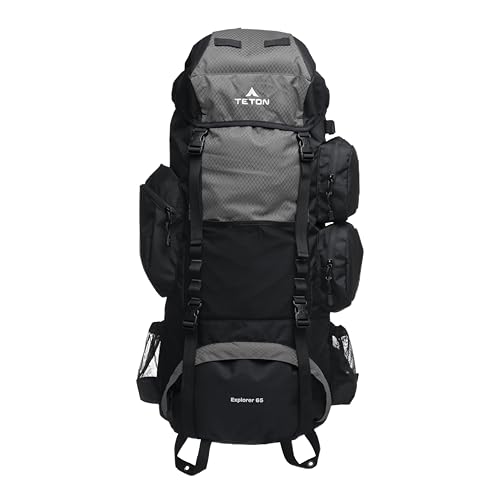 Teton Explorer 65L
A full-frame 65-liter pack with a belt to 70 inches, a hip belt pocket and a rain cover, for a first three to five day trip if your torso measures 19 to 23 inches.
Founder & Gear Research Editor
Sonia Zannoni
I’m Sonia, the founder of Best Trail Backpacks. I don’t test gear myself. For every pack I cover, I read the manufacturer’s specs and sizing charts and look for what owners report again and again.
Fit comes first, because a pack that doesn’t match your torso and hips will hurt no matter what it cost. My goal is to help you choose a pack that suits your body, your trip and your budget.
About the Founder
