

Osprey Hikelite 26 Review: Exceptional Ventilation for Warm-Weather Day Hikes
Affiliate Disclosure: Some links on this page may be affiliate links. If you buy through them, Best Trail Backpacks may earn a small commission at no extra cost to you. As an Amazon Associate, I earn from qualifying purchases.
You know the feeling. You are 45 minutes into a summer climb, the humidity is tracking right alongside you, and your daypack has turned into a sweaty rectangle fused to your back. Every step compounds the discomfort. By the time you reach a viewpoint worth stopping at, peeling the bag off feels like removing a damp compress that has been sealed in place for an hour.
A high-quality light hiking backpack does not just solve the weight problem. It solves the heat problem too, without strapping you into a fragile, shapeless stuff sack that buckles under a full water load.
That is the gap the Osprey Hikelite 26 was built to fill. It is structured enough to carry a real trail load, light enough to move naturally with your body, and engineered to help reduce heat buildup as temperatures climb.
This review covers everything that matters before you decide, from the AirSpeed suspension system and packing realities to who benefits most and who should look at a different pack entirely.
TL;DR: Osprey Hikelite 26 Backpack
Key Metric
Specification
Best For
Warm-weather day hikers prioritizing back ventilation on 3 to 10-mile trails
Key Strength
AirSpeed tensioned mesh suspension that creates a genuine air gap
Main Weakness
Fixed one-size torso length and basic webbing hipbelt with small padded hipwings (no pockets)
Price Tier
$$ (Mid-Range)
Recommendation
Buy if ventilation and an integrated raincover matter most.
Best For
Specification: Warm-weather day hikers prioritizing back ventilation on 3 to 10 mile trails
Key Strength
Specification: AirSpeed tensioned mesh suspension that creates a genuine air gap
Main Weakness
Specification: Fixed one-size torso length and basic webbing hipbelt with small padded hipwings (no pockets)
Price Tier
Specification: $$ (Mid-Range)
Recommendation
Specification: Buy if ventilation and an integrated raincover matter most.
Pricing Guide: $ = Under $100 USD | $$= $101 to $249 USD |$$$ = Over $250 USD.
Quick Verdict
Ready to check current pricing and availability on the Hikelite 26? See below.


The Anatomy of a Great Trail Pack: What to Look for Before You Buy
Before looking closely at the Hikelite, it helps to understand what separates a good light daypack from one that just looks the part. Three decisions matter most: volume, suspension type, and materials.
Why 26 Liters Is the Sweet Spot
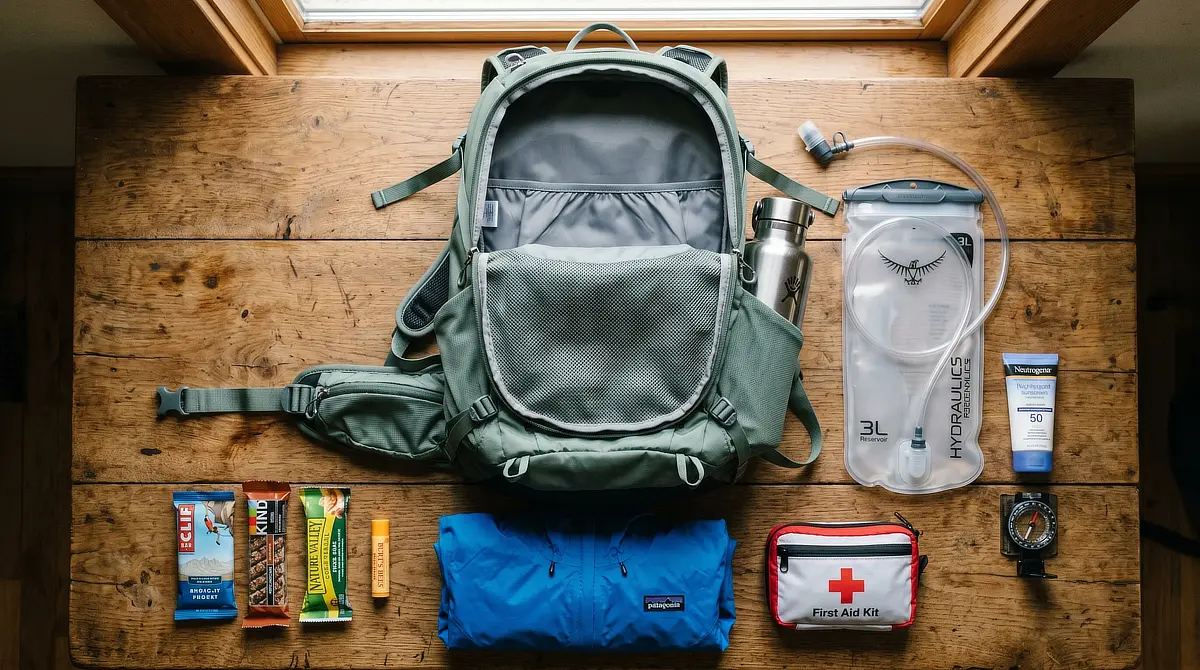
Twenty-six liters sits in a narrow but practical range that most day hikers eventually arrive at after going too big or too small. It holds a 3-liter hydration reservoir (sold separately), a rain jacket, snacks, a first aid kit, and an extra layer, with room left for small extras. This is the real-world checklist for most 3 to 8-hour hikes.
Go smaller, and you are rationing gear or leaving behind the rain cover. Go larger, and the empty space invites overpacking, which turns a light outing into a loaded grind by the second mile. The 26-liter range enforces sensible discipline without making you feel squeezed.
If you want to see exactly how the AirSpeed suspension system creates that crucial air gap on a hiker’s back, check out this hands-on visual breakdown:
Frameless vs. Tensioned Suspension: Why It Matters More Than Weight
The lightest daypacks on the market are frameless, and some of them are genuinely useful. But frameless means the pack body sits against your back with nothing between the nylon and your skin. In cool weather on a short outing, that is fine.
In warm weather or on anything longer than an hour, it becomes a problem. The pack acts as insulation, trapping heat and moisture against your back for the entire hike.
A tensioned mesh suspension system solves this by physically separating the pack body from your back. The mesh forms a taut surface that holds the pack a few centimeters away from your lumbar and mid-back, creating an air channel. Sweat still happens, but it can actually evaporate instead of pooling between you and 26 liters of nylon.
Materials and Durability at the Lightweight End
Light and durable used to be in direct conflict in pack design. The current North American Hikelite narrows that gap with a more sustainability-focused material construction.
The main body features bluesign® approved, 100% recycled 210D high-tenacity ocean-sourced ripstop nylon, while the lining uses 100% recycled 210D nylon. The base is reinforced with a tougher, bluesign® approved, 100% recycled 420D nylon to handle rough trail surfaces.
Both the outer fabrics and the internal lining are treated with a PFAS-free DWR (durable water repellent) finish. This helps shed light showers and morning dew without relying on fluorinated chemicals, meeting the strict ecological standards of a bluesign® product.
While 210D ripstop nylon is still on the lighter end of trail-tested fabrics, the high-tenacity weave handles normal trail abrasion well, specifically when you set your pack down on rough granite or brush against rocky walls.
Trail Story: Ask any regular day hiker why they upgraded from their first pack, and the answer almost always circles back to the same problem: a sweaty back that got worse every mile.
Switching from a flat-contact foam pack to a tensioned mesh suspension system makes an immediate difference on a warm day.
The airflow through that back gap is subtle but steady, turning a standard midday climb from a sweaty grind into a much more breathable carry.
Real-World Performance: The Osprey Hikelite 26 in Action
The Hikelite reputation rests almost entirely on one feature. That is not a knock on the pack. It means Osprey built something that solves one problem so thoroughly that hikers rarely need to look elsewhere for it.
Comfort and Fit: The AirSpeed System in Practice
The AirSpeed backpanel is the defining feature, and it earns the attention. The tensioned mesh trampoline design holds the pack body away from your lumbar and mid-back. Verified buyer feedback consistently names this system as the primary reason for purchase, and repeat buyers in humid climates tend to be the most enthusiastic.
The BioStretch harness adds another layer of practical comfort. Elastic binding on the shoulder straps allows the pack to follow your body’s movement rather than pulling against it. On a pack in this price range, that kind of dynamic response is not standard.
The fit caveat is real and worth taking seriously before you buy. The Hikelite runs on a single torso size (15 to 20 inches), which covers a wide range, but not everyone. Hikers at the shorter end, roughly below 5’2″, report that the frame sits tall enough to push against the back of the head when looking up.
Hikers above 6’2″ may find the webbing waistbelt rides too high on the stomach. While the current North American model includes padded hipwings extending from the frame, the waist strap itself is a simple webbing design without zippered pockets.
The padded hipwings do help with stability and offer a touch of load support compared to a bare strap, but they do not provide the heavy-duty weight transfer or storage of a dedicated multi-day trekking belt.
For a pack with a 5 to 20-pound load range, this is a reasonable compromise for lightweight packing, but it limits comfort if you carry heavy gear.
Organization and Accessibility
The Hikelite uses a panel-loading design, meaning you access the main compartment through a wide, dual-zip front panel rather than digging down from the top. For day hiking, this layout works well in practice. You can see and reach everything in one motion instead of excavating through stacked layers.
The front shove-it pocket handles rain shells and wet layers without opening the main compartment. The stretch-mesh side pockets are sized for tall bottles, including 1-liter Nalgene bottles and standard SmartWater bottles, which is a helpful detail if you are currently deciding which water bottles to buy for your day hikes. The elastic tension holds reasonably well when the pack is fully loaded.
Editor’s Note: A key design detail to note is how the tensioned, curved AirSpeed frame shapes the main compartment. This curvature can make loading a full 3-liter hydration bladder quite difficult once the pack is already stuffed with layers.
For a smoother trail prep, load your reservoir into the sleeve first before packing your extra gear.
Also, using a reservoir with a semi-rigid backplate, such as Osprey’s own Hydraulics LT bladder, makes it much easier to slide down into this curved slot when the pack is partially loaded compared to using a completely soft, frameless bladder.
The top zippered pocket holds keys, a wallet, and small essentials. One practical note from real users: load it light. If you pack heavy items like multi-tools or electronics in that suspended interior pocket, it sags and blocks access to gear stored deeper in the main compartment.
For beginners, remember that overstuffing this top pocket also shifts the pack’s center of gravity higher, which can make you feel off-balance on steep steps or uneven trail terrain.
The LightWire alloy frame does more than hold the mesh away from the body. It also stabilizes the entire pack shape under load, allowing the Hikelite to carry its recommended 5- to 20-pound load range without the shapeless sagging that flattens frameless packs.
The design trade-off is that the curved frame reduces the flat-packing surface area inside the main compartment. This matters most for hikers who carry large flat items like a foam sit pad or a laptop. For everyone else carrying a standard trail load, the structural benefit outweighs the geometric constraint.
However, you might need to adjust your strategy if you normally rely on a simple guide for packing a hiking backpack, as the curved frame requires you to arrange soft gear a bit differently than in a traditional flat-backed bag.
Who Should Buy the Osprey Hikelite 26?
The ideal buyer is a warm-weather day hiker taking on trails between 3 and 10 miles. Back ventilation matters to them. They have either lived through back sweat on a flat-contact pack before, or they are buying proactively to avoid the problem entirely.
The integrated raincover, stored in its own base pocket, is a meaningful differentiator. Most comparable daypacks in this tier require a separate cover purchase, meaning you save the hassle of shopping for the best backpack rain covers before your first hike.
The Pass Category
- Photographers: Those who carry a camera insert or heavy mirrorless kit will find the basic webbing hip belt and padded hipwings undersized for that load transfer, as they provide stability rather than heavy weight support.
- Fast-and-Light Runners: Dedicated trail running packs sit closer to the body by design and handle dynamic movement differently. The Hikelite is a hiker, not a runner.
The Honest Breakdown
Pros
Exceptional Ventilation: The AirSpeed tensioned mesh is an outstanding performer in its class among structured daypacks.
Integrated Raincover: Included in a dedicated pocket, saving you an extra purchase.
Streamlined Design: Works just as well for a light commute as for a peak climb.
Cons
Reduced Flat-Packing Space: The curved frame makes it harder to pack laptops or other large flat items.
One-Size Torso Fit: This is the most significant constraint for very tall or very short hikers.
Basic Webbing Belt: The waist strap features padded hipwings but lacks zippered storage pockets.
Delicate Mesh: The backpanel mesh can cause pilling on high-end merino wool shirts over time.
Keeping the Hikelite 26 in Good Shape
The mesh backpanel and shoulder straps collect salt residue from sweat. Left unaddressed, that salt can degrade the foam. Clean them with a soft brush, mild fragrance-free soap, and lukewarm water. Avoid machine washing entirely.
For off-season storage, keep the pack uncompressed. The LightWire frame relies on sustained tension to hold its shape. Stuffing the pack into a tight bin can distort the frame geometry. A hook in a dry closet is all it needs. Osprey backs the pack with their All Mighty Guarantee, which covers repairs and replacements for the lifetime of the product
The Osprey Hikelite 26: Our Verdict
For a day hiker who values a cool back, the Hikelite 26 is a very strong contender in the mid-range daypack category. The AirSpeed system is an exceptionally practical ventilation solution for a structured daypack without moving into heavier technical lines. The integrated raincover and panel-loading access round out a complete package.
The one-size torso fit remains the most significant buying risk. If you fall outside the 15 to 20 inch torso range, you may want to look at Osprey’s Talon or Tempest lines. If you like the idea of tensioned mesh but Osprey’s one-size frame does not fit your torso, the Gregory Citro 24 offers a similar ventilated carry with a slightly different harness geometry.
Editor’s Note: The Osprey Hikelite 26 is a strong contender for warm-weather day hikers who prioritize back ventilation over complex pockets.
Its AirSpeed tensioned-mesh back panel helps reduce sweat buildup and keeps you more comfortable under light to moderate loads, though the single-size torso frame and webbing belt with padded hip wings mean very tall hikers or those carrying over 20 pounds should look elsewhere.
Ultimately, the Osprey Hikelite 26 is one of the most straightforward buying decisions in the daypack market. Rather than overcomplicating things with endless pockets, Osprey focused on solving the warm-weather back-sweat problem highly effectively at a mid-range ($$) price point.
If your torso fits the one-size frame, this is a solid, reliable addition to your gear closet that will make your summer hikes noticeably more comfortable.
Ready to hit the trail? Check current pricing and availability below.
Founder & Gear Research Editor

Sonia Zannoni
I’m Sonia, the founder and Gear Research Editor behind Best Trail Backpacks. I research hiking backpacks through a comfort-first lens, with a focus on fit, back pain, ventilation, practical trail use, and the small design details that can make or break a hike.
I do not pretend to personally test every backpack I cover. Instead, I compare manufacturer specifications, product details, verified buyer patterns, and practical fit guidance to help casual hikers make better buying decisions without getting buried in gear jargon.
My goal is simple: help you choose a backpack that fits your body, your trail plans, and your budget, without the usual overwhelm.
About the Founder

Thanks for recommending Osprey Hikelite 26 backpack. Back then, I use the Eiger backpack when I went hiking. The bag is a bit rusty now, so I think the Osprey pack will be a suitable replacement, and I love that waterproof design.
Oh, I have one question. Does this backpack have a space for storing a laptop? Thank you for your information.
You have the main compartment, which is big enough to stow a laptop if you want. The Hikelite is the perfect backpack for everyday use, as well as a day hike.
Thanks for your question. If you have more questions, don’t hesitate to drop me a line below and I will gladly assist you further.
A very promising bag for my extending dog walks. Don’t tell the dog we will be out longer.
A few questions – Is the drinking bladder included? And what other colors does it come in? Blue is not really the best when out with doggo.
I’ve heard of the Osprey brand before but not the Hikelite 26, and I do feel I will not be disappointed as long as I can find a better color and a bladder.
Concerning the drinking bladder, the answer is no. It’s not included with the Osprey Hikelite backpack. There is a sleeve to put one in, but it has to be bought separately, unfortunately.
As for the colors, the Hikelite 26 comes in 5 different colors so that you won’t be stuck with a blue color backpack! The Osprey pack is also available in Grey, Black, Green, and Orange.
Thanks for your questions. I hope that I have answered them to your satisfaction.
Your information about the Osprey Lightweight pack was very helpful as we are searching for a good birthday gift for a nephew. He loves getting out and hiking and camping.
This backpack seems to have the best of both worlds. The larger section to allow you to easily stow away the larger items you need in your hiking adventure is a good idea. The ones that have all the pouches and dividers limit how you can use the pack and how versatile it is. The Hikelite backpack is also an attractive pack, and we all know how vital appearance is at specific points in your life.
The fabric sounds very strong and easy to clean when needed. I also like the mesh places that help control moisture in your pack and its pockets. I know that when you layer your clothes and take off layers throughout the day, moisture can cause some odors that are best avoided.
The adjustable straps will help adjust to where he needs to carry the pack on his back. We look forward to hearing about his trips and adventures and hope that this backpack can be among them.
Giving the Osprey Hikelite hiking backpack as a gift to your nephew is a great idea. Hopefully, he will enjoy carrying his new daypack on his numerous adventures for years to come.