
Best Backpack Rain Covers That Stay Put in Wind and Rain
Affiliate Disclosure: Some links on this page are affiliate links. If you buy through one, I may earn a commission at no extra cost to you. Commission never decides which products I recommend. Read the full disclosure.
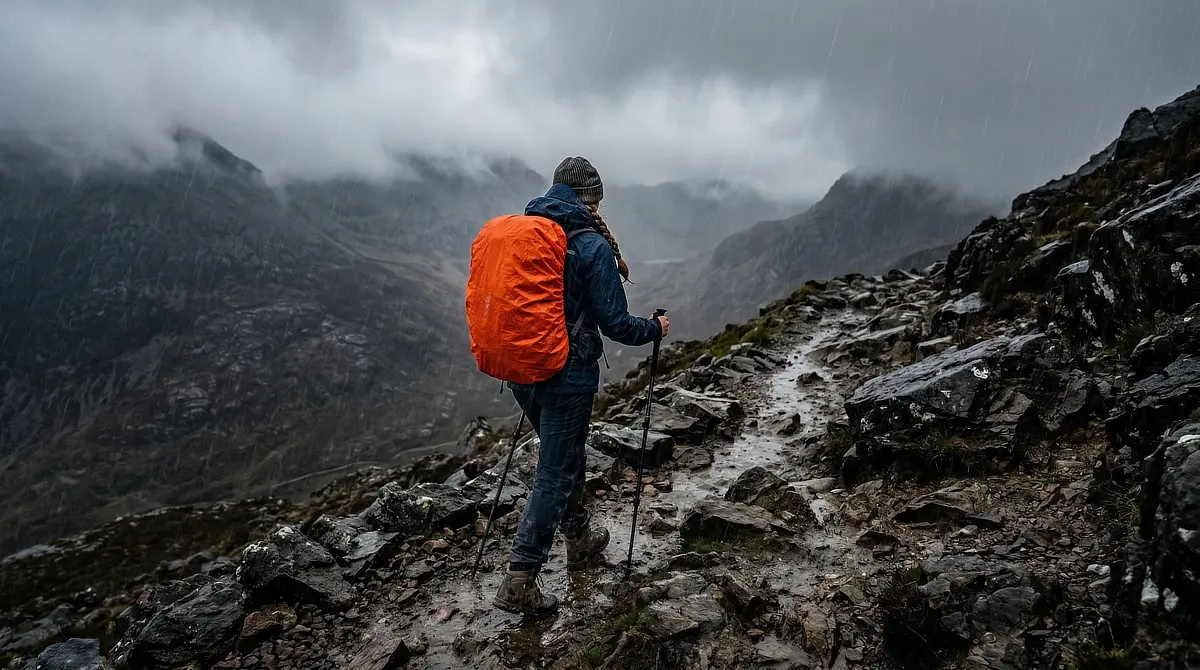
You are standing on an exposed ridge. The wind picks up, and suddenly your backpack rain cover fills with air like a parachute. It tries to launch itself into the next county, and that sudden drag can pull you off balance on a precarious trail when you need stability most.
If you have been there, you know the specific misery of a cover that refuses to stay put. And if you have made the other mistake of buying something thin and cheap that flaps and crinkles in every gust, you know that is not much better. The noise alone is enough to make a peaceful hike feel like you are carrying a plastic bag full of leaves.
High-quality backpack rain covers help manage both problems. They stay secure when the weather turns ugly, and they do it without adding significant bulk, weight, or aggravation. This guide covers the top options currently available, what actually separates a solid cover from a frustrating one, and which option makes the most sense for your pack size and hiking style.
TL;DR: Best Backpack Rain Covers
Product
Best For
Key Strength
Main Tradeoff
Verdict
Osprey Ultralight
Most hikers
Draw-cord fit, taped seams, recycled 40D nylon
Abrasion-prone; not for scrambling
Best Overall
Sea to Summit Ultra-Sil
Ultralight packers
Seamless construction, attached sack
Back strap placement limits gear
Best for Ultralight
Gregory Raincover
Heavy rain & durability
40% recycled 70D ripstop, taped seams
Less packable than silnylon options
Best for Heavy Rain
Joy Walker Cover
Budget shoppers
Internal buckle strap, compact storage
Can leak after 5+ hours; sizing quirks
Best Budget Pick
Deuter Rain Cover III
High-visibility needs
Luminous colors, PU coating
Size labeling confusion on listings
Best for Visibility
Osprey Ultralight
Best For: Most hikers
Key Strength: Draw-cord fit, taped seams, recycled 40D nylon
Main Tradeoff: Abrasion-prone; not for scrambling
Verdict: Best Overall
Sea to Summit Ultra-Sil
Best For: Ultralight packers
Key Strength: Seamless construction, attached sack
Main Tradeoff: Back strap placement limits gear
Verdict: Best for Ultralight
Gregory Raincover
Best For: Heavy rain & durability
Key Strength: 40% recycled 70D ripstop, taped seams
Main Tradeoff: Less packable than silnylon options
Verdict: Best for Heavy Rain
Joy Walker Cover
Best For: Budget shoppers
Key Strength: Internal buckle strap, compact storage
Main Tradeoff: Can leak after 5+ hours; sizing quirks
Verdict: Best Budget Pick
Deuter Rain Cover III
Best For: High-visibility needs
Key Strength: Luminous colors, PU coating
Main Tradeoff: Size labeling confusion on listings
Verdict: Best for Visibility
Pricing note: All covers in this guide fall under $100 USD. Prices shift frequently, so check current listings before buying.
Field Note: The 100% Waterproof Myth
No rain cover turns a backpack into a dry bag. It protects the exposed fabric, but wind-driven rain can still sneak in around the harness side. For sustained storms, pair the cover with a pack liner or dry bags, which adds a second line of defense for sleep gear, insulation, electronics, and spare clothes.
Trail Notes: Your Rain System’s Outer Shell
Most hikers learn the rain-cover lesson the same way: the outside of the pack looks protected, but the harness side still gets wet where it rests against your back. That does not mean the cover failed. It means a cover is only the outer shell of your rain system. The inside still needs a liner to keep the gear from getting damp.
How to Choose a Backpack Rain Cover That Actually Works
Most buying mistakes when choosing a backpack rain cover come down to three things: wrong size, wrong material weight, and overlooking the attachment system. Whether you are outfitting a standard daypack or one of the many cool hiking backpacks available today, here is what actually matters before you click buy.
The Parachute Effect: Why Fit Is Everything
A cover that is too large for your pack does not just look sloppy. It creates a pocket of air that acts like a sail in crosswinds. As mentioned, this means the cover will either billow dramatically, slip off entirely, or throw off your center of gravity.
Expert Sizing Note: Many hikers mistakenly buy a size up “just in case” they overstuff their pack. This is a critical error. Always buy the cover designed for your specific liter capacity. A snug fit is exactly what prevents wind from catching the edges.
To verify the fit at home, stuff your pack with blankets or pillows to its full capacity before sliding the cover on; it should grip the edges snugly without leaving loose, billowy fabric.
To ensure it stays put, look for covers with a secure attachment system, such as a cinch cord that wraps tightly around the bottom of your pack and anchors near the waist belt. That single feature separates a cover that stays put from one trying to escape.
Denier and Material Stiffness
Denier (abbreviated as D) is a measurement of fabric thread weight. Higher denier means heavier, more abrasion-resistant fabric. Lower denier means lighter and more packable, but also more delicate.
A 30D silicone-impregnated nylon packs down to almost nothing and offers excellent water resistance, though no external cover is completely impenetrable under extreme hydrostatic pressure. It will not survive repeatedly brushing against rough rocks. A 70D ripstop polyester is noticeably tougher for sustained heavy-weather use.
When considering noise, remember that while lighter silnylon materials pack down beautifully, they are notoriously crinkly and prone to flapping in high winds. Heavier, stiffer PU-coated fabrics might produce a dull thud when brushing against branches, but they will not sound like a rustling plastic bag in a storm.
Editor Commentary: Balance Silence Against Packed Size
From an engineering perspective, there is a clear tension between silence and packed size. Ultralight silnylon is incredibly thin and packs down to the size of a kiwi, but its high tensile stiffness means it vibrates rapidly in high winds, creating a loud, high-pitched rustle.
Heavier polyester options might add an ounce or two, but they absorb wind energy rather than vibrating, leading to a much quieter hike.
Drain Holes: The Detail Most Buyers Miss
Without a small drain hole at the bottom of the cover, rainwater can pool and collect inside. This creates hydrostatic pressure that eventually forces water through the fabric or seams.
A well-placed drain hole releases that pressure before it becomes a problem. It sounds like a minor design detail, but on a long day in sustained rain, it is a game-changer.
The Best Backpack Rain Covers
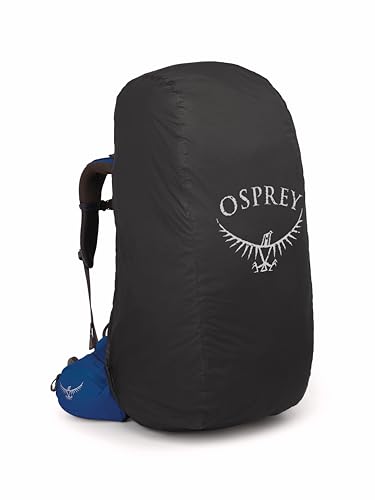
1. Osprey Ultralight Raincover
Key Specs:
- Material: bluesign-approved 100% Recycled 40D High-Tenacity Nylon
- Weight: about 4.0 oz (Medium) to 4.9 oz (Extra Large)
- Standout Feature: Full-wrap draw cord cinch and compact self-packing design
Pros
Snug wind-resistant fit via secure draw cord cinch
Bluesign-approved, PFAS-free DWR treatments
Highly packable, lightweight, and packs into its own carrying pouch
Cons
Not built for abrasive off-trail scrambling
Maxes out quickly if gear is strapped to the pack exterior
Best For: Day hikers and backpackers with 30 to 50L packs who want a reliable, set-and-forget lightweight cover.
The Details
The Osprey Ultralight Raincover makes a strong case for best overall because of its highly adjustable, full-wrap draw cord system. This cinch design allows you to wrap the cover tightly around your pack’s perimeter, offering a snug, flexible fit that keeps wind from getting underneath and lifting the edges.
When wind hits an exposed ridge, a loose cover can easily peel off the top or bottom of your bag. By cinching the draw cord tight, you minimize loose fabric and reduce the parachute effect, helping keep your gear protected in bad weather.
Beyond the fit system, the construction is solid for its weight class. The main body fabric uses responsibly sourced recycled nylon with taped seams throughout. Taped seams are sealed with a waterproof tape over the stitching lines, which prevents water from leaking through the tiny needle holes. The cover is completed with a PFAS-free DWR treatment, and it packs away easily into its own integrated storage pouch.
The Verdict
If you want a cover that helps keep your pack dry in heavy rain, stays secure in high winds, and uses responsibly sourced materials, this is the most well-rounded option available.
2. Sea to Summit Ultra-Sil Pack Cover
Key Specs:
- Material: 30D Ultra-Sil Cordura Nylon
- Weight: 2 oz to 4.6 oz (depending on size)
- Standout Feature: Seamless construction

Pros
Incredibly lightweight and packable
Seamless construction removes a common seam-tape failure point
Integrated stuff sack (impossible to lose)
Cons
Back strap placement interferes with bottom-mounted gear
Snap strap can loosen in severe gales
Best For: Hikers and commuters who count grams and want a cover that disappears into their bag when not in use.
The Details
The Sea to Summit Ultra-Sil Cover earns its reputation for two major reasons: the seamless construction and the attached stuff sack. Seamless construction removes a common seam-tape failure point, helping prevent water seepage on long days. The integrated stuff sack is permanently attached, so you cannot lose one without the other.
The drainage hole is another smart touch. That small vent at the bottom prevents water from pooling inside and building pressure, extending the waterproofing performance on long, wet days.
Be mindful of sizing and gear placement. If you regularly clip trekking poles or tents to the bottom of your pack, the back strap may interfere with that setup.
The Verdict
For ultralight hikers, long-distance thru-packers, and commuters who just want something featherlight and highly weather-resistant, the Sea to Summit Ultra-Sil is the obvious pick.
3. Gregory Raincover
Key Specs:
- Material: 40% Recycled 70D Polyester Ripstop (PFAS-free C0 DWR)
- Waterproofing: C0 DWR & Taped Seams
- Standout Feature: High-durability fabric & reflective logo

Pros
Exceptional durability against brush and rock
High-visibility reflective logo for safety
Secure waist belt attachment loops
Cons
Heavier and bulkier than silnylon options
Fussy hook-and-webbing system is difficult to manage with gloves
Best For: Hikers who regularly hike in sustained downpours, own 50 to 80L packs, and want a tougher fabric with visible safety features.
The Details
The Gregory Raincover uses 40% recycled 70D polyester ripstop with waterproof taped seams and a PFAS-free C0 DWR coating. That is a noticeably heavier construction than the ultralight options on this list.
Higher denier means vastly better resistance against abrasion. While a 30D fabric with a great silicone or polyurethane coating will keep rain out just as well out of the box, the 70D fabric is much less likely to develop micro-tears from brush that eventually lead to leaking during prolonged heavy rain.
The large-format reflective logo is a highly practical safety layer for anyone hiking into dusk or starting early on overcast mornings. The hook-and-clasp system allows the cover to adjust across a reasonable range of pack shapes, and the waist belt loops provide secure hip-anchor logic.
The Verdict
If you regularly hike in demanding conditions, bushwhack through rough brush, and need a cover that can take a beating without tearing, the Gregory Raincover has the specs to handle it.
4. Joy Walker Waterproof Backpack Rain Cover
Key Specs:
- Material: 210T Taffeta with dual interior PU coatings
- Sizes: Small (15 to 25L) to XXL (70 to 90L)
- Standout Feature: Internal buckle strap

Pros
Excellent budget price point
Internal buckle strap prevents slipping
Phenomenal customer service for sizing issues
Cons
Prone to seeping after 5+ hours of heavy rain
Stiffer, noisier material than premium brands
Best For: Budget-conscious day hikers and travelers who need reliable short-duration rain protection.
The Details
The Joy Walker cover does the main job well within its limits. While marketed as a 4-layer construction, this is a lightweight single-ply taffeta fabric featuring a rip-resistant exterior and double-coated interior layers to hold back water. An internal buckle strap keeps everything in position, which is a real functional advantage over budget covers that rely on elastic alone.
It is important to set expectations with budget gear. Covers like the Joy Walker are fantastic for a 5-hour hike where rain is a possibility, but they are not expedition gear. After half a day of sustained downpours, moisture can begin to seep through. They also use stiffer materials that can crinkle audibly as you walk, and their sizing can be a bit quirky.
However, customer service is top-notch. Reviewers consistently report that the brand responds quickly to sizing issues and offers free exchanges.
The Verdict
For a half-day hike, a commute through uncertain weather, or a casual trail walk, the Joy Walker cover is a smart, affordable choice.
5. Deuter Rain Cover III
Key Specs:
- Material: 100% Polyamide with PU Coating
- Capacity: 45 to 90L (Size III)
- Standout Feature: Luminous, high-visibility colors

Pros
Unmatched visibility for low-light trail safety
Reliable rain protection on large expedition packs
Built-in storage pouch
Cons
Frequent vendor shipping errors between Size II and Size III
Fit is best optimized strictly for Deuter packs
Best For: Hikers with large packs who hike in low-light conditions or early morning starts and want to be seen as well as stay dry.
The Details
The Deuter Rain Cover III leads with its most practical differentiator: luminous colors. Most rain covers are designed strictly to protect your gear, but this one keeps you visible. For anyone hiking at dusk, dawn, or during hunting season, the high-visibility colorway combined with the reflective logo is a vital safety feature.
The construction is sound, utilizing a PU coating and taped seams that hold up well in genuine storms. The adjustable hook clasp and drawstring give it a secure fit.
The main frustration here is not the product, but the retail listings. Some vendors confuse Size II (30 to 50L) with Size III (45 to 90L). If you are ordering close to a hiking date, verify the size with the retailer directly.
The Verdict
For Deuter pack owners, especially those doing pre-dawn starts or hiking in mixed-light conditions, the Rain Cover III is a brilliant, high-functioning choice.
The Bottom Line
A rain cover is not exciting gear. Nobody gets on the trail specifically excited about their pack cover. But a good one disappears into your routine and becomes a true hiking essential for beginners and veterans alike, while a bad one makes itself known at the worst possible moment.
The Osprey Ultralight Raincover is the most well-rounded pick for most hikers, featuring a highly adjustable draw-cord cinch that effectively minimizes wind drag.
If weight savings are the priority, the Sea to Summit Ultra-Sil is the lightest, most packable option available.
If you just need something reliable for occasional use without spending much, the Joy Walker cover gets the job done for reasonable trail conditions.
Still not sure which size or version will work with your specific pack? Drop your bag’s brand and size in the comments, and our team will help you match it with the right cover. The sizing quirks are real, and getting it right is an easy mistake to avoid.
Founder & Gear Research Editor

Sonia Zannoni
I’m Sonia, the founder of Best Trail Backpacks. I don’t test gear myself. For every pack I cover, I read the manufacturer’s specs and sizing charts and look for what owners report again and again.
Fit comes first, because a pack that doesn’t match your torso and hips will hurt no matter what it cost. My goal is to help you choose a pack that suits your body, your trip and your budget.
About the Founder

The best backpack cover for me was Deuter Rain cover III. I find it the best because it did exactly what it was supposed to do. It was effortless to put the cover on. The flexible band inside the cover is also nice, and it keeps everything sealed tightly. I really liked the drawstring as well and easy to adjust.
This is awesome! I am glad to hear that you are pleased with your Deuter Rain Cover.
One of the great features about the Deuter backpack rain cover is that it can fit a wide range of packs, from 45 to 90L. So, if you have more than one hiking bag fitting within this size range, then you won’t need to buy a rain cover for each. The Deuter Rain Cover III will fit them all.
Hey Sonia!
Well, you have outdone yourself with this review on the Top 5 Best Backpack Covers.
I really love the Kelty backpack rain cover. Best backpack rain cover on the market, in my opinion. I have used it during all-day/night downpours…and it shed all water like a champ! Provides complete coverage on large fully-loaded packs. Sturdy construction, too. Can take moderate abuse, the heat of summer, freezing temps in winter, hiking through brushy conditions, etc… I strongly recommend it.
Hey, I am glad to hear that you enjoyed using your Kelty backpack rain cover. Thanks for sharing your experience with rain covers.
Hello Sonia,
Thanks a lot for your review of one of the best backpack covers available online. I am thrilled I came across this.
I think almost all of them are perfect for walking under the rainy season like a king. The downside of these 5 backpack covers is that all of them look very similar, and you might have a hard time choosing the best backpack rain cover.
Well, a backpack cover is essentially a bag that goes over your backpack and protects it from adverse conditions keeping your belongings dry. So, unfortunately, they will all be very similar, although available in different sizes to snugly fit your hiking backpack and colors as well to match your style.
Thanks for sharing your thoughts.
Hello,
From the place I come from there is only around two bags with rain covers available at shops. It can be ordered through Amazon, though. I really liked the Osprey Hi-Visibility Raincover. It even comes with a cool headlight.
However, does the rain cover come with the bag as well? If so, it would be nice if you can mention some specifications of the bag.
Thanks
To answer your question concerning if the Osprey Hi-Visibility Raincover comes with a backpack, usually, it is the other way around. Let me explain. When you purchase some hiking backpack models, the pack comes with a rain cover as an accessory, especially if the bag is not waterproof.
So, in this case, if you want a backpack that fits with the Osprey Hi-Visibility Raincover, I would suggest the Osprey DayLite pack, which is available at Amazon.
Thanks for stopping. If you have more questions or need further assistance in purchasing your backpack, let me know here in the comment section, and I will get back to you promptly.