Best Hiking Backpacks Under $100: Budget Picks Worth Carrying
Affiliate Disclosure: Some links on this page are affiliate links. If you buy through one, I may earn a commission at no extra cost to you. Commission never decides which products I recommend. Read the full disclosure.
Getting out on the trail should clear your mind, not empty your wallet. You do not have to spend hundreds of dollars to carry your gear comfortably. You do have to spend wisely, though.
The sub-$100 backpack space is a mixed bag. Some of these packs genuinely compete with mid-range gear. Others look the part on a product page but fall apart after two trips. Knowing which is which before you buy saves you a lot of frustration and return shipping labels.
This guide covers what you actually get for under $100, which compromises are acceptable, and when spending less becomes a bad deal. The focus stays strictly on the budget-versus-value lens, separating daypacks from multi-day packs so you can find the right tool for the job.
TL;DR: Best Hiking Backpacks Under $100
Backpack Model
Best For
Key Strength
Main Tradeoff
Type
Note: Backpacks featured in this guide are strictly vetted for the sub-$100 budget category. Prices fluctuate; always confirm the current price before purchasing.
Gregory Nano 20L
Best For: Premium Day Hikes
Key Strength: Incredible brand-name quality
Main Tradeoff: Zippered panel-loader
Type: Daypack
Mountaintop 40L
Best For: Features on a Budget
Key Strength: Superb comfort for the price
Main Tradeoff: Shallow side pockets
Type: Multi-Day
Naturehike 45L
Best For: Budget Weekend Trips
Key Strength: Solid internal frame design
Main Tradeoff: Non-adjustable torso
Type: Multi-Day
Nevo Rhino 50L
Best For: Beginners Packing Heavy
Key Strength: Extremely thick padding
Main Tradeoff: Frame digs into small hips
Type: Multi-Day
Venture Pal 40L
Best For: Travel & Quick Summits
Key Strength: Ultralight and packable
Main Tradeoff: No internal frame structure
Type: Packable
Note: Backpacks featured in this guide are strictly vetted for the sub-$100 budget category. Prices fluctuate; always confirm the current price before purchasing.
How to Choose a Hiking Backpack Under $100
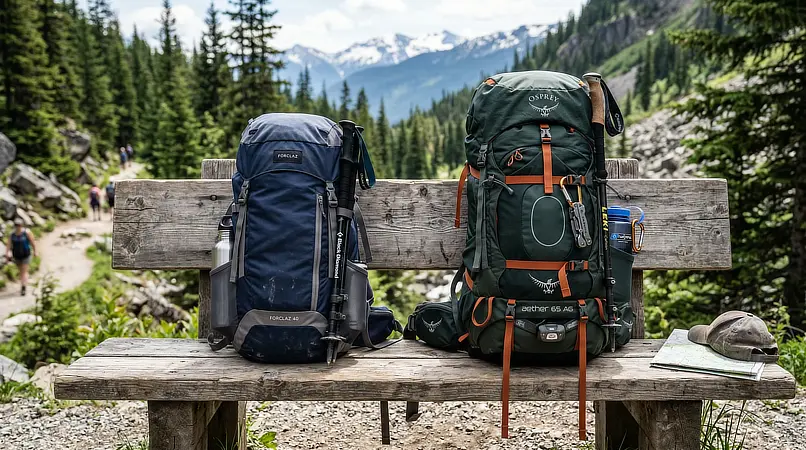
Before we look at specific bags, it helps to understand exactly what this price range delivers and where it draws the line.
Why Suspension Matters More Than Pockets: Cheap bags often lure buyers in with twenty pockets, but if the shoulder straps dig into your neck, the pockets do not matter. The harness and back panel dictate your comfort on the trail.
The “Unisex” Strap Warning: Budget brands almost always use “Unisex” shoulder straps, which in the gear world essentially means men’s sizing. These straps are often straight and stiff, which can chafe the chests of female hikers. If you have a curvy frame, pay close attention to harness design before buying.
What You Actually Get for $100: This budget buys a genuinely capable daypack. For a 50L multi-day bag, you are giving up advanced ventilation fabrics and ultra-lightweight frames. You are also usually sacrificing a lifetime warranty; while Gregory offers a lifetime guarantee, most budget overseas brands only provide a 30-day return window.
The Weight Tradeoff: Budget multi-day packs use thicker, heavier nylon or polyester. For a casual weekend trip, carrying an extra pound of bag weight is a completely reasonable compromise for the cost savings.
When to Walk Away: Steer clear of budget bags with zero hip-belt padding for loads over 30L, or bags that sound like crinkly plastic when you move.
Field Note: The Suspension Rule
Without a padded hip-belt, a 30-pound load rests entirely on the shoulders, guaranteeing severe bruising and fatigue by day two. You can compromise on pockets, but you can never compromise on suspension.
Field Note: The Torso Fit Problem
Budget packs almost never offer adjustable torso length. Before buying any pack in this category, verify your torso length. If you are outside of a medium range (roughly 16 to 19 inches), be especially careful about sizing and read user reviews from people who mention their height.
Top Budget Daypacks (Where $100 Goes Far)
If you only need a backpack for afternoon hikes or travel, $100 is plenty. You can easily find premium name brands that offer hydration sleeves, durable stitching, and breathable mesh back panels without stretching your budget. You are not making serious compromises here. You are simply choosing which premium features matter most.
If you are unsure whether you need a compact daypack or a larger backpacking pack, take a quick look at our guide comparing Daypacks vs. Backpacking Packs before you buy.
Gregory Nano 20L (Standard & Plus Size Available)
Key Specs:
- Capacity: 20 Liters
- Weight: 1.2 lbs
- Best Feature: Plus-size harness fit

Looking at the Gregory Nano 20L, the value becomes clear quickly. While it is a strong daypack for any hiker, it earns its lead spot here because it is one of the few quality bags to offer a dedicated plus-size harness under $100. This inclusive fit features extended shoulder straps and a hip belt designed to accommodate frames comparable to 2X to 6X in apparel sizing. You also get a breathable die-cut back panel and an independent zippered pocket for a hydration reservoir.
Important Note: If you need the inclusive fit, you must explicitly select the “Plus Size” variation at checkout. The standard model uses a different harness geometry entirely.
It is almost always a better investment to buy a smaller-capacity, quality bag from a proven brand like Gregory than a massive, cheaply made 50L bag you do not actually need. The durability and harness engineering will outlast the cheaper option by years.
Pros
Truly inclusive engineering for larger frames.
Premium 210D ripstop materials.
Breathable die-cut foam back panel.
Cons
Dye has been reported to transfer onto light shirts during sweaty summer hikes
Panel-loader design, which some users find less intuitive to pack than a top-loader
The Verdict
A capable, well-built daypack from a premium brand, sized for bodies the budget category usually overlooks. The fit and organization story here is genuinely one of the strongest in this price range.
Field Note: Dye Bleed Warning
Wash this pack by itself the first couple of times. A number of users have permanently stained light shirts during sweaty summer hikes. Run it on a gentle cycle alone before committing it to daily use.
Top Budget Multi-Day Packs (Smart Compromises)
Taking a weekend backpacking trip on a budget means looking for packs with real internal frames and thick hip belts. These bags will weigh a bit more than expensive ultralight gear, but they provide the structural support your shoulders desperately need for heavier loads.
Naturehike 45L
Key Specs:
- Capacity: 45 Liters
- Weight: 2.73 lbs
- Best Feature: 420D nylon and internal frame

Looking closely at the Naturehike 45L, the value becomes obvious quickly. At 2.73 lbs, the 420D nylon fabric delivers genuine durability with solid scratch resistance. The internal frame provides a real load structure for carrying in the 25 to 30 lb range. It also includes a rain cover stored in the bottom pocket, a functional hip belt, and a large mesh back pocket for quick-access gear.
Pros
Legitimate aluminum frame load transfer.
Durable 420D nylon construction.
Included rain cover and functional hip belt.
Cons
The torso length is entirely non-adjustable.
Hydration tube routing holes bow open and do not seal well in heavy rain
The Verdict
A lightweight, well-made internal frame starter pack for beginner backpackers on a real budget. The durability story is strong, but the fixed torso fit must be confirmed before purchasing.
Field Note: Measure First, Buy Second
The Naturehike fits medium and larger torsos well, but it is a fixed size. A pack that doesn’t fit your torso transfers almost none of the load to your hips, which turns a 25 lb trip into a shoulder problem.
Nevo Rhino 50L
Key Specs:
- Capacity: 50 Liters
- Weight: 2.65 lbs
- Best Feature: Wishbone hip belt and 12 pockets

At 2.65 lbs, the Nevo Rhino packs a feature list that punches above its price. Where the Naturehike focuses on minimalism, the Nevo offers 12 distinct pockets, including a separate sleeping bag compartment and a rear stretch pouch. The standout feature is the wishbone hip belt, which allows for independent top and bottom adjustment for a more customized fit around the hips.
Pros
Twelve dedicated pockets for thorough organization
Independent wishbone hip belt adjustments
Breathable mesh padding on the back and shoulder straps.
Cons
Rigid frame corners can dig into the lower back of smaller frames
Pockets are prone to ripping if the bag is severely overpacked.
The Verdict
A strong value pick with impressive organization for the right body type. It handles real backcountry conditions when it fits, but smaller-framed hikers should check dimensions carefully before buying.
Field Note: Pack Light, Hike Happy
User reports suggest this pack handles loads up to 35 lbs without issue. Push it past 40 lbs, and you increase the risk of pocket failure and frame discomfort. Challenge every item before you pack it.
Mountaintop 40L
Key Specs:
- Capacity: 40 Liters
- Weight: 2.31 lbs
- Best Feature: Bottom-access zipper

The Mountaintop 40L sits in a highly useful middle ground. Weighing around 2.3 lbs and crafted from water-repellent polyester, it earns its place through smart design choices. The standout feature is the bottom-access zipper, which lets you reach gear at the base without emptying the whole bag. It also features an internal 15.6-inch laptop sleeve, making it an excellent dual-purpose option for commuting days and weekend trails.
Pros
Bottom-access zipper is a genuinely useful design feature at this price
Internal laptop sleeve adds strong crossover travel value
Ergonomic structure distributes weight well for mid-sized loads.
Cons
Side water bottle pockets are wide but shallow, causing tall bottles to fall out
Durability reports are inconsistent across different manufacturing batches.
The Verdict
A versatile, well-organized bag for casual adventures. The bottom-access zipper is a smart practical detail, making it a solid hybrid travel-and-trail option.
Are Ultralight Packable Bags Worth It?
Packable daypacks are inexpensive and convenient for travel, but they lack rigid back support. They are well-suited for carrying a light jacket and a water bottle from your hotel to the trailhead, but they will sag uncomfortably if you overload them.
Venture Pal 40L Packable Daypack
Key Specs:
- Claimed Capacity: 40 Liters
- Weight: 1.0 lbs
- Best Feature: Folds down to fist size

At exactly one pound, the Venture Pal 40L is a travel utility item rather than a technical hiking tool. The 40L capacity is slightly deceptive, as it assumes you are filling it with soft clothing rather than rigid gear. It includes a smart wet/dry separation pocket and metal zippers with bar-tack reinforcement. Comfort is fine for very light loads, but it completely lacks an internal frame and a hip belt.
A useful personal rule for packable bags: never carry more than 10 pounds in them. Without a hip belt, any weight beyond that will dig directly into your shoulders and shift uncomfortably with every step.
Pros
Folds down to the size of a water bottle for easy packing.
Useful internal wet/dry pocket
Priced well under the rest of this category
Cons
Zero structural load support
Capacity claims are optimistic for rigid gear
Heavy items will transfer directly to your spine without a hip belt
The Verdict
Think of this as a bonus utility bag. At this price, it easily earns its place as the secondary pack that lives permanently at the bottom of your suitcase.
Field Notes: The Ultimate Waterproofing Hack
Most budget packs include a rain cover, but these covers almost always fail in a true downpour as water pools down your back. Skip the expensive waterproof sprays. Simply line the inside of your pack with a heavy-duty trash compactor bag. It provides failsafe waterproofing for your gear and costs less than a dollar.
The Comfort and Fit Tradeoffs to Expect
The biggest difference between a budget bag and a mid-range pack is the back panel. Budget bags typically use basic molded foam that retains heat on warm days, and they rarely offer adjustable torso lengths. Measure your back before buying to confirm the fixed size will actually work for your body.
How to Measure Your Torso
- Stand upright and tilt your head forward to find the bony bump at the base of your neck (the C7 vertebra).
- Place your hands on your hips so your fingers wrap around your hip bones.
- Have a friend measure from the C7 vertebra down to the line between your thumbs.
That measurement is your torso length. Most medium packs are designed for torso lengths of 16 to 19 inches. Check the spec sheet for the specific pack you are considering. Not sure what capacity you actually need based on your torso length? Check out our guide on choosing backpack capacity before you buy.
Field Note: The At-Home Load Test
Before taking the tags off a new budget pack, load it with 25 lbs of pillows and books. Walk around your house for an hour. If it pinches or bruises you in the living room, it will ruin your weekend on the trail. Return it while you are still within that 30-day window.
Trail Story: The “Bigger is Better” Myth
A larger pack does not automatically feel better. It just invites you to fill it heavier, which adds strain. A 45L pack carrying 25 lbs that fits poorly is miserable. A smaller, well-fitted 30L carrying that same 25 lbs feels like an extension of your body. Load management matters just as much as gear selection.
Which Budget Backpack Is Actually Worth Carrying?
Choosing a budget pack is not about finding perfection. It is about finding the right set of structural compromises for your body and your trail goals, so you can stop thinking about your gear and start enjoying the woods.
- For Day Hikes: The Gregory Nano 20L is the standout for any hiker, and a must-consider for plus-size explorers. It offers a lifetime warranty, durable construction, and genuine inclusive fit engineering.
- For Beginner Overnight Trips: The Naturehike 45L wins on weight and durability for medium-torso hikers.
- For Versatile Travel: The Mountaintop 40L is a solid all-rounder. The bottom-access zipper alone makes it worth a serious look.
- For Backup Use: The Venture Pal 40L is exactly what it says: a one-pound packable bag for light loads and travel days.
If you are heading out on your first real trip and want to know what trails pair well with gear like this, check out our guide to the Best Beginner Hiking Trails for routes that match a learning-curve pace.
Have you found a budget backpack that survived a tough trip? Drop your recommendations in the comments below, or share this guide with your favorite hiking partner.
Founder & Gear Research Editor

Sonia Zannoni
I'm Sonia, the founder of Best Trail Backpacks. I don't test gear myself. For every pack I cover, I compare the published specs and sizing charts, read what independent testers found, and look for what owners report again and again.
Fit comes first, because a pack that doesn't match your torso and hips will hurt no matter what it cost. My goal is to help you choose a pack that suits your body, your trip and your budget, and to tell you plainly where the evidence runs out.
About the Founder