What Are the Best Water Bottles for Hiking? A Hype-Free Guide
Affiliate Disclosure: Some links on this page are affiliate links. If you buy through one, I may earn a commission at no extra cost to you. Commission never decides which products I recommend. Read the full disclosure.
Picture this: you are two miles up a steep, dusty trail under a midday sun. You reach into your pack’s side pocket, pull out your bottle, and take a long drink. Instead of crisp, cold water, you get a mouthful of lukewarm, plastic-tasting liquid from a bottle that has been rattling against your pack frame the whole way.
That is not a hydration problem. That is a wrong-bottle problem.
Finding the right hiking water bottle is not as simple as grabbing whatever is sitting in your kitchen cabinet. A heavy insulated flask will weigh you down on a multi-day trek, while a featherweight collapsible bottle offers zero protection against scorching trail heat. The right tool depends on your mileage, your pack, and how you access water.
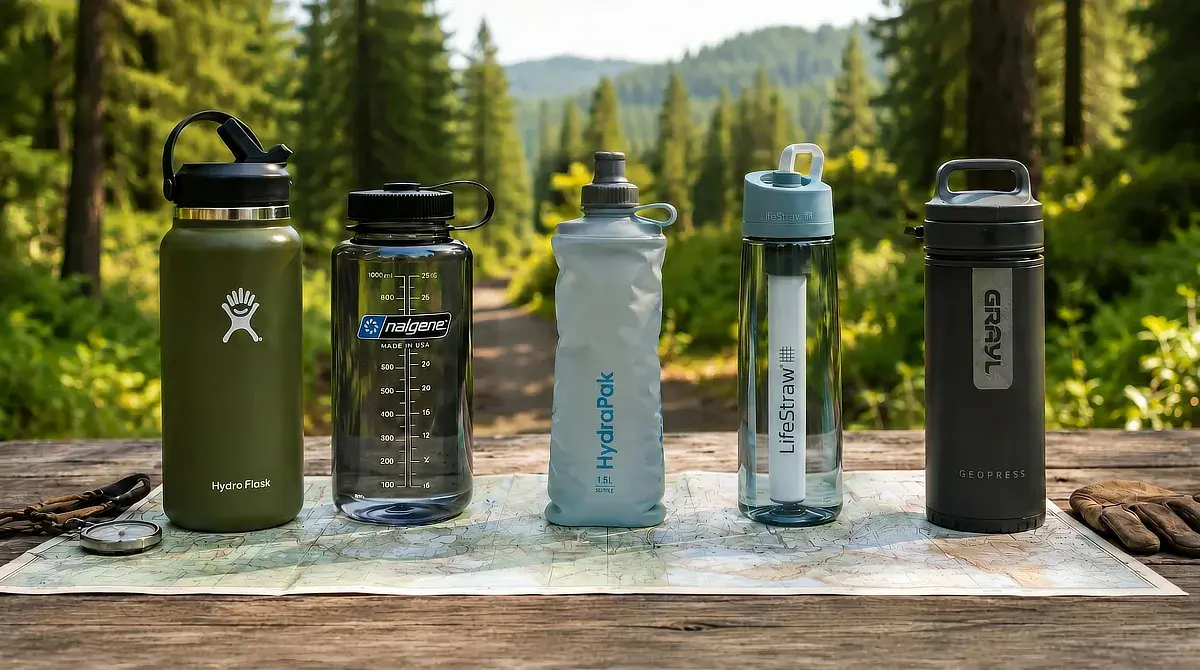
This guide breaks down five top-performing trail bottles across distinct categories. We analyze weight, thermal performance, and filtration systems to help you choose the bottle that fits your specific hiking style, without the marketing hype.
TL;DR: Best Water Bottles for Hiking
Bottle
Best For
Key Strength
Main Tradeoff
Price Tier
Day hikes & everyday carry
Keeps water ice-cold for 24 hours
Heavy build and potential for straw leaks
$$
Rugged, simple trail use
Highly durable and budget-friendly
Zero insulation and hard to drink in motion
$
Ultralight backpacking
Collapses to pocket-size when empty
Flexible sides and mild plastic taste
$
Travel & rustic water sources
Built-in filtration for pathogen protection
Requires strong suction, adds dry weight, and lacks virus protection
$$
Remote trails & global travel
Full-scale purification removing viruses
Pressing mechanism requires physical effort
$$$
Hydro Flask 32oz Wide Flex Straw
Best For: Day hikes & everyday carry
Key Strength: Keeps water ice-cold for 24 hours
Main Tradeoff: Heavy build and potential for straw leaks
Price Tier: $$
Nalgene Sustain 32oz Wide Mouth
Best For: Rugged, simple trail use
Key Strength: Highly durable and budget-friendly
Main Tradeoff: Zero insulation and hard to drink in motion
Price Tier: $
HydraPak Flux 1.5L
Best For: Ultralight backpacking
Key Strength: Collapses to pocket-size when empty
Main Tradeoff: Flexible sides and mild plastic taste
Price Tier: $
LifeStraw Go Series 22oz
Best For: Travel & rustic water sources
Key Strength: Built-in filtration for pathogen protection
Main Tradeoff: Requires strong suction, adds dry weight, and lacks virus protection
Price Tier: $$
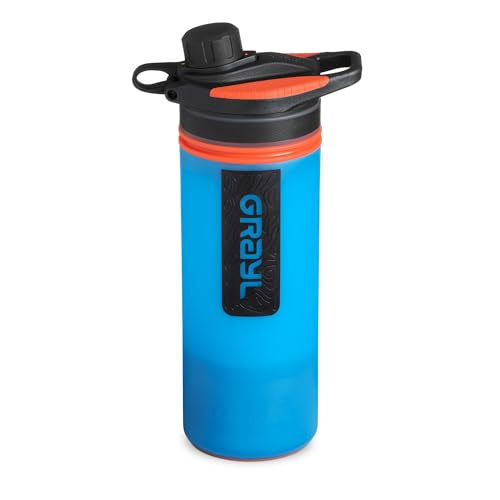
GRAYL GeoPress 24oz
Best For: Remote trails & global travel
Key Strength: Full-scale purification removing viruses
Main Tradeoff: Pressing mechanism requires physical effort
Price Tier: $$$
Pricing Guide: $ = Under $25 | $$ = $25 to $60 | $$$ = Over $60
How to Choose a Hiking Water Bottle
Before you get lost comparing ounces and insulation ratings, ask a simpler question: what kind of hiker are you on a typical outing? A short morning walk on a well-marked trail requires a completely different hydration setup than a multi-day backcountry trek where every ounce counts.
Here are the four key factors to consider before choosing your next trail bottle.
1. Sip vs. Gulp: How Do You Drink on the Trail?
Some hikers prefer frequent, small sips without slowing down, while others like to stop every mile and drink half a liter at once. If you are a sipper, a bottle with a flip straw lid or a bite valve is the most convenient option because it lets you drink on the move. If you are a gulper, a wide-mouth bottle is much better at keeping up with you.
The tradeoff is simple. Wide-mouth bottles are difficult to drink from while walking without splashing water down your shirt. Straw lids make sipping effortless in motion, but they require regular, meticulous cleaning to stay free of mold and mildew. If you want a deeper dive into materials, insulation, and capacity options, check out our hiking water bottle buying guide.
2. Weight vs. Temperature Control
Double-wall vacuum-insulated stainless steel bottles are exceptional at keeping your water icy cold on hot, exposed trails. The catch is weight. An insulated 32-ounce steel bottle can weigh nearly a pound when empty, which adds a significant tax to your pack weight.
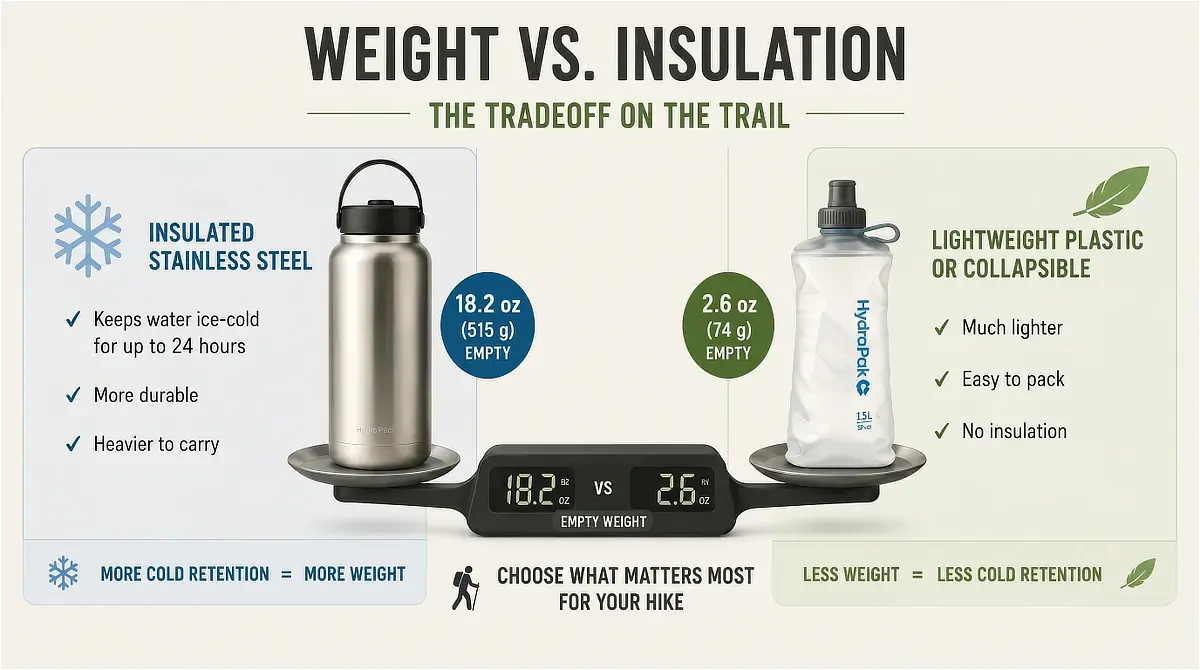
Plastic and collapsible bottles weigh next to nothing, but they offer zero insulation. If you hike in the desert or under direct sun, cold water is a massive boost to your trail morale. If you typically hike under deep forest canopy, you can easily prioritize a lighter plastic option.
Trail Story: Anyone who has carried a standard, uninsulated bottle on a hot, unshaded trail knows how quickly water can reach lukewarm temperatures. By midday, your hydration starts to feel more like a chore than a relief. Stepping up to the weight penalty of an insulated bottle changes that dynamic. The psychological boost of an ice-cold sip when temperatures peak is often worth more than saving a few ounces of pack weight.
3. Cupholder Fit: The Pre-Trail Detail
It is easy to overlook how a bottle behaves before you even reach the trailhead. Many wide-mouth trail bottles have a wide diameter that will not fit into standard car cupholders. If you like to sip water during your drive to the trail, this small detail quickly becomes an annoying daily frustration.
Slimmer profiles like the LifeStraw Go Series 22-ounce bottle generally fit easily into standard vehicles. Wide-diameter bottles like the Nalgene 32-ounce wide-mouth or the GRAYL GeoPress will usually end up rolling around on your passenger seat.
4. Pack Compatibility: Side Pocket vs. Main Compartment
Most modern hiking backpacks feature elastic side mesh pockets designed to hold water bottles. These pockets work best with slender, upright containers in the 24-ounce to 32-ounce range. If a bottle is too wide, like the 3.4-inch GRAYL GeoPress, it can stretch your side pockets to their limit or fail to slide in easily.
If a bottle does not fit your pack’s side pocket, you are forced to store it inside the main compartment. This means you have to stop, unbuckle your pack, and dig past your gear every time you need a drink. For more tips on how to balance your gear and maximize space, see our step-by-step hiking backpack packing guide.
Collapsible bottles are highly versatile here because they shrink down as you drink, allowing them to fit into tiny hip-belt pockets or shoulder straps once empty.
Expert Tip: If you use a hydration bladder as your primary water source, carry a lightweight, collapsible bottle as a backup. It weighs almost nothing in your pack, serves as an easy vessel for mixing sports drinks, and gives you a fail-safe backup if your main reservoir leaks on the trail.
The Five Best Hiking Water Bottles: Honest Reviews
Each bottle below was evaluated by listed specs, design, trail practicality, and user consensus. The goal is simple: show who each bottle genuinely suits, along with the honest drawbacks you need to know.
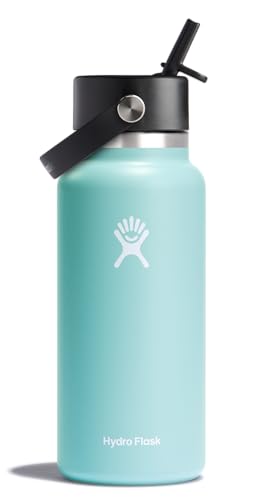
1. The Cold-Water Champion: Hydro Flask 32oz Wide Flex Straw Cap
Best For: Day hikers who prioritize ice-cold hydration and want a convenient, one-handed drinking mechanism on the trail.
Key Specs:
- Capacity: 32 oz
- Material: 18/8 Pro-Grade Stainless Steel
- Insulation: Double-wall vacuum (TempShield)
- Lid Type: Flex Straw Cap
Pros
Keeps water ice-cold for up to 24 hours, even on scorching, unshaded trails.
One-handed flip straw lets you drink quickly without stopping or tilting your head.
Durable powder coat finish provides an excellent grip and resists scuffs.
Cons
Double-wall steel construction makes it heavy (nearly a pound empty).
The straw and lid mechanism require regular, deep cleaning to prevent mold.
Can leak if the bottle is laid flat inside a pack with the straw slightly ajar.
The Expert Take: Looking at the TempShield double-wall vacuum insulation, Hydro Flask remains the standard for thermal efficiency on the trail. However, the steel construction creates a noticeable weight penalty. Carrying a pound of empty metal means you are sacrificing energy that could go toward trail miles.
If you are a fast-packer or ultralight hiker, this thermal luxury is the first thing you should cut. But for a weekend day hiker who struggles to drink enough water when it gets warm, the psychological boost of an icy sip is a worthy trade.
Skip If: You are an ultralight backpacker counting every gram, or you need a bottle that fits easily into narrow car cupholders.
The Verdict
The Hydro Flask 32oz is a durable option for hikers who refuse to compromise on water temperature. The Flex Straw Cap makes hydration effortless while moving, provided you are willing to clean the straw assembly regularly. It is an investment in trail comfort that will easily last for years of weekend adventures.
2. The Dependable Classic: Nalgene Sustain 32oz Wide Mouth
Best For: Budget-conscious hikers who want a highly durable, lightweight, and simple bottle for day hikes or camp use.
Key Specs:
- Capacity: 32 oz
- Material: Tritan Renew (50% certified recycled plastic)
- Insulation: None
- Lid Type: Attached wide-mouth screw cap

Pros
Extremely durable and highly resistant to drops on hard granite or gravel.
Wide mouth makes filling from backcountry streams or adding ice cubes effortless.
Lightweight plastic build adds very little dry weight to your pack.
BPA-free and BPS-free material made from certified recycled plastic.
Cons
The wide opening makes it very difficult to drink while walking without splashing.
Offers zero thermal insulation; water matches the ambient trail temperature quickly.
Too wide to fit into standard car cupholders.
Expert Tip: You can easily solve the splashing issue by adding a cheap wide-mouth splash guard insert, which drops directly into the neck of the bottle to control water flow while you walk.
Skip If: You want your water to stay cold on hot days, or you prefer a bottle you can drink from one-handed while hiking.
The Verdict
The Nalgene Sustain 32oz is a legendary, highly reliable gear item. It is inexpensive, incredibly rugged, and serves multiple purposes on the trail, such as holding hot water in your sleeping bag on cold nights. While it lacks insulation, its sheer reliability makes it a staple in almost every hiker’s gear closet.
3. The Space-Saving Specialist: HydraPak Flux
Best For: Ultralight backpackers and long-distance hikers who want to minimize pack weight and volume.
Key Specs:
- Capacity: Available in 750ml, 1L, and 1.5L
- Material: Dual-layer TPU film (thermoplastic polyurethane: a tough, highly flexible, rubber-like plastic) with RF-welded seams (seams fused together using high-frequency electromagnetic energy for a leakproof seal)
- Insulation: None
- Lid Type: Twist-to-drink nozzle

Pros
Compresses down to the size of a deck of cards when empty, freeing up massive pack space.
Compresses down to the size of a deck of cards when empty, freeing up massive pack space.
Weighs a mere 4.3 ounces for the 1.5-liter size, making it incredibly lightweight.
Cons
Soft, flexible sides make it floppy when partially empty, requiring two hands to drink.
Can impart a mild, plastic taste to water, especially during the first few trail runs.
Thin TPU (thermoplastic polyurethane) material is more vulnerable to punctures from sharp trail debris than rigid bottles.
Beginner Care Tip: If the taste of plastic bothers you, try filling the bottle with a water-and-baking-soda solution (1 teaspoon per liter) and letting it sit overnight before your first real use. To dry the bottle and prevent mildew, prop it open using a clean kitchen utensil or a rolled-up paper towel to ensure the inside dries fully.
Skip If: You hate the taste of plastic, want cold water, or prefer a rigid bottle that can stand up easily on uneven dirt or rock.
The Verdict
The HydraPak Flux is a brilliant piece of engineering for backpackers who measure their gear in grams. By shrinking down as you drink, it keeps your pack organized and stable. Its filter compatibility makes it an exceptional clean-water reservoir for multi-day backcountry trips.
4. The Peace-of-Mind Pick: LifeStraw Go Series
Best For: Day hikers and international travelers who want built-in protection against common waterborne pathogens in freshwater sources.
Key Specs:
- Capacity: 22 oz (also available in 18 oz and 1 Liter)
- Material: BPA-Free Plastic (stainless steel insulated versions also available)
- Filtration: 2-Stage (Hollow fiber membrane microfilter + activated carbon filter)
- Lid Type: Flip straw with integrated filter housing

Pros
Integrated microfilter is manufacturer-rated to remove 99.999999% of bacteria and 99.999% of parasites, including Giardia and Cryptosporidium, under standardized laboratory conditions.
Carbon filter reduces chlorine, organic chemical matter, and bad odors, greatly improving the taste of backcountry or rustic tap water.
Durable, BPA-free plastic build fits easily into standard backpack side pockets and vehicle cupholders.
Cons
Requires noticeable suction effort to pull water up through the filter straw.
Heavier than standard plastic bottles due to the internal filter assembly.
Does not protect against viruses, making it unsuitable for areas with high risk of viral contamination. The CDC explains that most portable water filters can remove parasites, and some can remove bacteria, but they do not remove viruses, which is why this distinction matters for travel and high-risk water sources.
The carbon filter must be replaced every 26 gallons (100 L) to maintain effectiveness.
Skip If: You are hiking in freezing temperatures where the filter membrane could freeze and crack, or you are traveling to areas where viral water contamination is a known risk.
The Verdict
The LifeStraw Go Series is a highly convenient option for day hikes where you might need to supplement your water supply from a stream. It eliminates the need to carry a separate pump or wait for chemical tablets to dissolve.
While the suction resistance takes some getting used to, the instant access to filtered water provides great confidence on the trail, though users must remember it does not protect against viruses.
5. The Best-in-Class Purifier: GRAYL GeoPress 24oz
Best For: Adventure travelers and backcountry hikers who require comprehensive water purification, including protection against viruses, in remote or high-risk environments.
Key Specs:
- Capacity: 24 oz
- Material: BPA-Free ABS plastic and food-grade silicone
- Purification: Press-to-purify electroadsorption cartridge (which uses an electrical charge to attract and trap microscopic contaminants like a magnet)
- Lid Type: SimpleVent Drink Cap
Pros
Provides full-spectrum purification, with manufacturer testing indicating it removes 99.99% of viruses, 99.9999% of bacteria, and 99.9% of protozoan cysts in about 8 seconds.
Reduces microplastics, pesticides, chemical residues, and certain heavy metals like lead and arsenic.
Incredibly rugged, drop-resistant design built to survive harsh trail and travel abuse.
Simple, press-down operation requires no tedious pumping, batteries, or chemical waiting times.
Cons
The physical pressing motion requires significant body weight and upper-body effort, which can be tiring after multiple uses.
At 3.4 inches in diameter, it is too bulky for many standard backpack side pockets and vehicle cupholders.
Replacement purifier cartridges are relatively expensive and have a limited lifespan of about 350 presses (65 gallons).
The Expert Take: The GRAYL GeoPress is an exceptional safety tool for remote backcountry routes and international travel. It provides some of the fastest, most comprehensive pathogen protection on the market.
However, if your hikes are limited to protected US wilderness areas where viruses are rarely a concern, the high cost of replacement cartridges and the bulk of this bottle are probably overkill. For standard day hikes, a simpler filter bottle is a much more practical choice.
Skip If: You want a lightweight day hiking bottle, you have limited upper-body strength, or you need your bottle to slide effortlessly into narrow backpack side pockets.
The Verdict
For global adventurers and true backcountry explorers, the GRAYL GeoPress is a highly practical piece of gear when sanitation is uncertain. It transforms questionable freshwater sources, from backcountry streams to sketchy hostel taps, into treated drinking water in seconds.
It is heavy and requires some muscle, but the peace of mind it offers is a significant advantage in high-risk zones.
If you are still deciding between a filter bottle and a full purifier, this is the point where the difference matters. Filters and purifiers are not the same thing, especially when viruses are part of the risk.
Head-to-Head Comparison: Finding Your Perfect Match
Picking the right water bottle is simply about matching the tool to your typical trail environment. Here is a quick orientation based on common trail scenarios:
- The Daily Hiker: If you want cold water on demand and easy sipping, the Hydro Flask 32oz Flex Straw Cap is your clear winner.
- The Budget-Conscious Explorer: If you just need a tough, simple bottle with very little fuss, the Nalgene Sustain 32oz is a classic choice.
- The Ultralight Backpacker: If you count every gram and filter your water along the trail, the HydraPak Flux 1.5L is built specifically for you.
- The Weekend Camper: If you want to drink from natural streams without carrying a separate pump, the LifeStraw Go Series integrates filtration seamlessly.
- The Global Adventurer: If you are heading to remote environments with real water safety concerns, the GRAYL GeoPress 24oz offers the most robust pathogen protection available.
The Honest Verdict
If you could only own one bottle for general day hiking in North America, the Hydro Flask 32oz Flex Straw Cap is the most versatile choice. You get cold water on demand, effortless one-handed drinking, and a build quality that holds up over years of use. Just remember to clean the straw.
If budget is your primary constraint, the Nalgene Sustain holds its own. It is not flashy, and that is exactly the point. It is a highly reliable piece of gear.
For backpackers concerned with weight and pack volume, the HydraPak Flux easily earns its place. The initial plastic taste is a valid consideration, but there is nothing else in this price range that collapses that small and packs that well.
Finally, for travel or environments where water quality is a gamble, the LifeStraw Go and the GRAYL GeoPress serve different ends of the spectrum. The LifeStraw integrates filtration quietly into a standard bottle experience, while the GeoPress offers comprehensive pathogen coverage for the most rugged adventures.
Your Turn
We want to hear from you. Have you ever had a water bottle leak all over your dry gear on the trail? Or have you found the one bottle that goes with you on every single adventure?
Drop a comment below and share what you are carrying on your hikes. Let us know what is actually working for you on the trail.
Founder & Gear Research Editor

Sonia Zannoni
I'm Sonia, the founder of Best Trail Backpacks. I don't test gear myself. For every pack I cover, I compare the published specs and sizing charts, read what independent testers found, and look for what owners report again and again.
Fit comes first, because a pack that doesn't match your torso and hips will hurt no matter what it cost. My goal is to help you choose a pack that suits your body, your trip and your budget, and to tell you plainly where the evidence runs out.
About the Founder
I would like to buy a bottle, not for hiking but for the office or work activities outside the office. I really appreciate this article which presents the best water bottles for hiking.
I didn’t know that all water bottles came with a water purification system. I think that the one that I use now doesn’t have it.
Well, not all water bottles are created equal… If you need a water bottle for everyday use, your best option is the LARQ water bottle, which comes with a purification system and sleek design. However, it is the most expensive of the five.
If you are going to use it for work purposes, you might not need to have a purification system since drinkable water is treated to remove bio-contaminants. In that case, a water bottle such as the Hydro Flask or the Life Straw Go water bottle are both great options.
I hope it helps. If you need further assistance, let me know below.
Hello,
After reading your interesting article, I started thinking I need to have a water bottle with a filter. You gave me a few options on what kind of bottles are best to use, and I appreciate that. I was using the regular bottle, but I was in a struggle with cleaning inside the bottle. As soon I clean the bottle, it becomes dirty inside again. I became tired of buying the new bottles again and again…
I like the LARQ water bottle most because it cleans itself. Also, I like Lifestraw Go Filter Bottle, but I’m not too fond of the straw Idea. It needs to be cleaned somehow inside.
Excellent post, useful suggestions on the water bottle.
Thank you, your post came on-time spring is around the corner.
I wouldn’t say I like cleaning water bottles also. I find it to be a tedious chore because of the narrow opening that many of them have. It is very challenging to clean the bottle thoroughly.
I like the Hydro Flask Wide Mouth water bottle because it has a wide opening, making it easier to clean while on hiking trips. I also use the Hydro Flask bottle at home. However, I don’t bother to wash it manually. It goes into the dishwasher!
Thanks for sharing your thoughts.