What’s in my Hiking Backpack? — Must-Have for Keeping Safe

Affiliate Disclosure: I believe in honest, trail-tested gear reviews. When you purchase through links on my site, I may earn a small commission that helps keep Best Trail Backpacks running, at absolutely no extra cost to you. As an Amazon Associate, I earn from qualifying purchases.
Hiking excursions are perceived in two different ways. For some people only thinking about undertaking such a journey is extremely daunting, whereas for others, it’s the most exhilarating adventure, one is to embark upon. New roads, steep mountains (if snowy, then an added bonus), and testing your own limits are a few of the challenges that will come your way.
So, if adventure is your forte, hiking is definitely your “thing.” Other than the benefits of exploring new boundaries (literally and figuratively), hiking allows you to improve your lifestyle. Since liveliness replaces lavishness, plus what tops being able to walk the extra mile without panting every minute of the way?
Getting Ready for Your Hiking Adventure
First off, before even figuring out what to put in your hiking backpack, there are 3 paramount questions that you need to ask yourself before setting foot on the trails, and they are the following:
(1) What’s the Length of the Trip?
As you plan for your hiking adventure, bear in mind that there are no criteria for how long it should be. Even if it is just a simple 15-minute walk around your local woods, I still consider that a hike. As long as you are outside in nature, that is the key.
If you want to gear up for a longer hiking adventure, start out small, so you can get used to it, and get used to the outdoor environment. This will gear up your body for a more extended adventure, and you can go prepared, and most of all, knowing you will be safe.
So, judge your walking skills accurately and time your journey accordingly.
(2) So, Are You with Someone…? Or Not!
Find a partner. Or don’t. Make up your mind; if you want to travel solo or in a group. At times, it’s risky for people to wonder about alone on a hiking trail, especially for a newbie.
So, it’s recommendable for beginners to travel in a group, but that may not be something you’re comfortable with.
(3) Where to Go?
Pick your hiking location wisely. If you’re out of shape and seeking a fitness routine while hiking, you can start small. Accordingly, choose the trail you’ll be willing to tread upon on sites like Trails.com, where you have to put your pin code in to find good spots for hiking.
So Now, What Do I Pack for my Hike?
The most common question I get asked the most is, “What should I put in my hiking backpack?” Now, packing is dependent on the nature of your hiking adventure.
If you’re going to travel light, then you need to find a secret garden in your area which you would like to explore. On the other hand, if you’re interested in exploring the hidden trails of the Alps, then you’d better be ready for some heavy packing!
However, before giving you my list, check out this video which provides you with all the essentials that you should pack for your outdoor adventures:
So, here is my list of essentials! If you follow my outline below, I assure you, that you will have everything you need to execute a fantastic hiking adventure.
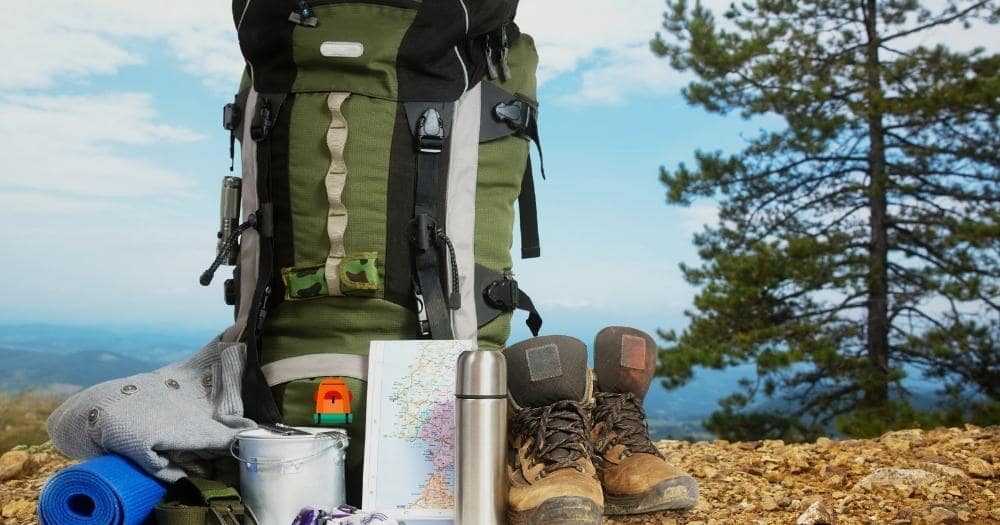
- Navigation – This translates into having a compass with a map. While climbing a mountain encompassed by a foreign land, a compass can prove to be a better guide than your GPS. You’re off the grid; since Google hasn’t come up with a way to personify its maps literally, you’ll have to go old school. It’s time you get acquainted with a magnetic compass to deflect yourself from unknown territories.
- First Aid Kit – This is very important since injuries can occur in the wild at any point in time. Make sure it is light and has band-aids, ointments, aspirin, tweezers, and any medications you may need.
Also, it is imperative to have someone trained in first aid and to lay out a course of action for handling severe health conditions.”
Furthermore, remember that minor cuts can scale up to infection because of the open wound’s exposure to the rough weather and bacteria. So, you need to treat injuries as quickly as possible.”
- Repair Kit and Tools – It is always handy to have a knife as it will be a big help with hiking gear repair, food preparation, and the first aid kit. Also, a gear repair kit should be included in your backpack in case of mishaps or gear malfunction. For instance, the repair kit could consist of but is not limited to duct tape, zip ties, and main parts for the water filter system, to only name a few.
- Nutrition – Energy is essential when it comes to hiking. As useful as solar energy can be, we’re sure you aren’t made of aluminum to capture it! Hence, the only way for you to charge yourself is via healthy food.
You need to have food that can still be good if it endures adverse weather (such as getting soaking wet). To do this, you need sealable bags (Ziplocs are great) and have foods such as nuts, dried fruit, and hard vegetables.”
If you decide to bring meat, you need to always keep it cool with ice and have a cooler in your backpack.”
- Hydration – You need a lot of fluids, especially water, on your trip, just in case of an emergency. Store it in the side pockets of your backpack so you can quickly get it. If you think you are going to be gone for a while, try to buy a portable water system that can filter rainwater; that way, you will never run out.
- Fire – We’re not randomly naming the elements, don’t worry. You need to carry something which can generate heat energy without electricity. So, you should have a lighter, matches, or anything that can ignite a fire quickly.
Wood is present in abundance in the forest, but it may be a good idea to pack things like cotton balls dipped in petroleum jelly in a Ziploc bag or some firesticks, etc.”
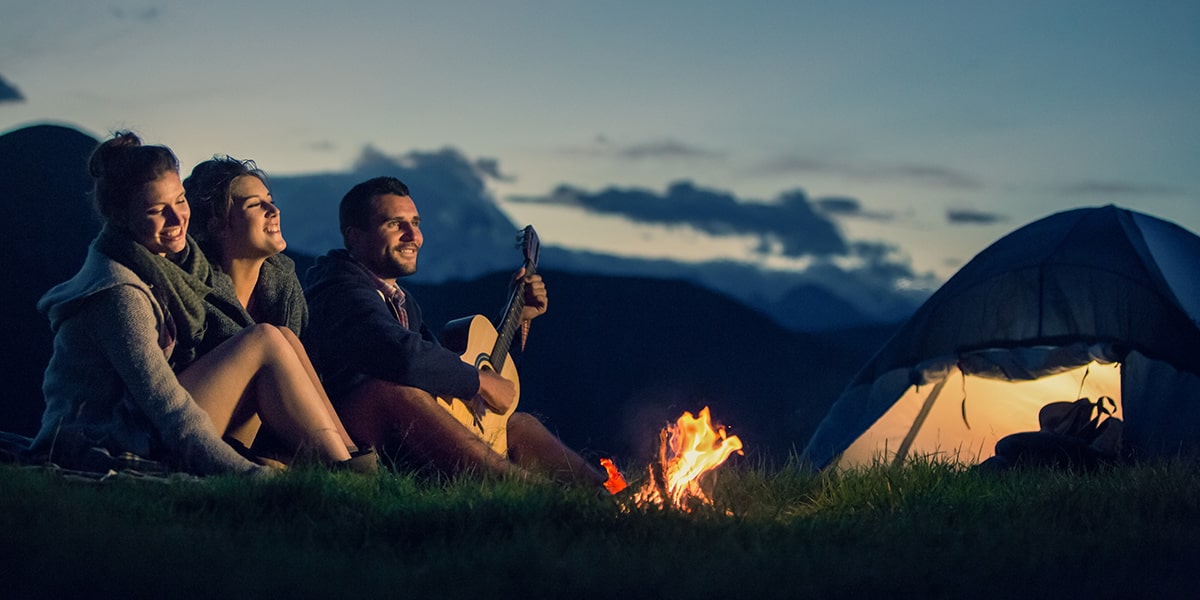
- Illumination – If you are planning to hike overnight, or even just at night, bring a flashlight or a headlamp; this will help you find your way in the night. Also, having your phone will allow you to use its flashlight.
- Insulation – Weather forecasting is not an exact science! So, you should pack a raincoat along with extra clothing and dress up in layers to adjust to the various weather conditions.
- Shelter – You need some form of shelter. When going hiking (depending on how long you are going to be gone), bring the gear that you would usually take for camping.
This includes all your basic necessities such as a tent, sleeping bag, a cooking pot that is lightweight, utensils, and, most importantly, bug repellent. There are bugs where you are going to be hiking, and it is so vital that you have a spray so you can be comfortable.”
- Sun Protection – As much as bug repellent is vital, it is equally important to protect yourself from the harmful UV-Rays by bringing your sunglasses, sunscreen, and sun-protective clothing.
A 21st Century Essential
I would add an eleventh essential item to the list above: a cell phone. It would be best if you took a cell phone hiking in case of emergencies. Keep it tucked away in your backpack, and don’t forget to bring a portable charging system to charge it while hiking.
Pack all of the above, and according to your needs, that’s it! You’re all set for the adventure. There are a few items that can vary depending on the terrain and the location of your hiking trip, but the above list should be included in every hiker’s backpack. Get set, hike, have fun, and remember, stay safe!

Wow, these is all essential tools to carry along while hiking and I can’t agree less with every single pick in the list. I doubt if there’s anything you left out. I’m also planning on a little bit of hiking this summer with my girlfriend so I feel all you have written here will be of great help to me so I won’t forget anything
I think that what I listed in this post is at the very least, the basics essentials that you should pack for any outdoor adventure.
Then, depending on where you are going and for how long you should add the appropriate paraphernalia for your journey. But beware of overpacking your backpack as you will have to carry the load!
Great post!
It reminds me of when I went to Wales with some friends and stayed on a campsite for 4 days. It was fun, I tell you. We went by car and had 2 tents between us. Though I am not good at rigging up a tent, I carried enough food to last for 4 days. Kefir included. We dined quite sumptuously on the chicken soup that I made from scratch with chicken wings.
We were in Wales for 14 days and spent the rest of the time in a friends house, but I will always remember the fun we had at the camp.
As for expeditions, I would need to up my fitness levels as I lead a more sedentary life now. But I am always up for packing a bag. You are right – adequate water supply is a given.
Without it, we won’t last very long!
Thanks for sharing your adventure! It sounds like you had a great time!
You are right; it’s paramount to have plenty of drinkable water for any hiking adventure. Moreover, if you are planning an extended hiking trip (longer than 3-4 days), you should consider packing a portable water system to filter the rainwater. By doing so, you won’t have to carry the extra weight of water bottles in your hiking backpack and lessen the chances of you hurting your back!