What Are the Best Water Bottles for Hiking? A Hype-Free Guide

Affiliate Disclosure: I believe in honest, trail-tested gear reviews. When you purchase through links on my site, I may earn a small commission that helps keep Best Trail Backpacks running, at absolutely no extra cost to you. As an Amazon Associate, I earn from qualifying purchases.
You grabbed your pack, laced up your boots, and drove forty minutes to the trailhead. Somewhere around mile two, you reached for your water bottle and got a mouthful of lukewarm, vaguely chemical-tasting liquid. The bottle had been rattling loose in your side pocket, the lid was barely closed, and the straw smelled like a gym bag.
That is not a hydration problem. That is a wrong-bottle problem.
Choosing the best water bottle for hiking is less obvious than it sounds. The options range from featherweight collapsibles to heavy-duty purifiers. The one sitting on your kitchen counter right now may not be the right tool for the trail.
This roundup covers five bottles across very different use cases. We break down the specs so you can find the one that fits how you actually hike, rather than just the one with the most internet hype.
TL;DR: Best Water Bottles for Hiking
Need the short version first? Here are our five top picks at a glance.
| Bottle | Best For | Key Strength | Main Tradeoff | Price |
| Hydro Flask 32oz Wide Flex Straw Cap | Day hikes, everyday carry | Cold retention up to 24 hrs | Leaks if tipped, straw needs cleaning | $$ |
| Nalgene Sustain 32oz | Simple, durable everyday use | Near indestructible, eco-conscious | Wide mouth hard to sip on the move | $ |
| HydraPak Flux (750ml–1.5L) | Ultralight / multi-day backpacking | Collapses to pocket-size | Persistent plastic taste | $ |
| LifeStraw Go Series | Travel, questionable water sources | Dual-filter purification built-in | Harder to drink through, heavier | $$ |
| GRAYL GeoPress 24oz | International travel, backcountry | Removes viruses + bacteria | Press action tires some users | $$ |
(Price guide: $ = under $100 | $$= $100 to $249 |$$$= $250 and above)
How to Choose a Hiking Water Bottle
Before you get lost comparing ounces and insulation ratings, ask a simpler question: what kind of hiker are you on a typical outing? A two-hour morning walk with a packed lunch is a different world from a three-day backcountry trip.
If you want a deeper dive into the exact materials and science behind hydration gear, check out our comprehensive post: What to Look For in a Water Bottle.
Here are the four things worth thinking through before you buy.
Sip vs. Gulp: How Do You Actually Drink?
Some people take frequent, small sips. Others chug half a liter without thinking about it. If you are a sipper, a flip straw lid or bite valve lets you drink without breaking your stride. If you are a gulper, a wide-mouth bottle keeps up with you.
The catch: wide mouths are much harder to drink from while moving without spilling. Straw lids are faster in motion but require dedicated cleaning to remain mold-free.
Weight vs. Temperature Control
Stainless steel insulated bottles keep drinks cold all day. They also weigh more, which matters when you are already carrying a loaded pack. A 32oz insulated bottle can run close to a pound empty.
Plastic and collapsible options weigh far less but offer little to no temperature control. If your trail is shadeless and long, cold water makes a real difference in your comfort. If your hike is a short walk through shaded woods, temperature control is secondary to weight.
Cupholder Fit: A Small Detail That Matters
Many wide-mouth bottles and oversized containers do not fit standard car cupholders. If you drive to the trailhead, easy access to your water before and after the hike matters more than you might realize.
The LifeStraw Go 18oz and the GRAYL GeoPress are designed to fit most cupholders. The Nalgene 32oz does not reliably fit, and user feedback on the Hydro Flask 32oz is mixed, depending on the vehicle.
Pack Compatibility: Side Pocket vs. Main Compartment
Most backpacks route water bottles into a stretchy side mesh pocket. These pockets work best with slim, upright containers in the 750ml to 32oz range. The GRAYL GeoPress, at 3.4 inches in diameter, is too wide for many standard backpack side pockets.
If a bottle won’t fit the side pocket, you will have to store it in the main compartment. This means digging past your snacks every time you need a drink. Collapsible bottles neatly solve this problem by shrinking down to fit in a jacket or hip-belt pocket once empty.
Field Note: If you carry a hydration reservoir for drinking and a separate bottle for camp use or filter backup, prioritize the backup bottle by weight, not capacity. A lighter, collapsible 1L option costs you almost nothing on the trail and provides ultimate flexibility.
The Five Best Hiking Water Bottles: Honest Reviews
Each bottle below was evaluated on real-world usability, carry comfort, and user consensus. No inflated ratings, just clear insights into who each bottle genuinely suits best.
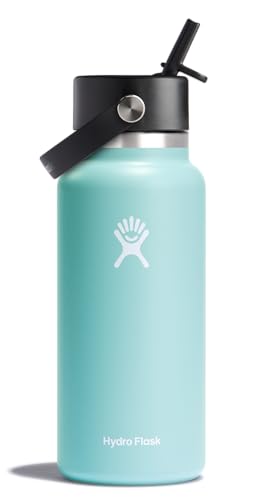
1. The Cold-Water Champion: Hydro Flask 32oz Wide Flex Straw Cap
Key Specs:
- Capacity: 32 oz
- Material: 18/8 Pro-Grade Stainless Steel
- Insulation: Double-wall vacuum (TempShield)
- Lid Type: Flex Straw Cap

Pros
Keeps water ice-cold for up to 24 hours.
One-handed flip straw is incredibly convenient on the move.
Rounded edge on the newer mouthpiece design is highly comfortable.
Cons
Straw assembly requires diligent cleaning to prevent mold.
Can leak if tossed sideways into a bag with the cap improperly seated.
Too wide for many standard car cupholders.
Field Note: After washing, let the straw and cap air-dry completely before reassembling. A damp straw sealed into a closed cap is how mold takes up residence. A thin straw brush is a mandatory piece of the maintenance kit for this lid.
The Expert Take: When you are out on an exposed trail with no shade in sight, the psychological boost of ice-cold water is very real. From a gear perspective, the slight weight penalty of an insulated stainless steel bottle is almost always worth it if it encourages you to actually stay hydrated when temperatures peak.
The Verdict: The Hydro Flask 32oz with the Flex Straw Cap is the most recognizable insulated hiking bottle on the market for a reason. On hot days, the ability to flip the straw open with one hand and drink ice-cold water without breaking stride is not a minor comfort; it is a game-changer.
2. The Dependable Classic: Nalgene Sustain 32oz Wide Mouth
Key Specs:
- Capacity: 32 oz
- Material: Tritan Renew (50% recycled content)
- Insulation: None
- Lid Type: Attached wide-mouth screw cap

Pros
Virtually indestructible and highly drop-resistant.
Wide mouth makes filling from streams and cleaning effortless.
Eco-conscious build using 50% certified recycled material.
Cons
Wide opening is awkward for drinking while walking.
Zero temperature retention; water warms up quickly.
Will not fit standard car cupholders.
Field Note: The Nalgene’s wide mouth is genuinely useful at camp or at a water source. On a moving trail, add a splash-guard or a sport cap (sold separately) to make sipping easier without stopping. It is a low-cost upgrade that completely changes the usability profile.
The Expert Take: For beginners building their gear closet, a Nalgene is the lowest-risk investment you can make. It forces you to rely on a proven, fail-safe tool without getting bogged down in hydration bladders or complicated bite valves. It just works, every single time.
The Verdict: There is something reassuring about a product that has been trusted by hikers for decades. The Nalgene Sustain does not need to be flashy. It is a rugged, low-cost plastic bottle that handles knocks, drops, and rough trail conditions without a single complaint.
3. The Space-Saving Specialist: HydraPak Flux
[IMAGE PLACEHOLDER: Collapsible soft water bottle compressed flat in a hiker’s open palm, full loaded backpack visible in background. Aspect Ratio: 1:1]
Key Specs:
- Capacity: Available in 750ml, 1L, and 1.5L
- Material: Dual-layer TPU film with RF-welded seams
- Insulation: None
- Lid Type: Twist-to-drink nozzle

Pros
Compresses down to the size of a pocket when empty.
Compatible with most 42mm backcountry water filters.
Stands upright on its own when filled.
Cons
Persistent plastic taste, especially during early use.
Some users report pinhole leaks developing at the seams over time.
Soft sides offer no resistance when squeezing to drink.
Field Note: If plastic taste bothers you, try filling the bottle with a water-and-baking-soda solution (one teaspoon per liter) and letting it sit overnight before your first real use. This heavily reduces the off-taste straight out of the box.
The Expert Take: Collapsible hydration is a massive organizational advantage, particularly on multi-day treks. The ability to shrink your water storage as you consume it keeps your pack’s center of gravity stable and frees up valuable internal volume for other essentials.
The Verdict: If every gram in your pack is a calculated decision, the HydraPak Flux exists specifically for you. It solves the annoying problem of carrying an empty, bulky bottle on the hike back to the car. Because it is filter-compatible, it perfectly doubles as a backcountry water collection vessel.
4. The Peace-of-Mind Pick: LifeStraw Go Series
[IMAGE PLACEHOLDER: Insulated stainless steel water filter bottle positioned beside a clear mountain stream, rocky terrain. Aspect Ratio: 16:9]
Key Specs:
- Capacity: Available in 18oz, 22oz, and 1L
- Material: BPA-Free Plastic or Insulated Stainless Steel
- Filtration: 2-stage (Microfilter + Carbon)
- Lid Type: Flip straw with built-in filtration

Pros
Removes99.999999% of bacteria and 99.999% of parasites.
Carbon filter vastly improves the taste of tap or trail water.
Slim profile fits most car cupholders and backpack side pockets.
Cons
Requires noticeably more suction effort to pull water through the filter.
Heavier than standard bottles due to the internal filter housing.
Carbon filters require semi-regular replacement.
Field Note: The LifeStraw Go works best as your primary bottle rather than a backup. The filter’s effectiveness and flow rate depend on regular use and proper rinsing. Letting the filter sit out and dry with stale water inside is how it degrades the fastest.
The Expert Take: Water anxiety is a real barrier for many hikers exploring new areas. A built-in filter shifts your mindset; suddenly, every flowing stream is a reliable rest stop rather than a question mark. The slight increase in drinking effort is a small price to pay for that level of confidence.
The Verdict: If you travel internationally or want to drink from natural sources without pulling out a separate pump, the LifeStraw Go addresses a very specific anxiety. It transforms sketchy hotel tap water or backcountry streams into clean, great-tasting hydration without the use of chemical drops.
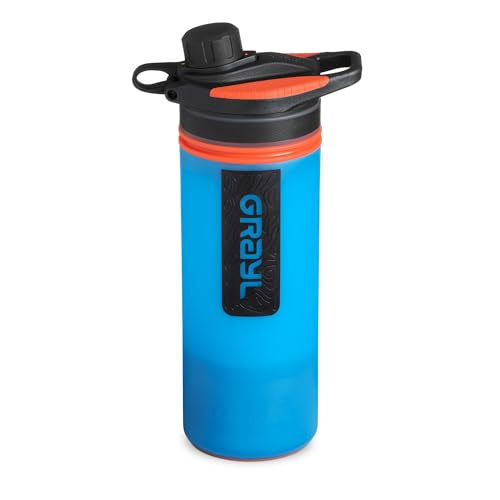
5. The Best-in-Class Purifier: GRAYL GeoPress 24oz
[IMAGE PLACEHOLDER: Outdoor adventurer pressing down the inner cylinder of a GRAYL GeoPress water purifier bottle, river visible in the background. Aspect Ratio: 16:9]
Key Specs:
- Capacity: 24 oz
- Material: BPA-Free ABS plastic and food-grade silicone
- Purification: Press-to-purify electroadsorption cartridge
- Lid Type: SimpleVent Drink Cap
Pros
Removes viruses, bacteria, and protozoa in roughly 8 seconds.
No pumping, batteries, or chemical aftertaste.
Incredibly durable and drop-resistant.
Cons
Pressing action requires upper-body strength and can be tiring.
3.4-inch diameter is too wide for standard pack side pockets.
Cartridges are somewhat expensive to replace.
Field Note: If you are purifying water to fill a secondary reservoir, the GeoPress works best when set on a flat, stable surface. On the trail, plan your fill stops at flat ground near the water source to give yourself leverage and make the pressing action easier.
The Expert Take: While most North American backcountry streams primarily pose protozoan risks like Giardia, official CDC guidelines emphasize that virus protection is crucial for international travel or areas with poor sanitation. If your adventures take you across borders, the GeoPress transitions from a ‘nice-to-have’ to an absolute non-negotiable piece of safety kit.
The Verdict: The GeoPress is not simply a filtered bottle; it is a full-scale water purifier. One simple press gives you 24oz of clean water without waiting for tablets to work or sucking aggressively through a straw. It is the gold standard for global travel and austere environments.
Head-to-Head: Which Bottle Fits Your Style of Hiking?
Picking the right bottle is simply about matching the tool to the environment. Here is a quick orientation based on common trail scenarios:
| If you are… | Consider… |
| A daily hiker who wants cold water and easy sipping | Hydro Flask 32oz Flex Straw Cap |
| Budget-conscious and just need a tough, simple bottle | Nalgene Sustain 32oz |
| A backpacker who counts every gram and filters trail water | HydraPak Flux |
| A traveler or camper near uncertain water sources | LifeStraw Go Series |
| Heading somewhere with real water safety concerns | GRAYL GeoPress 24oz |
The Honest Verdict
If you could only own one bottle for general day hiking in North America, the Hydro Flask 32oz Flex Straw Cap is the most versatile choice. You get cold water on demand, effortless one-handed drinking, and a build quality that holds up over years of use. Just remember to clean the straw.
If budget is your primary constraint, the Nalgene Sustain holds its own. It isn’t flashy, and that is exactly the point. It is a fail-safe piece of gear.
For backpackers concerned with weight and pack volume, the HydraPak Flux easily earns its place. The initial plastic taste is a valid consideration, but there is nothing else in this price range that collapses that small and packs that well.
Finally, for travel or environments where water quality is a gamble, the LifeStraw Go and the GRAYL GeoPress serve different ends of the spectrum. The LifeStraw integrates filtration quietly into a standard bottle experience, while the GeoPress offers comprehensive, top-tier pathogen coverage for the most rugged adventures.
Your Turn
Have you been burned by a leaking bottle in your pack? Or have you finally found the one piece of hydration gear you reach for every single time? Share what you are hiking with and whether it is actually working for you. The comments are open!


I would like to buy a bottle, not for hiking but for the office or work activities outside the office. I really appreciate this article which presents the best water bottles for hiking.
I didn’t know that all water bottles came with a water purification system. I think that the one that I use now doesn’t have it.
Well, not all water bottles are created equal… If you need a water bottle for everyday use, your best option is the LARQ water bottle, which comes with a purification system and sleek design. However, it is the most expensive of the five.
If you are going to use it for work purposes, you might not need to have a purification system since drinkable water is treated to remove bio-contaminants. In that case, a water bottle such as the Hydro Flask or the Life Straw Go water bottle are both great options.
I hope it helps. If you need further assistance, let me know below.
Hello,
After reading your interesting article, I started thinking I need to have a water bottle with a filter. You gave me a few options on what kind of bottles are best to use, and I appreciate that. I was using the regular bottle, but I was in a struggle with cleaning inside the bottle. As soon I clean the bottle, it becomes dirty inside again. I became tired of buying the new bottles again and again…
I like the LARQ water bottle most because it cleans itself. Also, I like Lifestraw Go Filter Bottle, but I’m not too fond of the straw Idea. It needs to be cleaned somehow inside.
Excellent post, useful suggestions on the water bottle.
Thank you, your post came on-time spring is around the corner.
I wouldn’t say I like cleaning water bottles also. I find it to be a tedious chore because of the narrow opening that many of them have. It is very challenging to clean the bottle thoroughly.
I like the Hydro Flask Wide Mouth water bottle because it has a wide opening, making it easier to clean while on hiking trips. I also use the Hydro Flask bottle at home. However, I don’t bother to wash it manually. It goes into the dishwasher!
Thanks for sharing your thoughts.