Hiking Essentials for Beginners: What to Pack (and What to Leave Behind)
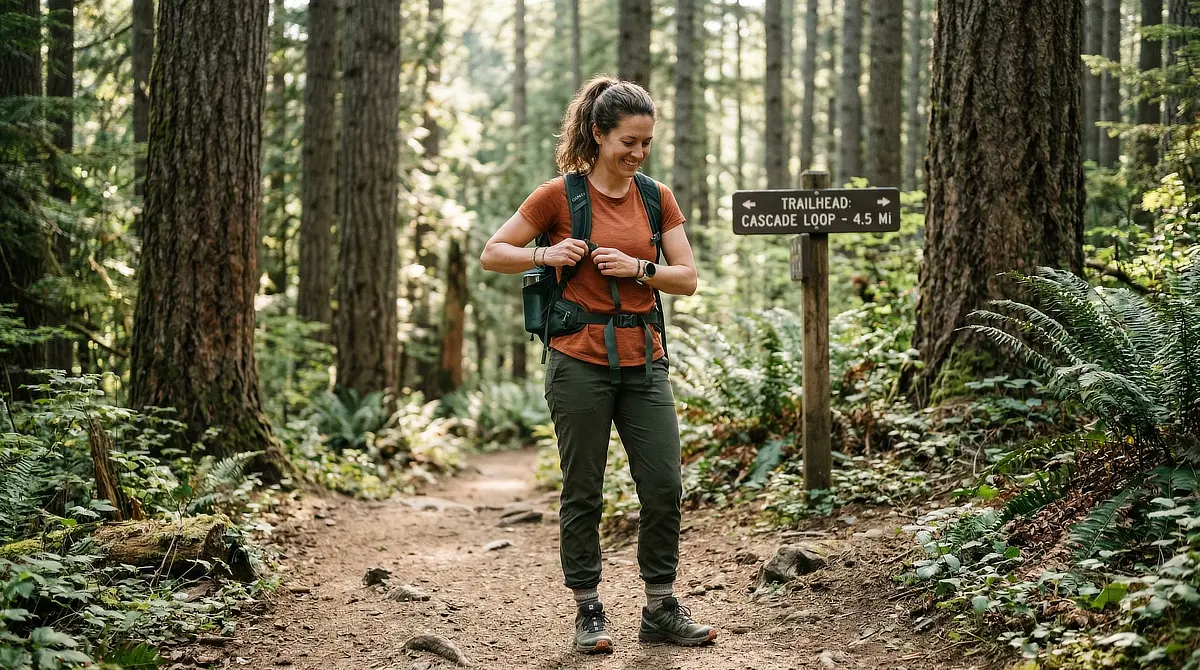
You are standing at the trailhead. The sign says 4.2 miles. Your bag is on your back.
Somewhere between your car and this moment, a small panic set in. Did you pack enough water? Too much water? Is that blister forming already, and you have not even started? Should you have worn different shoes?
That voice in your head running a last-minute inventory of everything you might have forgotten is one of the most common experiences in beginner hiking. The good news is that the list of actual hiking essentials for beginners is much shorter than most packing guides suggest.
Most of the overwhelm simply comes from trying to prepare for every scenario at once. This guide will help you figure out what genuinely matters for a day hike, what you can safely leave at home, and how to build a pack that feels light enough to actually enjoy the trail.
TL;DR: Hiking Essentials for Beginners
If you are in a hurry, here is the short breakdown of what you actually need for a standard day hike:
The “Core Three” Essential Gear: Backpack, Water, and Footwear
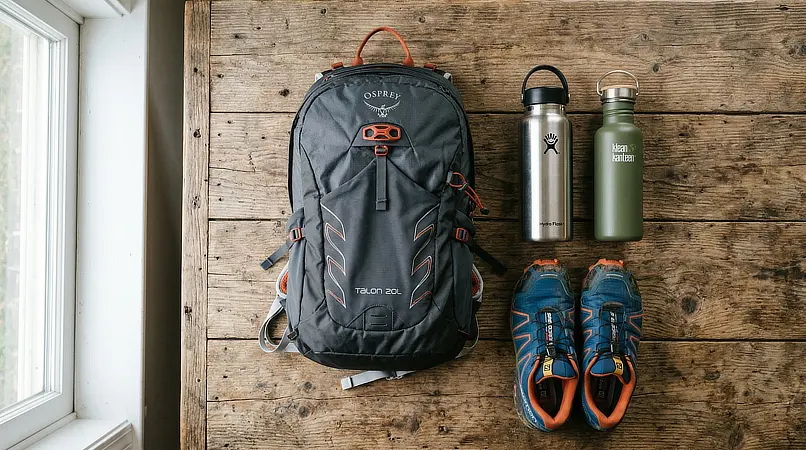
Before worrying about offline apps or emergency blankets, get the foundation right. Your daypack, your water supply, and your shoes do 90% of the work on any trail. Keep them simple, and you save yourself a lot of early frustration.
For most beginner day hikes, heavy, technical mountaineering gear is completely unnecessary.
Choosing the Right-Sized Daypack
A 15 to 25-liter daypack is the sweet spot for a day hike. Anything larger invites you to overpack and carry dead weight. Anything smaller turns into an awkward game of gear Tetris.
Look for wide, padded shoulder straps and a simple webbing hip belt to keep the load stable. Check the sternum strap buckle, too. Many modern hiking packs build a tiny emergency whistle right into the sternum strap clip.
Still looking for the right one? Check out our guide to the Best Daypacks for Beginners.
Managing Your Hiking Water Supply
A solid baseline is half a liter of water per hour of hiking on a moderate day. If you are climbing steep switchbacks or walking in summer heat, you may need closer to double that. Carrying two liters is a reasonable starting point for many standard half-day loops, as long as the weather, distance, and elevation gain are moderate.
Dehydration does not always start with a dry mouth. It usually sneaks up on you as a dull headache, sudden fatigue, or a general loss of focus.
Field Note: If you are using a hydration reservoir, practice filling it and threading the hose at home first. Discovering a leak or a twisted tube at the trailhead is a stressful way to start your morning.
The Importance of Broken-In Footwear
You do not need heavy, stiff leather boots for a local trail. Lightweight hiking shoes or trail runners offer excellent traction and let your feet move naturally, saving your energy over long miles.
The style matters far less than the fit. Whatever you wear must be thoroughly broken in before you reach the trailhead. Wearing brand-new shoes straight out of the box is the most reliable way to end your hike early in pain.
Trail Story: Many beginners have had some version of this moment: a massive pack, three extra layers, heavy food, and a flashlight big enough for a power outage, all for a simple loop. By mile two, the shoulders start complaining. Packing your fears is a normal beginner habit, but keeping the load simple changes how much of the trail you actually get to enjoy.
Best Hiking Clothes for Beginners: Why You Should Ditch Cotton
Cotton is comfortable for lounging, but on a trail, it is a liability. It acts like a sponge, soaking up sweat and holding onto it. Once damp, cotton stops insulating, leaving you shivering the moment a breeze picks up or the trail climbs into the shade.
Synthetic fabrics (like polyester and nylon) or merino wool are different. They pull sweat away from your skin and dry quickly as you move, helping your body regulate its temperature naturally.
How to Use the 3-Layer System
- Base Layer: The shirt closest to your skin. Its job is moisture management, not warmth. Stick to lightweight polyester or merino wool.
- Mid-Layer: A light fleece or grid pullover that traps warm air. On a hot day, this stays in your pack. On a breezy ridge, it goes on immediately.
- Outer Layer (Shell): A packable jacket that blocks wind and rain. You do not need a commercial-grade mountaineering shell for a day hike. You just need a simple, lightweight layer to stop wind chill and light precipitation.
The weather at the trailhead is rarely the weather you will find two miles in, especially as you climb. For a complete breakdown of how to choose the right fabrics and stay comfortable, check out our guide on Hiking Layers Explained for Beginners.
Classic Layering Combo: A practical, highly effective setup for a crisp morning hike that turns into a warm afternoon includes a lightweight merino wool t-shirt, a breathable grid-fleece pullover, and a highly packable wind shell. The wind shell is easy to pack away once you warm up on the first incline, but having it on keeps the initial chill from cutting your hike short.
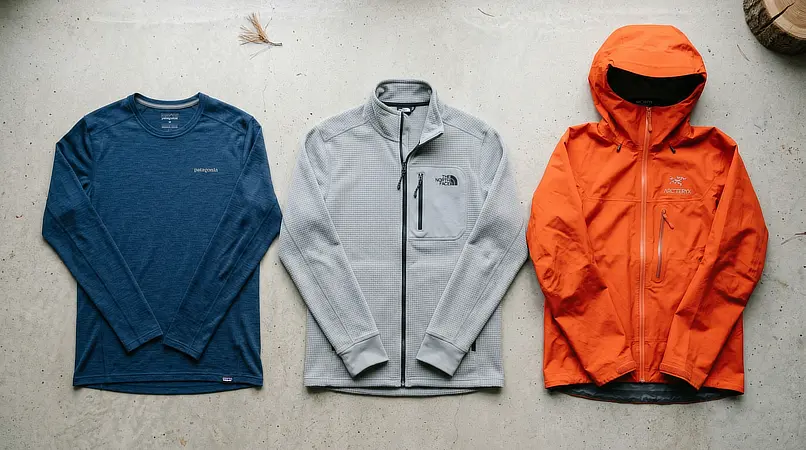
Field Note: Your rain shell does not need to cost a fortune to be functional. A basic packable wind or rain jacket from a reliable brand will do the job for most beginner day hikes. Save the premium waterproof investments for when you are regularly tackling high-elevation routes in heavy weather.
Navigation and Power: Essential Safety Tools for the Trail
Using your smartphone for trail navigation is perfectly fine, but relying on a live cellular connection is not. Trailheads are notorious for poor reception, and once you dip into a valley or climb behind a ridge, your signal will likely drop completely.
Before leaving home, download your route for offline use. Apps like AllTrails, Gaia GPS, or Komoot make this simple. It takes two minutes and removes the sudden panic of realizing your map will not load when you reach a trail junction.
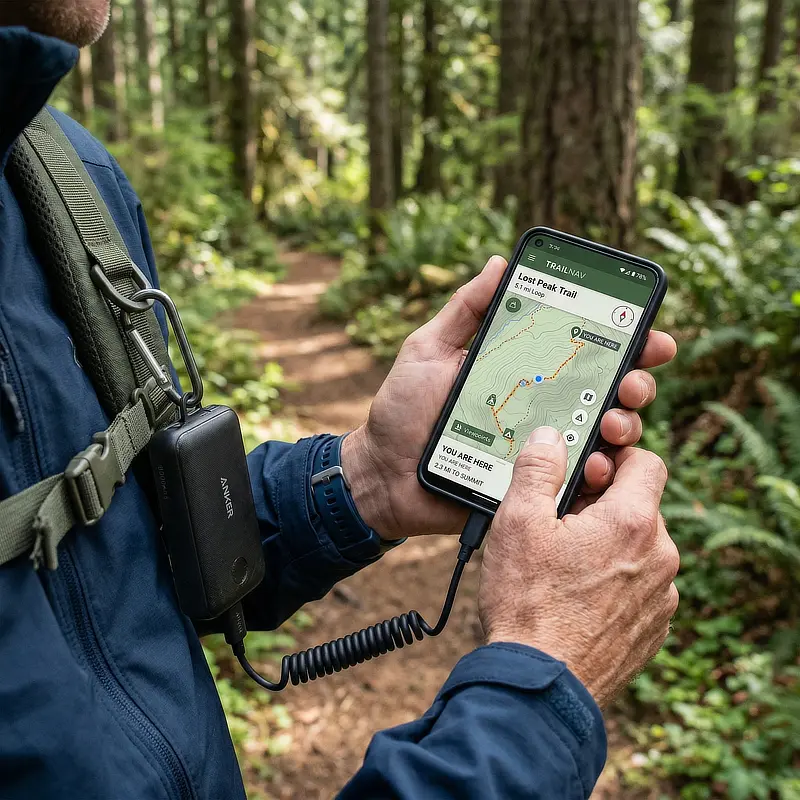
To keep that digital map running, tuck a small power bank (5,000 to 10,000 mAh) into your pack. It adds minimal weight and ensures your phone remains functional for navigation and emergency calls.
Always pack a dedicated headlamp, too. You do not pack it because you plan to hike in the dark; you pack it because plans change. A sprained ankle or a wrong turn can easily stretch a four-hour afternoon walk into the dusk. A headlamp keeps your hands free and preserves your phone battery when you need it most.
Pro Tip: Always text a friend or family member your trailhead location and expected return time before you lose cell service. It costs nothing, takes up no pack space, and is the most important safety step you can take.
Field Note: Practice downloading offline maps before you leave cell service. Turn your phone to airplane mode at home and confirm the map loads properly. GPS works independently of cell towers, but only if the map data is cached to your device beforehand.
The Beginner Hiking First Aid and Safety Kit
You do not need a heavy, expedition-grade medical kit for a local day hike. A simple, quart-sized freezer bag packed with a few targeted basics is more than enough to handle common trail issues.
Your trail mini-kit should include:
- Blister tape or moleskin patches
- A few standard adhesive bandages
- Tweezers for splinters or ticks
- Pain relievers you can safely use, such as ibuprofen or acetaminophen, kept in their original travel-sized blister pack or a clearly labeled bottle
- Travel-size sunscreen
- A lightweight emergency space blanket (mylar blanket)
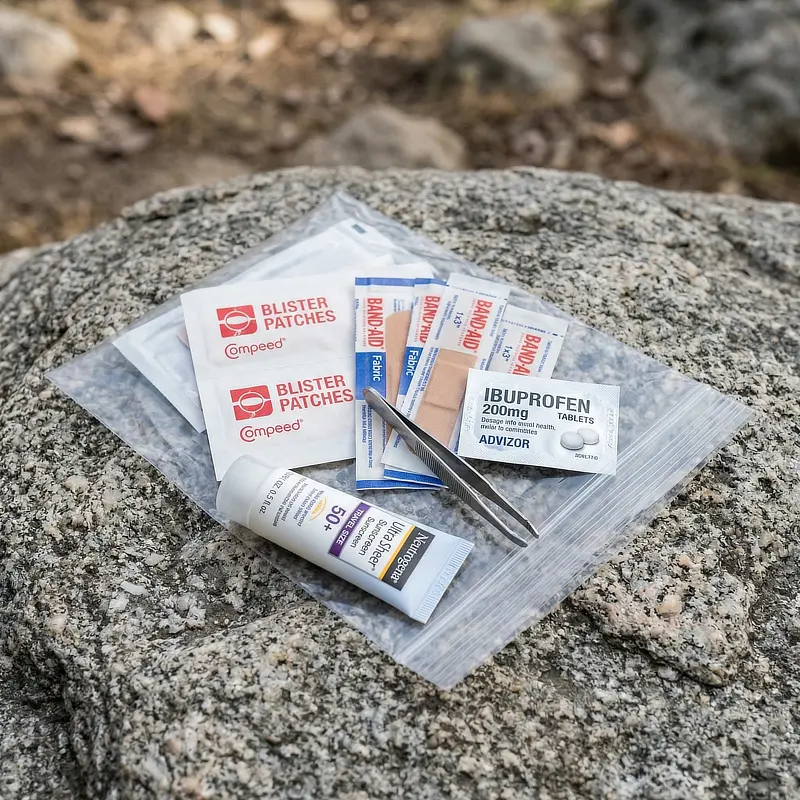
Do not carry loose, unmarked pills in a ziplock bag. They are easy to mix up, and trail moisture can damage them.
The blister supplies are your most critical items. Blisters form from friction and moisture. They start as a “hot spot” (a warm, slightly tender area on your foot). If you stop immediately and cover that spot with blister tape, you can keep hiking in comfort. If you try to push through it, you will be limping back to your car.
Trail Story: Stopping to deal with a hot spot is a small blow to your pride, but ignoring it is worse. Applying blister tape the moment you feel a rub is the difference between completing the loop comfortably and limping back to your car. The trail does not care about your ego; it cares about your feet.
Essential Sun and Tick Protection
- Sunscreen: Apply this before you leave, but carry a travel-sized tube to reapply on the trail. UV exposure increases significantly with elevation, even on cloudy days. For exact SPF and reapplication timing, follow the skin protection guidelines from the American Academy of Dermatology (AAD).
- Sunglasses and a Wide-Brimmed Hat: These keep your face cool and protect your eyes from intense glare, which is especially severe when walking near water or snow.
- Tick Awareness: In wooded or grassy areas, ticks are a real concern. Wear light-colored clothing to make them easier to spot, and perform a thorough check on your clothes and skin immediately after your hike. For tick-heavy areas, look for an EPA-registered repellent with an active ingredient such as picaridin or DEET, and follow the label directions carefully. Reviewing the CDC’s official tick prevention guidance before your trail season starts is highly recommended.
Field Note: Wool or synthetic-blend socks are worth the investment even in summer. They reduce friction against the heel and ball of the foot, which are the primary hot spots for blister formation.
Additional Hiking Gear: Nice-to-Haves for a Better Experience
Once your safety and comfort basics are locked in, a few small additions can elevate your entire experience on the trail:
- A Foam Sit-Pad: These are cheap, weigh next to nothing, and strap to the outside of your daypack. They turn cold, damp rocks or muddy logs into a dry, comfortable seat at your lunch spot.
- A Small Thermos: Sipping warm coffee, tea, or broth at a windy viewpoint turns a quick rest stop into a memorable highlight.
- A Small Trash Bag: Trail etiquette means packing out everything you bring in, including food wrappers, apple cores, and banana peels (which can take years to decompose in cold climates). We highly recommend reading our full guide, Leave No Trace for Beginners, before your first outing.
- Trekking Poles: While not strictly necessary on flat terrain, they are incredibly helpful for taking the pressure off your knees during steep descents and maintaining balance on uneven trails.
Field Note: Dealing with waste on the trail is one of those topics beginners are often too polite to ask about, but it is a critical skill. Packing out used toilet paper in a secure, opaque ziplock bag wrapped in duct tape keeps your pack clean and respects the trail. It is a simple habit that instantly marks you as an experienced, responsible hiker.
The Most Common Beginner Packing Mistakes to Avoid
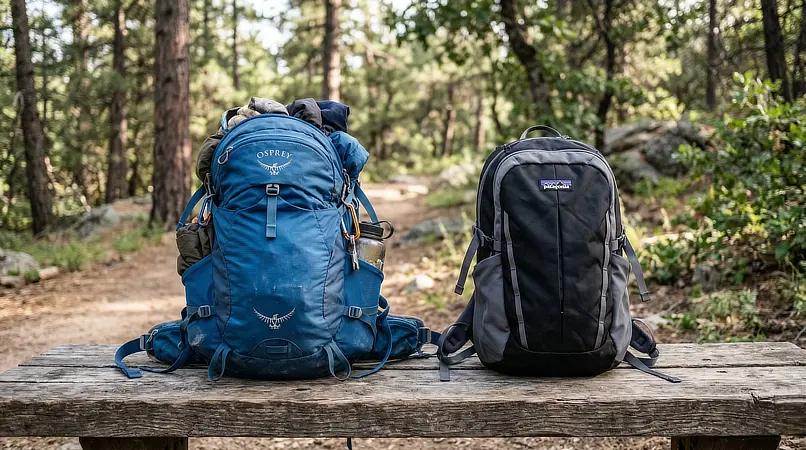
The fastest way to ruin a good day on the trail is to overpack out of anxiety. Here are the most common mistakes beginners make, and how to avoid them:
- Packing Your Fears: Carrying three backup pairs of socks, heavy canned goods, or massive tools for a short afternoon walk. Pack for the specific route and weather you are facing, not a hypothetical survival movie.
- Wearing Brand-New Shoes: Brand-new trail runners or boots have stiff spots that only show up after a mile or two. Wear them around the house, on neighborhood walks, or to the grocery store before trusting them on dirt.
- Relying on a Phone Flashlight: They have a wide, weak beam that drains your battery. A real headlamp throws light far down the trail, keeps your hands free if you stumble, and leaves your phone charged for navigation.
- Skipping Snacks: Even a short walk burns significant calories. Keep your energy and mood high with simple, calorie-dense options like trail mix, energy bars, or dried fruit.
- Overpacking the First Aid Kit: Leave the full-sized splints and heavy trauma bandages at home. Focus on blister care, simple cuts, and basic anti-inflammatories.
Field Note: Pick up your fully loaded pack before you leave. If the weight surprises you, open it up and remove the non-essential gear. A properly packed daypack for a half-day hike rarely needs to exceed six to ten pounds.
Trail Tips in Your Inbox: Want gear guides and beginner advice without the fluff or the overwhelm? Sign up for our newsletter, Get Trail Notes, to get our best practical trail tips and gear insights delivered straight to your inbox.
You Already Have More Hiking Gear Than You Think
The trailhead panic is real, but it rarely means you have forgotten something critical. More often, it means you have packed more than you need, and the sheer weight of your bag is making you second-guess the entire outing.
Start with the foundation: a properly sized pack, enough water, and broken-in footwear. Layer up with synthetic or wool clothing, pack a small ziplock safety kit, and download your maps before you lose cell service.
That is it. That is your complete, trail-ready daypack.
The rest comes with experience. You will quickly learn whether you prefer almonds over energy bars, or if you actually use that foam sit-pad at your rest stops. The goal for your first few outings is not to have a flawless, ultralight setup. It is to get outside, build your confidence, and let the trail teach you what genuinely belongs in your pack.
Join the Conversation: What is the one luxury item you always carry on a hike, even if it is not strictly necessary? Drop it in the comments below, we would love to hear what keeps you comfortable on the trail!
Founder & Gear Research Editor

Sonia Zannoni
I’m Sonia, the founder of Best Trail Backpacks. I don’t test gear myself. For every pack I cover, I read the manufacturer’s specs and sizing charts and look for what owners report again and again.
Fit comes first, because a pack that doesn’t match your torso and hips will hurt no matter what it cost. My goal is to help you choose a pack that suits your body, your trip and your budget.
About the Founder