

Hiking Layers Explained for Beginners (Without the Gear Jargon)
Affiliate Disclosure: I believe in honest, trail-tested gear reviews. When you purchase through links on my site, I may earn a small commission that helps keep Best Trail Backpacks running, at absolutely no extra cost to you. As an Amazon Associate, I earn from qualifying purchases.
Picture this: you show up to the trailhead in the bulkiest coat you own because it feels chilly at 7 a.m. By the time you hit the first real climb, you are sweating through your shirt, and your face is red. At the top, you finally peel the coat off, only to have the wind cut straight through you because now you are soaked underneath.
That moment is where most beginners learn what hiking layers explained for beginners really means. It is not a slick gear list. It is not a complicated packing chart. It is just the simple, uncomfortable truth that one big coat has exactly one setting, and the trail has many.
TL;DR: Hiking Layers Explained for Beginners.
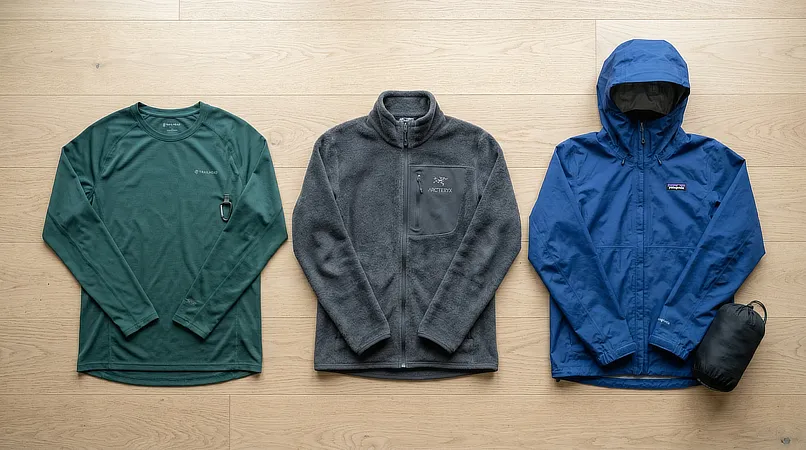
The layering system is a modular approach that uses three lighter pieces of clothing instead of one heavy coat. A base layer pulls sweat away from your skin. A mid-layer traps your body heat. An outer shell blocks wind and rain. Start your hike slightly cold, adjust your layers frequently, and never wear cotton.
Layering fixes temperature swings on the trail. It is a modular approach where you carry three lighter pieces instead of one heavy one, and you adjust as your body temperature changes. That is the whole system. The rest are just details, and I will walk you through them all so you can hit the trail with confidence.
Trail Story: I learned the importance of layering the hard way during an early-spring hike. I wore my favorite thick cotton hoodie because it was freezing in the parking lot. Halfway up the climb, I was drenched in sweat. When I finally stopped to rest, the mountain breeze hit that wet cotton, and I spent the rest of the day shivering. I bought my first proper base layer the very next day.
The Essential 3-Layer System for New Hikers
Layer
Job
What to Look For
Base Layer
Pull sweat away from your skin
Synthetic athletic shirts or merino wool; absolutely no cotton
Mid-Layer
Trap your body heat
Lightweight fleece for moving; packable puffy jacket for resting
Outer Shell
Block wind and rain
Simple packable rain jacket or lightweight windbreaker
Base Layer
Job: Pull sweat away from your skin
What to Look For: Synthetic athletic shirts or merino wool; absolutely no cotton
Mid-Layer
Job: Trap your body heat
What to Look For: Lightweight fleece for moving; packable puffy jacket for resting
Outer Shell
Job: Block wind and rain
What to Look For: Simple packable rain jacket or lightweight windbreaker
The golden rule of layering: Start cold. If you are perfectly warm and comfortable standing at the trailhead, you will be overheating before you reach the first switchback.
Why One Big Coat is a Beginner Hiking Mistake
Outdoor clothing works as a system, not a single solution. A massive winter coat traps too much heat when you are moving uphill. It gives you zero way to cool down, short of taking it entirely off in the middle of the trail. Lighter, separate pieces let you peel one layer at a time, which is the difference between a great hike and a sweaty, frustrated slog.
Your body temperature does not stay flat on a hike. You heat up on the climbs, cool down quickly on exposed ridgelines, and drop even further when you stop for a snack or a view. A single heavy jacket cannot adapt to any of that. It is either too hot or too cold, and usually both within the same hour.
The practical part that beginners often miss is that your backpack is your closet on the trail. When you take a layer off, you stuff it in your bag and keep moving. That only works if you have pieces light enough and small enough to actually fit. A big winter parka does not fold down to much, but a fleece and a packable rain jacket do.
Field Note: A shell jacket that you can compress into its own pocket is one of the most useful things you can own as a hiker. Not because bad weather is guaranteed, but because the option to pull it out in 30 seconds is genuinely reassuring and removes a lot of trail anxiety.
The Base Layer: How to Stay Dry on the Trail
Your base layer’s only job is to keep your skin dry. Not warm. Dry. That distinction matters much more than most beginners realize.
When you hike hard, you sweat. If that sweat sits against your skin and you slow down or stop, your body temperature drops fast. A good base layer wicks moisture away from your skin so it can evaporate rather than chill you.
Cotton does not do this. Cotton soaks up sweat, stays wet, and holds that cold against your body. That is where the old backcountry warning “cotton kills” comes from. It sounds dramatic, but on a cold, wet day, it is a very real risk. You do not need to spend a lot here, as reasonably priced athletic shirts already do the job perfectly.
Synthetic Base Layers: Affordable and Quick-Drying
Synthetic base layers, made from polyester or nylon blends, dry fast and cost less than wool. They are the practical starting point for most beginners. The one honest downside is that they hold odor after a few wears. On a day hike, that is a non-issue. On a multi-day trip, you will definitely notice.
Merino Wool: The Premium Odor-Resistant Choice
Merino wool is the premium upgrade option. It regulates temperature better across a wider range of conditions, resists odor naturally, and feels softer than most synthetics against bare skin. The trade-off is the price. A good merino base layer costs more upfront, but it earns its place quickly if you hike regularly.
Field Note: If you already own moisture-wicking athletic shirts from the gym, those will work brilliantly as a starting base layer. Save the expensive merino wool purchase for when you are sure hiking is a habit you are keeping.
The Mid-Layer: Your Personal Insulation
Think of your mid-layer as a wearable furnace. Its job is to catch the heat your body naturally generates and hold it close to your core so it does not escape into the cold air around you. Without a mid-layer, your outer shell has nothing warm to protect.
There are two main types of mid-layers, and they serve different moments on the trail.
Fleece: The Best Active Insulation
Fleece is an active insulation layer. It breathes well enough that you can wear it while moving without overheating quickly. It handles light moisture reasonably well, dries quickly, and compresses into a bag with little trouble. A simple fleece pullover or zip-up is the most versatile mid-layer most hikers own.
Puffy Jackets: Warmth for Rest Stops
Packable puffy jackets use down or synthetic fill for a different kind of warmth. They trap heat very efficiently, which makes them excellent for rest stops, lunch breaks, or cold summit moments. The catch is that they do not breathe as well as fleece, so wearing one while climbing hard usually leads to overheating. Think of the puffy as your “I just stopped moving” layer.
Trail Story: You do not need expensive, name-brand gear to stay warm. For my first two years on the trail, my go-to mid-layer was a basic, inexpensive fleece zip-up I found on clearance. It trapped heat perfectly, survived countless washes, and proved that having a reliable system matters far more than having a fancy logo.
The Outer Shell: Protecting You from Wind and Rain
Your outer shell does not create warmth. It protects the warmth your mid-layer is already trapping. That is the key distinction most people miss when they reach for a thick rain jacket on a cold but dry day.
Wind is the biggest threat to trail comfort. Even on a calm day, an exposed ridgeline or summit can feel 10 to 15 degrees colder with a breeze cutting through. A good outer shell blocks that wind so your fleece can keep doing its job underneath.
Rain, obviously, adds another layer of misery to the equation. A wet mid-layer loses most of its insulating ability, so keeping it dry matters. The good news is you do not need a $400 hard shell to hike well.
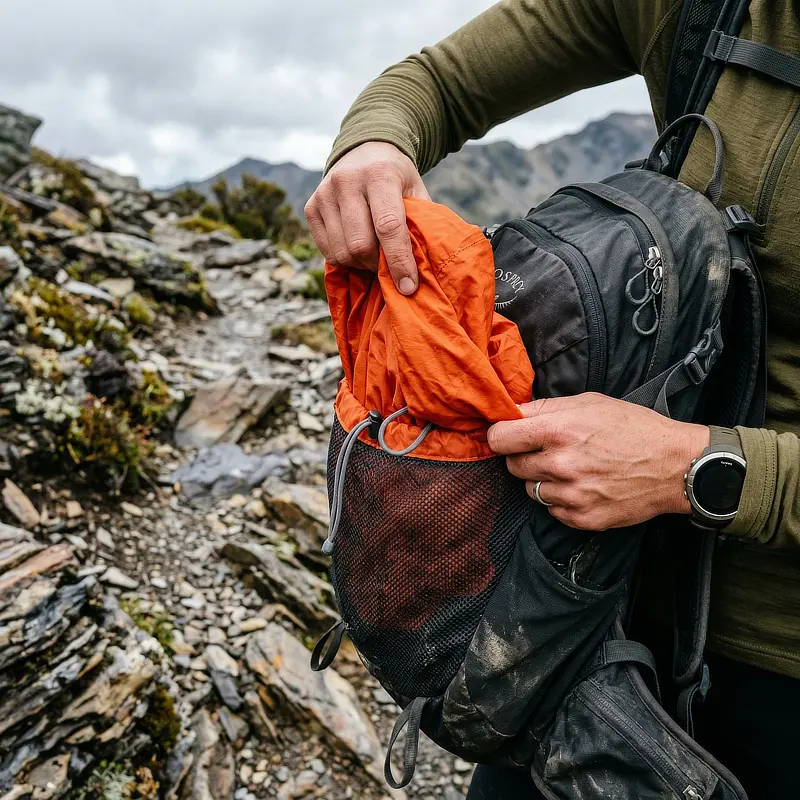
A simple, packable rain jacket or windbreaker handles most of the conditions beginners will encounter. Look for something water-resistant with sealed seams, a hood, and enough room to layer over a fleece without feeling like a stuffed sausage.
Field Note: If your outer shell does not fit over your mid-layer comfortably, it is either the wrong size or the wrong jacket. Always try them on together, or at least account for the extra bulk of your fleece when sizing online.
How to Adjust Your Hiking Layers on the Trail
Knowing the three layers is the theory. Using them correctly is the practice, and the two do not always click immediately.
The most common beginner mistake is waiting too long to adjust. If you are already sweating, you waited too long to shed a layer. If you are already shivering, you waited too long to add one. The goal is to stay just barely comfortable, which means making small changes before you feel extreme.
Trail Story: The hardest habit for me to break was starting a hike while fully bundled up. It feels completely counterintuitive to step out of a warm car into the cold air and take off your fleece. But forcing myself to “start cold” eliminated the frustrating process of stopping five minutes into a hike to strip off sweaty layers.
Start your hike slightly cold with just a base layer. Your body will warm up within five to ten minutes on any real incline. Put your mid-layer on as soon as you stop to rest, and add your outer shell the moment the wind picks up or rain starts. Acting early keeps your layers dry and your comfort steady.
Scenario 1: The Crisp Fall Morning
You start at 45°F with a base layer and a light fleece. The first climb warms you up fast, and by the second switchback, you are unzipping the fleece to your chest. At the top, the wind hits immediately. You zip back up, pull out your rain jacket as a windbreaker, and are perfectly comfortable again in 60 seconds. That is the system working.
Scenario 2: The Windy Viewpoint
You reach an exposed ridge or summit, and the temperature feels like it dropped 20 degrees. It didn’t, but wind chill is real. This is exactly when a packable puffy jacket earns its weight. Pull it on over your fleece, block the wind with your shell over that if needed, eat your lunch, and actually enjoy the view instead of sprinting back to the trees.
Scenario 3: The Surprise Rain Shower
You didn’t check the weather carefully enough, or the weather didn’t care about the forecast. Either way, rain starts. Your outer shell goes on immediately, before you get wet. Once your mid-layer gets soaked, it loses most of its warmth. Keeping it dry is much easier than trying to warm back up after the fact.
Common Layering Mistakes Beginners Should Avoid
Most layering mistakes are not about buying the wrong gear. They are about using the right gear the wrong way.
- Wearing your rain jacket all day “just in case.” A rain jacket is not breathable enough to wear as a regular hiking layer. Wear it in dry conditions and you will trap heat and sweat inside until your shirt is as wet as if it had rained anyway. The outer shell goes on for weather, not warmth.
- Buying clothes that fit too snugly. Layering depends on air pockets between your clothes. If everything is skin-tight, there is nowhere for warm air to circulate. Your mid-layer needs room to do its job. When in doubt, size up slightly on fleeces and shells.
- Bringing a daypack that is too small. This one catches people off guard. You are carrying three layers but only wearing one at a time. The other two need to live in your pack. A tiny hydration pack with no main compartment leaves you with no room to shed clothing, so you stop adjusting and start suffering. For a full checklist of what else should be in your bag, take a look at my guide to Hiking Essentials for Beginners before your next trip.”
If you are struggling to fit your layers, check out our guide to finding the Best Hiking Daypacks to determine the right capacity before your next trip.
Field Note: The rain jacket worn all day is by far the most common mistake I see on the trail. It feels logical (what if it rains?), but results in a sweaty, uncomfortable hike. Keep it packed in your bag until you actually need it.
Start with the Gear You Already Own
Here is the thing nobody in the gear industry is rushing to tell you: you probably do not need to spend $500 to hike comfortably this season.
A moisture-wicking athletic shirt from the gym works as a base layer. A fleece pullover from your closet or a thrift store works as a mid-layer. A basic packable rain jacket covers most weather conditions that beginners will encounter. Start with what you have. Adjust as you figure out what you actually need on the trail.
The layering system is not a buying checklist. It is a way of thinking about your body, your movement, and the conditions around you. Once that clicks, you will know exactly what to reach for before a hike, and you will stop showing up to the trailhead overdressed, overheated, and underprepared.
What is your absolute favorite piece of hiking clothing that goes with you on every trail? Let me know in the comments below!
GEAR EXPERT & FOUNDER

Sonia Zannoni
With over two decades of experience testing outdoor gear, I cut through the marketing noise to bring you honest, trail-tested reviews. My goal is to help you pack smarter and hike with confidence.
About the Founder