
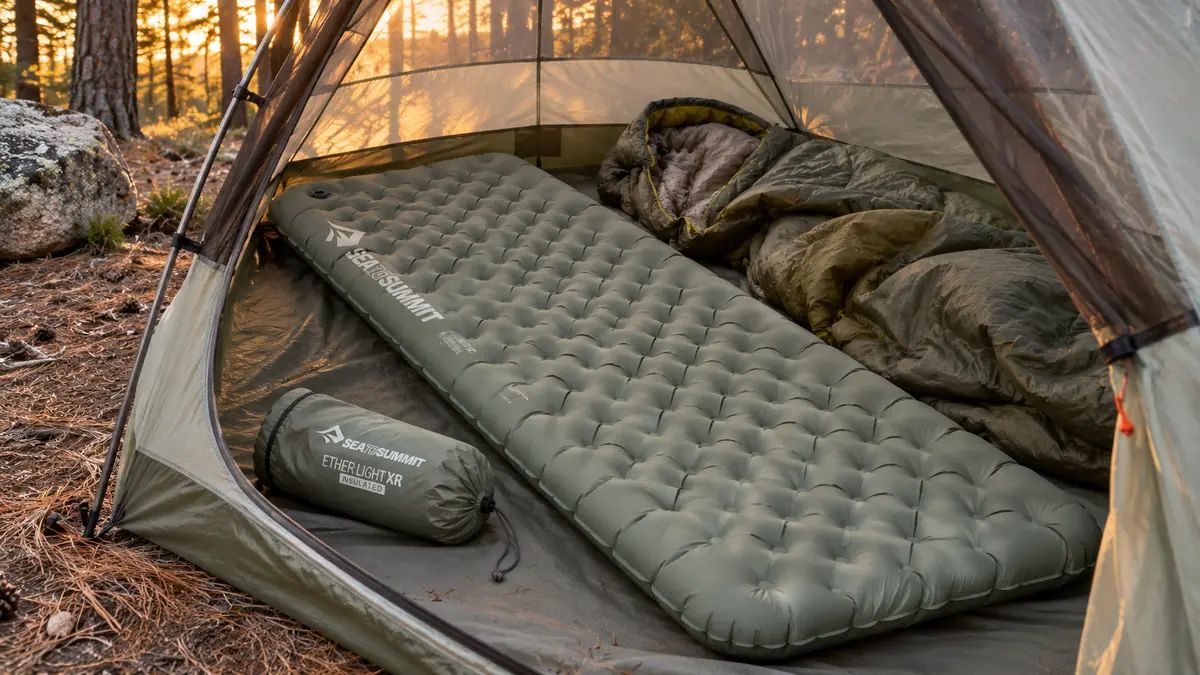
Best Sleeping Pads for Side Sleepers That Stay Quiet When You Roll Over
Affiliate Disclosure: Some links on this page are affiliate links. If you buy through one, I may earn a commission at no extra cost to you. Commission never decides which products I recommend. Read the full disclosure.
You lie down on your side, and by midnight your hip has found the ground through the pad. You roll over, and the pad crackles loud enough to wake you and whoever is next to you.
None of that means you bought carelessly. I sleep on my side too, at camp and at home, and a side sleeper’s hip and shoulder press into a pad far harder than a flat back does.
Most spec sheets rate thickness and noise separately, but the best sleeping pad for side sleepers has to keep your hip off the ground and stay quiet when you turn, without being too heavy to carry.
A thicker pad sounds like the fix until you see the weight, and “quiet” on the box doesn’t tell you whether owners still hear it.
Below are five backpacking pads, each matched to a kind of side sleeper, with the numbers that matter side by side and what each maker says about noise checked against what owners report. That way you can decide how many ounces you’re willing to carry, and for which job.
TL;DR: Best Sleeping Pad for Side Sleepers
- If your hip bottoms out on thin pads: the Sea to Summit Ether Light XR Insulated, with almost 4 inches of air across its whole surface, the most under your hip of the five.
- If you camp in the cold or share a tent with a light sleeper: the NEMO Tensor All-Season, the warmest here, which owners call quiet for an insulated pad.
- If you roll off pads in the night, the Big Agnes Rapide SL Insulated and its raised side rails; if every ounce counts, the Therm-a-Rest NeoAir XLite NXT at 13 ounces.
- For a budget first overnight, the Big Agnes Divide Insulated, unless your tentmate is a light sleeper. None of the five is silent, so “quieter” is the honest goal.
Here are the five picks at a glance, matched to the side sleeper each one suits.
Product Name
Best For
Key Strength
Main Tradeoff
Price Tier
Hips that bottom out
Most air under the hip, almost 4 in
Warmth less certain than its R 4.1
$$
Cold nights and light sleepers
Warmest, quiet for an insulated pad
Crinkle reduced, not gone
$$
A budget first overnight
Warm and comfortable for the price
Least proven on noise, heaviest
$$
Ether Light XR Insulated
Best For: Hips that bottom out
Key Strength: Most air under the hip, almost 4 in
Main Tradeoff: Warmth less certain than its R 4.1
Price Tier: $$
Tensor All-Season
Best For: Cold nights and light sleepers
Key Strength: Warmest, quiet for an insulated pad
Main Tradeoff: Crinkle reduced, not gone
Price Tier: $$
Rapide SL Insulated
Best For: Restless sleepers who roll off
Key Strength: Raised side rails
Main Tradeoff: Split warmth reports
Price Tier: $$
NeoAir XLite NXT
Best For: Counting ounces
Key Strength: 13 oz at R 4.5
Main Tradeoff: Thinnest, still loud to some
Price Tier: $$
Divide Insulated
Best For: A budget first overnight
Key Strength: Warm and comfortable for the price
Main Tradeoff: Least proven on noise, heaviest
Price Tier: $$
Price tiers: $ under $100 | $$ $100 to $249 | $$$ $250 and up
Find the row that sounds like you and jump to that pad’s section. Each one ends with where to check its current price.
What the Best Sleeping Pad for Side Sleepers Has to Get Right
A side sleeper needs a pad that does two jobs: keep your hip and shoulder off the ground, and stay quiet enough that rolling over doesn’t wake you. I’d check five things in this order: thickness, noise, width and shape, warmth by R-value, then the cost in ounces.
You’ve probably asked yourself whether 3 inches is enough, or whether you need 3.5 or 4. And if your last pad sounded like a bag of chips every time you turned, you already know why noise comes right after thickness.
Every pick further down is judged against these five, so here’s why each one matters.
Enough Thickness Under Your Hip and Shoulder
Your hip and shoulder press hardest into the pad, so they use up its thickness first. Among these five, thickness runs from 3 inches to almost 4. Read the number carefully: some listings give the height of the raised outer chambers, while the center, where your hip rests, sits lower.
On your back, your weight spreads across your shoulders, back and seat. On your side, most of it lands on two narrow points, so a pad that feels plush to a back sleeper can still let your hip touch down.
The NeoAir XLite NXT is the thinnest here at 3 inches. The Ether Light XR has the most air across its whole surface, 10 cm (3.9 inches), so your hip gets the deepest cushion wherever you lie.
The two Big Agnes pads are where the numbers get confusing. Big Agnes lists the Rapide SL at 3.5 inches in the center with 4.25-inch outer chambers, and the Divide at 3.25 inches with 3.5-inch outer tubes.
Retailers often list only the taller edge height. Your hip rests on the center, so that’s the number to compare.
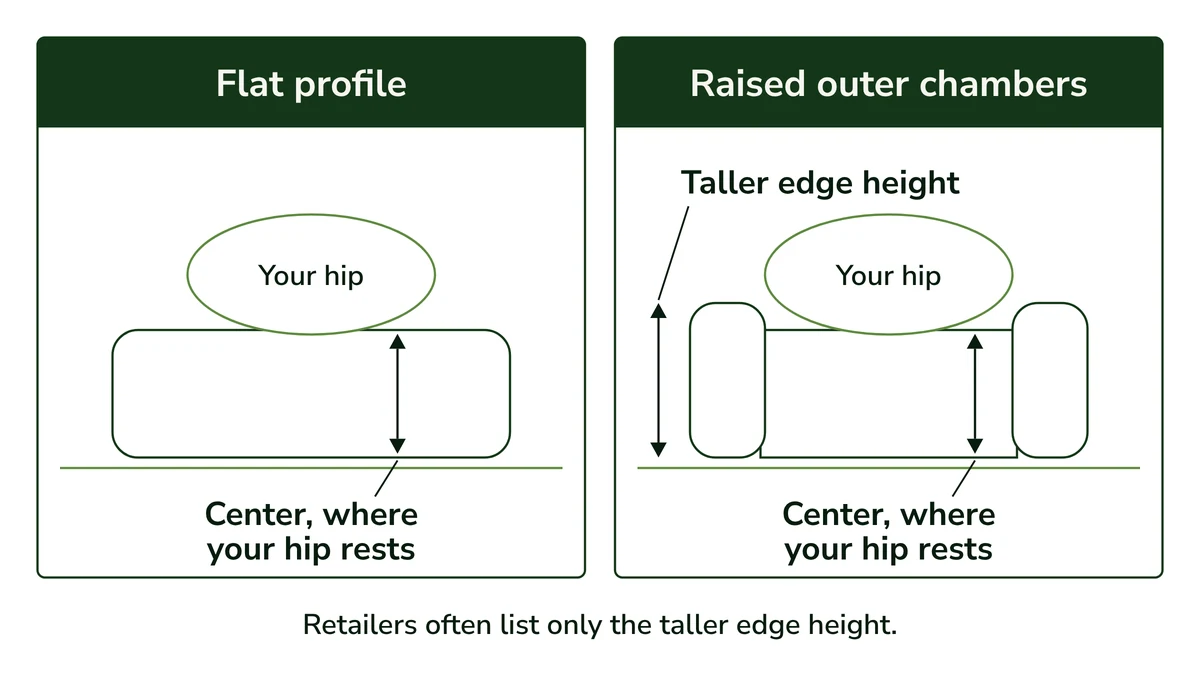
That half inch between 3 and 3.5 can matter. Several owners of the 3.5-inch Tensor say their hips and shoulders stay off the ground, and each pad’s section below says what owners report. If your hip still finds the floor on a 3-inch pad, I’d start your shortlist at 3.5.
Noise When You Roll Over: What “Quiet” on the Box Means
NEMO traces crinkle to the reflective film that keeps insulated pads warm, and both NEMO and Therm-a-Rest say they’ve changed their construction to cut it. Owners call both pads much quieter, though some still hear them. Three of the five make no-noise claims, so owners are the only check.
NEMO says it floats its film inside the pad rather than bonding it, and Therm-a-Rest credits a new internal construction. Either way, the makers’ wording is a claim until owners back it up, and each pad’s section shows where they do and don’t.
Most adults shift position more than once an hour through the night, according to a 2017 study of 664 sleepers, and every turn is another chance for the pad to crackle.
If your old pad sounded like a bag of potato chips and your tentmate mentioned it the next morning, you know the cost.

None of these five is silent. The realistic goal is a pad that’s clearly quieter than the one you have now, and quiet enough for the person beside you.
Width and Shape: Room to Curl Up Without Rolling Off
A 20-inch pad leaves little room for elbows and knees when you curl up. Every pick here comes in a 25-inch size, and the raised outer chambers on the two Big Agnes pads help keep a restless sleeper centered. Going wider costs ounces, as the table below shows.
If your arms slide off the edges when you curl up, or you wake up half on the tent floor, width is the fix, not thickness. Narrow mummy shapes make it worse, because they taper exactly where your knees drift when you draw them up.
Warmth by R-Value, in One Line
R-value measures how well a pad stops the cold ground from pulling heat out of you, and higher is warmer. These five run from R 4.0 to 5.4, and more air doesn’t mean more warmth. Lab figures put pads on one scale but won’t always match a real night.
The Ether Light XR has the most air but sits at R 4.1, while the 3.5-inch Tensor All-Season is the warmest at R 5.4, because the insulation inside does that work.
Sea to Summit and Big Agnes say their figures follow the ASTM F3340 standard, which puts pads from different brands on one scale. ASTM itself says the lab number won’t always match real-world warmth, partly because sleepers change position through the night.
That’s why I read R-value as a comparison number rather than a promise. An R 5.4 pad should sleep warmer than an R 4.1 pad on the same ground, but neither number tells you exactly how warm you’ll be at 2 a.m.
Your pad and bag work as a pair, so before you settle on a number, check how R-value pairs with your sleeping bag for the coldest night you expect.
What the Extra Thickness and Width Cost in Ounces
Thicker and wider pads weigh more, and the numbers show it. The 3-inch XLite NXT weighs 13 ounces in Regular, while the almost 4-inch Ether Light XR weighs 16.6. Going from 20 to 25 inches wide adds about 3 to 7 ounces, depending on the pad.
The usual worry runs like this: a thicker pad is heavier, and a quiet pad probably gives up some warmth. Here are the numbers. Weights are the makers’ own except for the two Big Agnes pads, whose product pages give no weight, so those come from the retailers named.
Pad
Thickness
R-value
Regular weight
25 in wide weight
Ether Light XR
3.9 in (10 cm)
4.1
16.6 oz (22 in tapered)
21.3 oz
Tensor All-Season
3.5 in
5.4
15.5 oz
1 lb 3 oz
Rapide SL
3.5 in center, 4.25 in rails
4.8
about 1 lb 2 oz (REI)
about 1 lb 7 oz (REI)
XLite NXT
3 in
4.5
13 oz
1 lb
Divide
3.25 in, 3.5 in outer tubes
4.0
about 1 lb 7 oz (REI)
about 1 lb 14 oz (Backcountry)
Ether Light XR
Thickness: 3.9 in (10 cm)
R-value: 4.1
Regular weight: 16.6 oz (22 in tapered)
25 in wide weight: 21.3 oz
Tensor All-Season
Thickness: 3.5 in
R-value: 5.4
Regular weight: 15.5 oz
25 in wide weight: 1 lb 3 oz
Rapide SL
Thickness: 3.5 in center, 4.25 in rails
R-value: 4.8
Regular weight: about 1 lb 2 oz (REI)
25 in wide weight: about 1 lb 7 oz (REI)
XLite NXT
Thickness: 3 in
R-value: 4.5
Regular weight: 13 oz
25 in wide weight: 1 lb
Divide
Thickness: 3.25 in, 3.5 in outer tubes
R-value: 4.0
Regular weight: about 1 lb 7 oz (REI)
25 in wide weight: about 1 lb 14 oz (Backcountry)
The weight part of the worry holds. Going wide adds about 3 ounces on both the XLite NXT and the Tensor, and about 4.7 on the Ether Light XR (from its 22-inch Regular), on the makers’ figures. On retailer figures, the two Big Agnes pads add more.
The warmth part doesn’t hold for these five. The Tensor All-Season is the warmest here at R 5.4, and owners still call it quiet for an insulated pad. In this group the real tradeoffs are thickness against weight, width against weight, and price against proven quiet.
All five are backpacking pads. The heavier car camping pads make sense next to the car, but they’re a different weight class and aren’t in this roundup.
Packed size decides whether the rolled pad rides inside your pack or gets strapped to the outside. The guide to packing a hiking backpack shows where a rolled pad sits and why gear on the outside is best kept to a minimum.
As a side sleeper, I’d spend ounces on thickness and width before I’d shave them off the pad you sleep on. Those ounces are usually easier to find elsewhere, and the guide on how to lighten your backpacking pack shows where.
For Side Sleepers Who Bottom Out: Sea to Summit Ether Light XR Insulated
The Ether Light XR puts the most air under your hip, 10 cm (3.9 inches), and packs to 8 x 4 x 4 inches in Regular. Owners call it quieter than their other pads, not silent. Its R 4.1 suits three seasons, though one detailed owner says it sleeps colder.
Who This Pad Is For
- Side sleepers whose hip still finds the ground on a 3-inch pad, including heavier builds, because it has the most room to sink before you touch down.
- Light sleepers coming from a crinkly reflective pad, since owners describe it as quieter than what they had before.
- Wider or elbow-out sleepers who choose one of the 25-inch (64 cm) sizes.
Why It Stands Out
It’s the deepest pad in the roundup, almost 4 inches across its whole surface, yet the Small and Regular pack to 8 x 4 x 4 inches. One Regular Wide owner says the construction “allows my hips and shoulders to sink in,” which is what side sleepers pay for.
Key Features and What They Mean
- 10 cm of Air Sprung Cells. The cells give your hip and shoulder room to sink before they meet the ground. The surface has raised ridges, which bother stomach sleepers more than side sleepers.
- Shape and width. The Small and Regular are 22 inches wide and tapered, with the Regular at 16.6 ounces. The Regular Rectangular Wide and the Large sizes are 25 inches, with the Regular Rectangular Wide at 21.3 ounces.
- More room to curl up. One owner of the Regular Wide says “my arms don’t fall off the sides” anymore, after an old mummy pad.
- R 4.1, ASTM-tested. Sea to Summit calls it extended three-season, and its FAQ says it suits conditions down to where a hard frost might occur.
- ThermalCore with a suspended reflective layer. This is what keeps you warm, and reflective layers are also the usual source of crinkle, so noise is a fair question here. Sea to Summit makes no noise claim for this pad.
- XPRESS valve with a fine-tune button. You can soften the pad in small steps until your hip sinks in.
- Pumpsack built into the stuff sack. Sea to Summit says three or four breaths with it fill the pad. PillowLock patches hold a Sea to Summit Aeros pillow in place as you roll.
- A range of body types. One owner, 6 feet and 250 to 275 pounds on the Large, rates it highly, and so does a 5-foot-3 owner. Those are single comments, but they come from opposite ends.
The XR has taken the XT’s place in Sea to Summit’s current line, so if you’re reading older reviews of the XT, they describe a different pad.
Where It Falls Short
Real-world warmth is less certain than the 4.1 label suggests. One detailed owner review says it “sleeps much colder than it should”: a group was cold at around 45°F, and a foam sit pad underneath helped. Other owners call it warm, so this is one report, not a pattern.
It isn’t silent either. One owner finds it “a bit noisy when you change position,” and another hears a squeak when it’s slightly underinflated, which means its quietest setting may be a little firmer than a side sleeper would choose.
The pumpsack is sewn into the stuff sack, so you can’t leave one at home without the other. And one owner points out that the rectangular sizes cost more than the tapered ones of the same width.
Pros
The most cushion in the roundup, almost 4 inches where your hip rests
A small packed size for its thickness, 8 x 4 x 4 inches in Regular
Owners call it quieter than the pads they had before
Cons
Warmth reports are less certain than the R 4.1 rating
The lighter Small and Regular are only 22 inches wide and tapered
Who Should Skip It
Cold sleepers and shoulder-season campers need a bigger warmth margin than this pad promises, though a closed-cell foam pad (the thin, solid foam kind that can’t go flat) under it adds warmth.
Skip it too if you need a truly silent pad, or if you sometimes sleep on your stomach and raised ridges bother you.
Verdict
If your hip keeps bottoming out, this is the pad I’d look at first, if three seasons cover your trips. It has the most cushion here, packs small, and owners find it quieter than their old pads. For frosty nights, add a foam pad underneath or look at the Tensor.
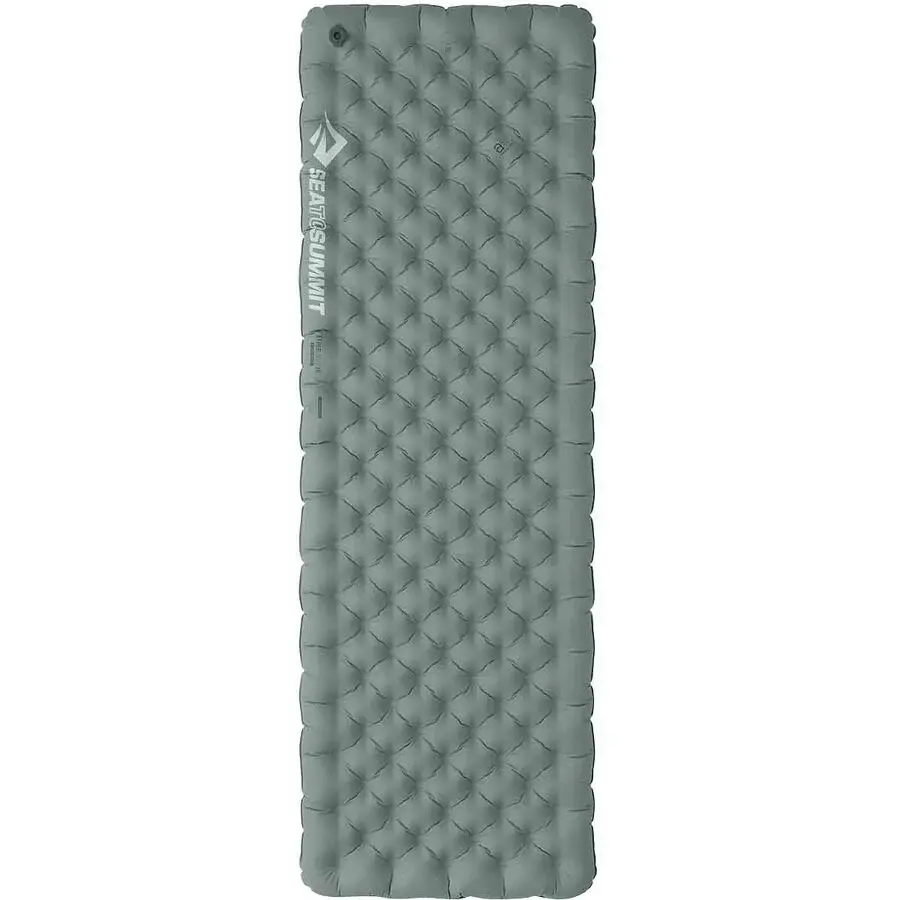 Sea to Summit Ether Light XR Insulated
Almost 4 inches of air where your hip rests, and a small packed size for that much cushion. Owners call it quieter than the pads they had before.
The Quiet, Warm Pick: NEMO Tensor All-Season Ultralight Insulated
The Tensor All-Season is the warmest pad here at R 5.4, with 3.5 inches of air, and the Regular weighs 15.5 ounces. NEMO says its floating film eliminates crinkle. Most owners describe it as quiet for an insulated pad, and a few still hear it when they turn.
Best For
- Cold-weather and shoulder-season side sleepers, because it has the highest R-value of the five.
- Light sleepers moving from a loud insulated pad.
- Restless or broad side sleepers who pick a 25-inch size.
Why It Stands Out
It’s the warmest pad here, and the one owners keep calling quiet for an insulated pad. One Regular owner says it doesn’t sound like “a crunchy bag of chips.”
It has hundreds of owner reviews across REI, Backcountry and NEMO, and several side sleepers among them say their hips and shoulders stay off the ground.
Key Features and What They Mean
- 3.5 inches of air. Room for your hip and shoulder to sink before they reach the ground. Baffles are the air tubes inside a pad, and NEMO’s Spaceframe baffles run across this one, so your hip rests across several tubes.
- R 5.4 from suspended reflective film. The highest figure in the roundup, which gives you margin on early and late-season nights. NEMO’s product page doesn’t say whether it’s ASTM-rated.
- Floating film layers. On its Tensor All-Season page, NEMO says the floating construction “eliminates the crinkling” insulated pads are known for. Owners describe it as reduced rather than gone.
- Laylow valve. It lets out small puffs of air, which helps because side sleepers often run a pad a little softer so the hip sinks in.
- Width. The Regular is 72 x 20 inches at 15.5 ounces. The Regular Wide is 25 inches at 1 pound 3 ounces, about 3 ounces more, and one Long Wide owner’s advice is blunt: “Get the wide version if you’re not tiny.”
- 20D top over a 40D bottom. Light fabric where you lie and tougher fabric underneath. A ground sheet and a cleared site still help.
- Packed 10 x 4 inches. One owner says it “packs down to the size of a Nalgene.”
Where It Falls Short
“Eliminates” overstates it. A repeated minority of owners still hear crunch when turning, and one calls the film “crunchy whenever you move on the pad.”
Comfort isn’t unanimous either. One detailed review found not quite enough flex for the hip to sink in, and another owner coming from a NeoAir XLite found the NeoAir more comfortable. Long-term durability isn’t proven in the readable reviews yet, and the 20-inch Regular is narrow for a restless sleeper.
Pros
The warmest pad in the roundup, at R 5.4
Quiet for an insulated pad, by most owners’ accounts
Light for its warmth, at 15.5 ounces in Regular
Cons
Crinkle reduced, not gone
Durability not yet proven in owner reviews
Who Should Skip It
Skip it if you need near silence, because some owners still hear it. If you want a soft, sinking feel at the hip, one detailed review suggests it may feel firmer than you’d like. And restless sleepers who won’t carry the Regular Wide will find the 20-inch Regular tight.
Verdict
For cold nights or a tentmate who wakes easily, the Tensor All-Season is the pad I’d choose. It’s the warmest of the five, and most owners call it quiet for an insulated pad. Expect “quieter,” not silent, and size up to the Regular Wide if you sprawl.
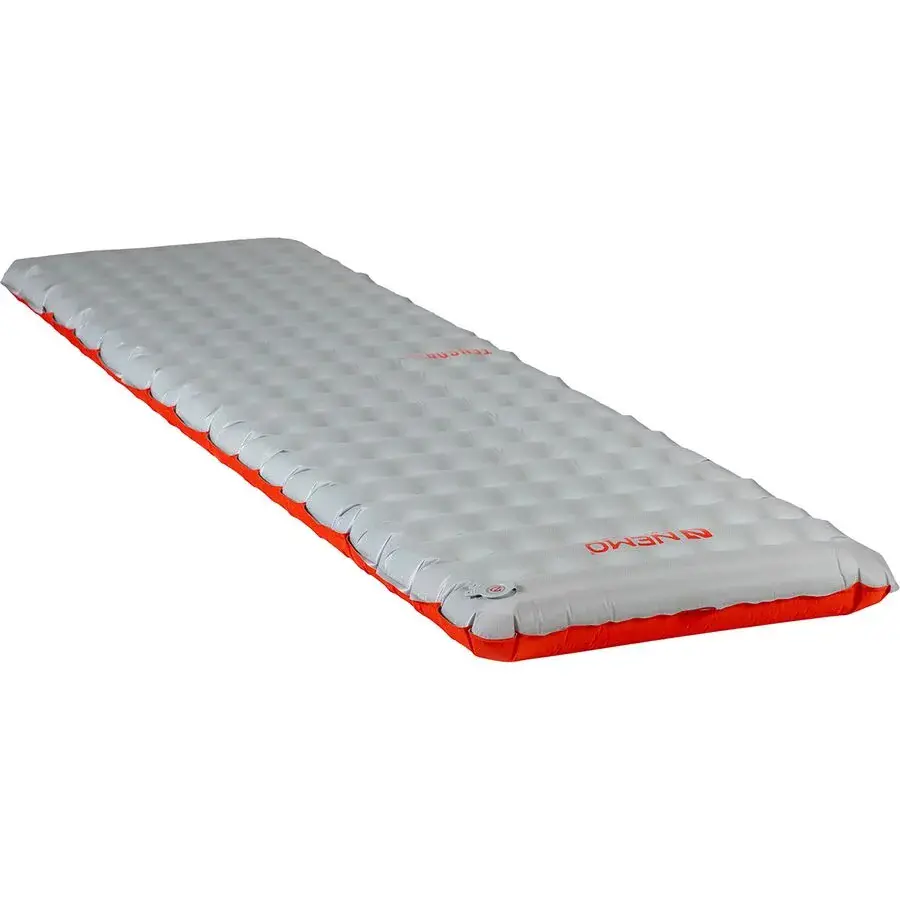 NEMO Tensor All-Season
The warmest pad in this roundup at R 5.4, with 3.5 inches of air, and quiet for an insulated pad by most owners' accounts. The crinkle is reduced, not gone.
Big Agnes Rapide SL Insulated: Side Rails That Keep You on the Pad
The Rapide SL Insulated has a 3.5-inch center inside 4.25-inch outer chambers, a shallow cradle that owners on three retailer sites say keeps them on the pad. Several owners call it quiet. Warmth reports for its R 4.8 are split, and Big Agnes’s product page gives no weight.
Ideal For
- Restless side sleepers who roll off pads in the night.
- Side sleepers who want 3.5 inches of height plus rails at the edges.
- Broad or larger sleepers who choose one of the 25-inch sizes.
What Sets It Apart
The raised outer chambers make a cradle that keeps a rolling sleeper centered, with extra height at the edges where a shoulder or knee drifts.
One owner writes that “hips knees and shoulders do not touch the ground,” and an owner of the earlier version says “the raised sides do help to keep you on the pad.”
Key Features and What They Mean
- Thickness. 3.5 inches in the center and 4.25 inches at the rails, by Big Agnes’s figures. Retailers often list only the 4.25.
- R 4.8, three-season. The maker’s chart shows ASTM F3340. This is the current 2024 generation, an update on an earlier R 4.2 version.
- Offset I-Beam baffles and a quilted top. Big Agnes describes the baffles as stable in every direction, which for you means less bounce when you roll over.
- Five single sizes. Two 25-inch widths for broad shoulders, a 78-inch length for tall sleepers and a 66-inch Petite.
- High-volume dual valve and Pumphouse sack. No lung inflation, and you can let air out in small amounts to tune firmness at the hip.
- Weight. Big Agnes’s product page gives none. REI lists the Regular at about 1 pound 2 ounces and the Regular Wide at about 1 pound 7 ounces, while Backcountry lists the Regular Wide at 1 pound 11 ounces. REI gives the packed Regular as 4 x 7 inches.
- Noise. Four owners on four retailer pages call it quiet, one calling it “the quietest sleeping pad,” and none complain in the reviews I could read. That’s a thin sample, partly from the earlier version.
Where It Falls Short
Warmth reports are split. One REI review is titled “Sleeps cold,” and another owner says it isn’t as warm as other insulated pads, while several others call it warm.
Two REI owners report problems: a leak right out of the box, and seams that kept ripping. Those are single reports, not a pattern. It’s also heavier than the lightest pads here, on retailer figures.
Pros
Raised rails that help keep you on the pad
Comfortable, by many owners’ accounts
Owners who mention noise call it quiet
Cons
Split warmth reports for an R 4.8 pad
Durability complaints in a minority of reviews
Look Elsewhere If
You sleep cold and expect the full R 4.8 on cold ground, because the warmth reports are too mixed to count on it. Look elsewhere too if you count every ounce, since this pad trades a few ounces for its rails.
My Read
For side sleepers who wake up half off the pad, the Rapide SL is the one I’d pick. Many owners call it comfortable, and the rails keep them on the pad. On colder nights, I’d add a closed-cell foam pad underneath rather than trust the 4.8 alone.
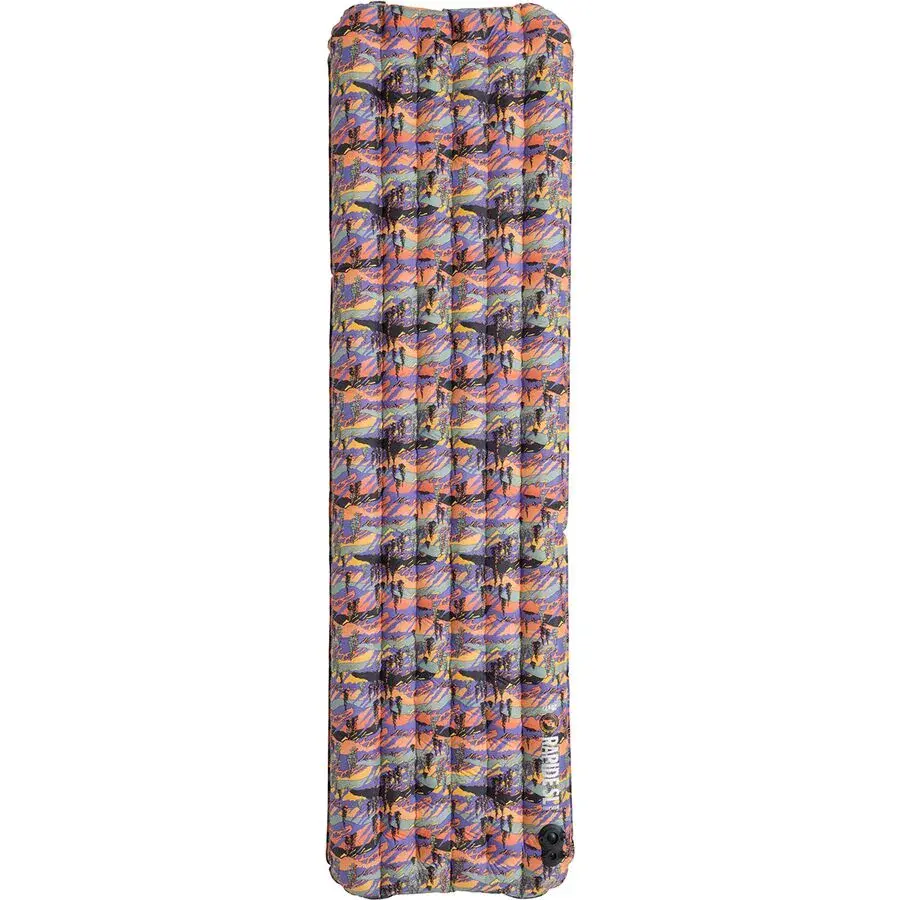 Big Agnes Rapide SL Insulated
Raised side rails that help keep you on the pad when you roll, and comfortable by many owners' accounts. Warmth reports are split for an R 4.8 pad.
Best for Counting Ounces: Therm-a-Rest NeoAir XLite NXT
The NeoAir XLite NXT is the lightest pad here at 13 ounces in Regular, with R 4.5, and at 3 inches it’s also the thinnest. Therm-a-Rest says it cuts noise by 83% from the old XLite, and many owners find it much quieter, though some still call it loud.
Who This Pad Is For
- Side sleepers who count every ounce.
- Readers who gave up on the old, crinkly XLite.
- Broad or restless sleepers who pick a 25-inch size or the rectangular NXT MAX.
The Case for It
You get real warmth and comfort at a very low weight, with noise much reduced. One owner says the old model’s “potato-chip-bag noise” is gone, and many owners say it’s much quieter than the old XLite.
Key Features and What They Mean
- 3 inches of air. The thinnest margin under your hip in the roundup, which Therm-a-Rest says leaves room to adjust firmness. No owner I read reports bottoming out, but no review comes from a heavier sleeper either.
- R 4.5 at 13 ounces in Regular. Close to the Tensor on warmth per ounce, and well ahead of the other three. Therm-a-Rest’s product page doesn’t say whether it’s ASTM-rated.
- Triangular Core Matrix with horizontal baffles. Therm-a-Rest credits this internal construction for both the warmth and the lower noise, and says on its XLite NXT product page that it “reduces noise by 83% compared to previous model.”
- WingLock valve. You can let a little air out while lying on the pad, so you can tune it with your hip already in place.
- Width. The Regular is 20 inches. The Regular Wide is 25 inches at 1 pound, 3 ounces more, and packs to 11 x 4.6 inches instead of 9 x 4.1. The NXT MAX is the full rectangular version, 1 pound 3 ounces in Regular Wide.
- Shape. Retailers call the regular NXT a mummy shape. Therm-a-Rest doesn’t label it.
- Packed size. Therm-a-Rest says the Regular packs to about the size of a 1-liter water bottle.
- 30D ripstop top and bottom. Light fabric, which is where the weight savings come from.
Where It Falls Short
The noise is reduced, not gone. One REI reviewer who received the pad free says it’s “still not a quiet pad,” and another owner found it “so comfortable and toasty warm, but so loud” that her own movement woke her.
The 20-inch Regular is narrow: one owner says “my shoulders hung off on both sides.” Owners on three different pages also find the surface slick, so the pad can slide around under you.
A minority of owners report leaks or air loss. Owners on two pages also call the fabric fragile enough to need a cleared tent floor, with sticks swept away and dogs kept out.
Pros
The lightest pad in the roundup, 13 ounces in Regular
Warm for its weight, at R 4.5
Much quieter than the old XLite, by owners’ accounts
Cons
The thinnest cushion under the hip, at 3 inches
A slick surface, and still loud to some owners
Not the Right Fit If
- You’re a very noise-sensitive light sleeper, because some owners still find it loud.
- You’re a heavier side sleeper who wants more than 3 inches under the hip, since there’s no owner evidence either way.
- You camp on rough ground without a ground sheet, or share the tent with a dog.
- You hate a slippery surface.
Verdict
For ounce counters who still sleep on their side, the XLite NXT is my pick, in the 25-inch width if your shoulders are broad. It’s the lightest pad here and warm for its weight.
If 3 inches already lets your hip touch down, though, a few more ounces for the Ether Light XR or Tensor buys you more room.
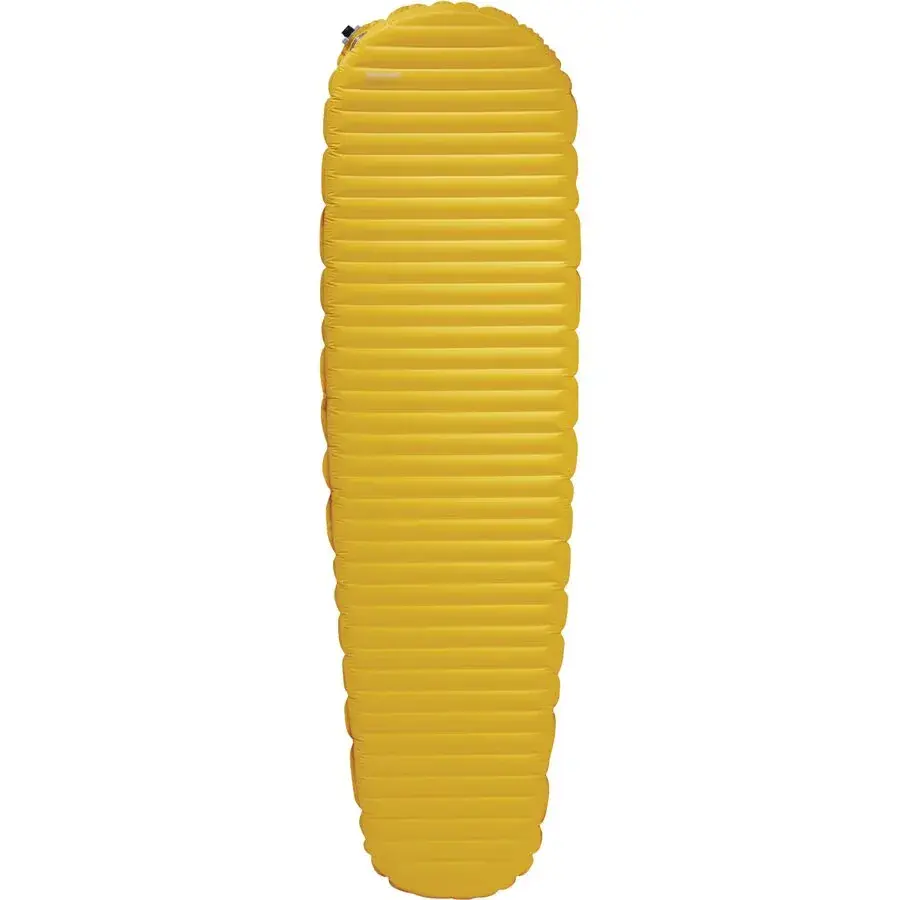 Therm-a-Rest NeoAir XLite NXT
The lightest pad in this roundup at 13 ounces in Regular, and warm for its weight at R 4.5. It has the thinnest cushion here, at 3 inches.
For a First Overnight on a Budget: Big Agnes Divide Insulated
The Divide Insulated is the budget pick: 3.25 inches of air with 3.5-inch outer tubes, R 4 and a 25-inch size for the least money here, often on sale. Owners consistently call it warm and comfortable. It’s the least proven on noise, and the heaviest pad here on retailer figures.
Best For
A side sleeper on a first overnight in three seasons who wants real height and R 4 warmth for the least money here, with a 25-inch option for room to curl up.
Why It Stands Out
It has more than 200 REI reviews, and owners keep describing it as warm and comfortable for the price. A couple of owners praise the wide size, and one says it “stays inflated for the whole trip.” It’s also the lowest-priced pad in the roundup, and often on sale.
Key Features and What They Mean
- 3.25-inch body with 3.5-inch outer tubes. More cushion than thin budget pads, with a slight cradle at the edges.
- Vertical baffles. They run head to foot, so a side sleeper’s hip rests along the tubes rather than across them.
- R 4, three-season. The maker’s chart shows ASTM F3340. Big Agnes itself advises a closed-cell foam pad on frozen ground or snow.
- 20-inch and 25-inch widths. The wider size gives drawn-up knees and broad shoulders somewhere to go.
- Dual valve with a pump sack. One owner notes it can’t be inflated by mouth. Repair patches and a spare valve seal come in the box, so a field fix is possible.
- Inflation. One side sleeper prefers it about two-thirds inflated and hasn’t bottomed out, which is one owner’s setting, not a rule.
- Weight. Big Agnes’s product page gives none. REI and Backcountry list the Regular at about 1 pound 7 ounces, and Backcountry lists the 25 x 72-inch size at about 1 pound 14 ounces.
This is the Divide Insulated, not the uninsulated R 1.5 Divide that Big Agnes sells separately, so check the name before you buy.
Where It Falls Short
It’s the least proven of the five on noise. Two owners on one retailer call it loud whenever a sleeper moves, one of them writing “super noisy when a sleeper changes their position.”
Another calls it “a little bouncy and squeaky,” while a few others call it quiet. Most reviews don’t mention noise at all.
Two owners on two sites report the insulation coming loose inside. That’s too few for a pattern, but it’s the only failure that comes up more than once.
On retailer figures, it’s the heaviest of the five, size for size. And one 250-pound owner found the rails a pressure point when he slept on his back.
Pros
The lowest price in the roundup
Warm and comfortable, by owners’ accounts
Holds air through a trip
Cons
Split owner reports on noise
The heaviest of the five on retailer figures
Who Should Skip It
Skip it if you’re a very light sleeper sharing a tent, or already bothered by pad noise, because two owners call it loud when anyone moves.
One heavier owner found the rails uncomfortable, so heavier sleepers may want to try it at home first. Ounce counters will notice the weight, and below-freezing nights need a foam pad under it.
Verdict
For a solo first overnight on a budget, the Divide Insulated makes sense. Owners call it warm and comfortable, and it gives you real height for the least money here. Just don’t bring it next to a light-sleeping partner, since it’s the least proven of the five on noise.
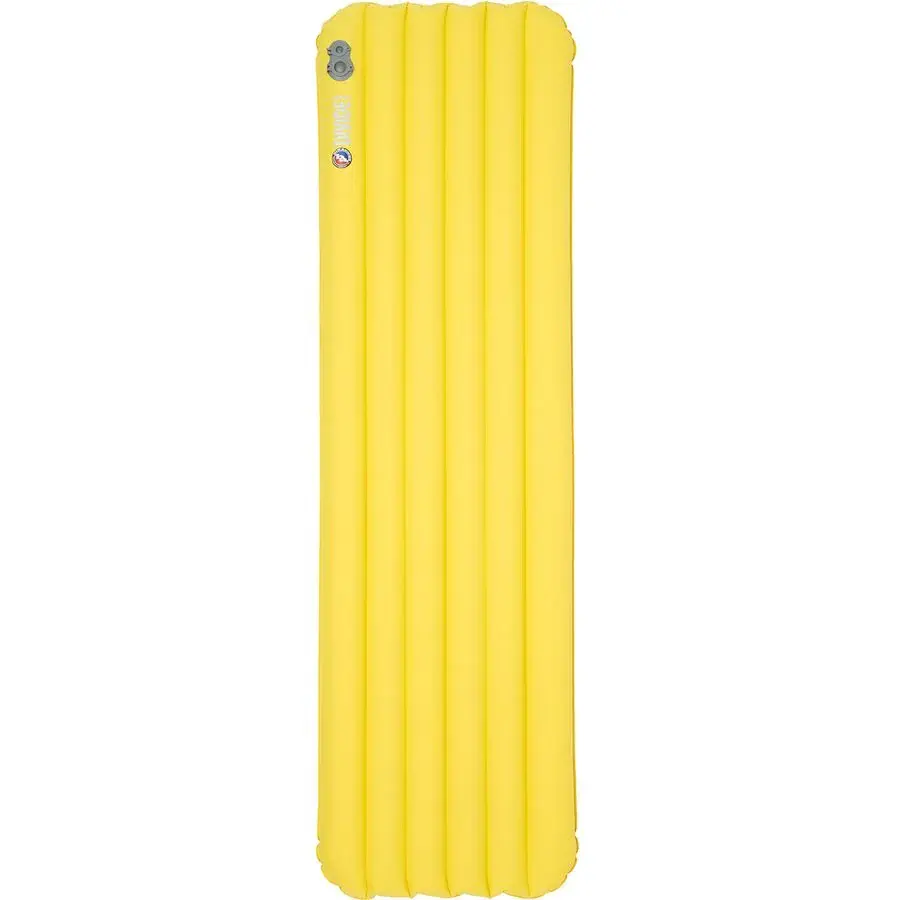 Big Agnes Divide Insulated
The lowest price in this roundup, with 3.25 inches of air at R 4, and warm and comfortable by owners' accounts. It's the heaviest of the five, and owner reports on noise are split.
Find Your Pad’s Sweet Spot at Home, Before the Return Window Closes
An air pad feels different at full pressure than slightly soft, and two owners say side-sleeping comfort depends on not over-inflating. So inflate yours at home first, lie on your side and let out small amounts of air until your hip sinks in without touching the floor.
Too much air and your hip rides high on a pad as hard as a board. Too little and the hip sinks until it touches down. The comfortable setting sits between the two, and it changes with your weight and the pad.
The Tensor owner says hips and shoulders stay comfortable “as long as you don’t over inflate.” The Divide owner, also a side sleeper, runs it about two-thirds inflated. After a night on a rock-hard pad, or one where your hip touched down, inflation is the first thing to check.
Every pick here has a valve that lets air out in small amounts, so you can do this on your living room floor. If the pad still bottoms out at any firmness that feels comfortable, that’s your sign to go thicker while it can still go back.
For nights colder than the pad’s rating, a closed-cell foam pad underneath adds warmth, and Big Agnes itself advises one on frozen ground. A folded jacket under your hip can also help on a night that turns out colder or harder than you planned.
When your pad arrives, give it one evening on the floor at home: lie on your side and let air out a little at a time until your hip sinks in without touching the floor, while the return window is still open.
Founder & Gear Research Editor

Sonia Zannoni
I’m Sonia, the founder of Best Trail Backpacks. I don’t test gear myself. For every pack I cover, I read the manufacturer’s specs and sizing charts and look for what owners report again and again.
Fit comes first, because a pack that doesn’t match your torso and hips will hurt no matter what it cost. My goal is to help you choose a pack that suits your body, your trip and your budget.
About the Founder
