
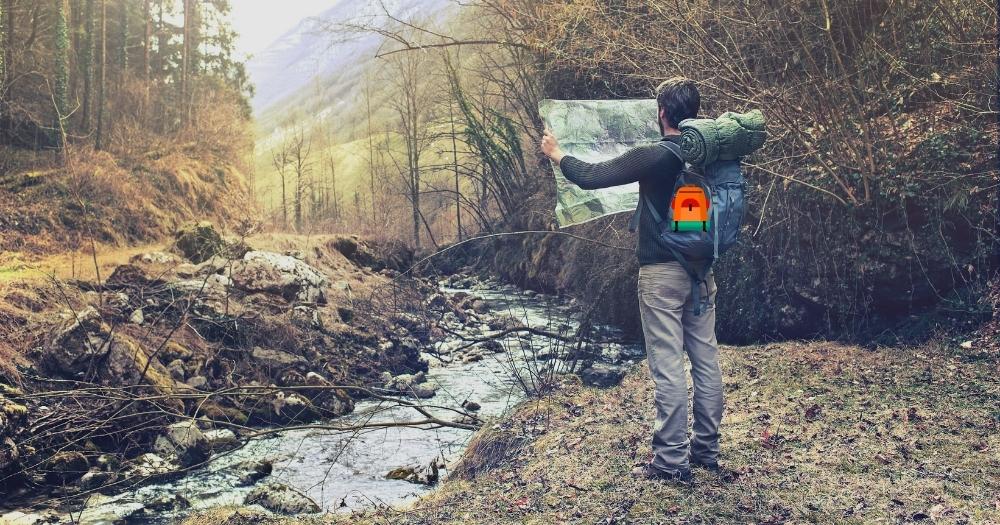
How to Avoid Getting Lost While Hiking — 9 Tips to Stay Safe
Affiliate Disclosure: I believe in honest, trail-tested gear reviews. When you purchase through links on my site, I may earn a small commission that helps keep Best Trail Backpacks running, at absolutely no extra cost to you. As an Amazon Associate, I earn from qualifying purchases.
If you are an outdoor enthusiast, the chances are that you enjoy going on camping, climbing, or hiking trips. For many outdoor explorers, one of their biggest fears is getting lost in the wild. Then, the question becomes: how to avoid getting lost while hiking?
To help you better prepare for your next adventure, I have outlined some tips to ensure that you stay on track and safely return home to your loved ones.
So without further ado, let’s dig in:
My 9 Trail Smart Tips to Avoid Getting Lost
It would be best if you did a few things before hitting the trails to ensure that your hiking excursion is an enjoyable one.
Here are some paramount tips to avoid getting lost in the wilderness:
1) Research and Plan your Hike
The first thing you need to do is to study the area where you are planning to go hiking. The best way to do so is by visiting the park website and maps of the region. Then, make a detailed map of your hiking route.
Moreover, if you are a novice hiker, don’t go alone. It is advisable to have a hiking partner, a seasoned hiker, to avoid getting lost on the trails.
2) Share your Itinerary
Tell a friend or relative where you are going, when and for how long, and who is going with you. Also, please give them a copy of your detailed hiking map. If you don’t get back, then the rescue team will have an idea of where to start looking.
Don’t forget to keep a copy of your hiking map in your vehicle.
3) Check the Extended Weather Report
Before you head out for your hiking adventure, it’s vital that you know what you’re getting yourself into. Check the weather report for the length of your trip. If the weather conditions are adverse, then you should strongly consider postponing the excursion to a later date.
4) Sign Up for the Trail Register
If the park has a registry, it is always good to sign in to leave a trace of your whereabouts on the trails.
5) Learn Navigational Skills
Before you hit the trails, you must learn necessary navigational skills, such as how to read a map and use a compass with a map.
However, suppose you plan to bring different techie tools, such as a GPS tracking device, a smartphone, a satellite phone, or a personal locator beacon (PLBs). In that case, you must know how to use them before your hiking trip. Otherwise, leave them home as they will be useless.
Lastly, as your techie gadgets rely heavily on batteries, don’t forget to charge them fully and bring extra battery packs!
6) Pay Attention to your Surroundings
While hiking, you need to get a lay of the land, sort of speak. If you have a camera (or a smartphone), take pictures of the different landmarks on the trails.
Also, it is good to match the different landmarks such as the rivers, crossings, peaks, and trail junctures that you encounter while hiking with the map to check if you are still on course.
Lastly, regularly peer behind you to get another perspective of the trail to see what the path looks like the other way.
7) Keep Track of Time
Yes, your watch keeps the time… but I highly recommend bringing a notebook. Doing so will help you better keep track of time.
You can use the notebook to write down where you turn and draw sketches of the trail. You can make a note of the different landmarks that you encounter on the trail, the conditions, the flora, and the trail junctures.
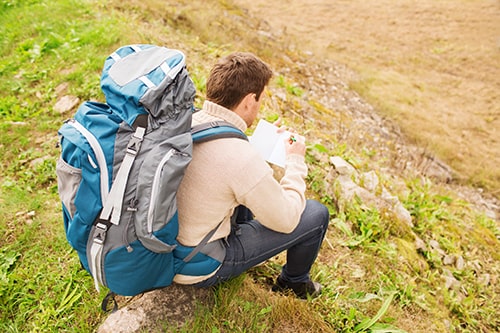
For instance, you can track how long it takes you to get from one landmark to another, which includes but is not limited to hillsides, ravines, river crossings, lakes, and so on. Doing so will give you some point of reference if you ever have to backtrack.
8) Stay on the Trail
The best way to avoid getting lost while hiking is to stay on the trails. Don’t deviate from the path because you might have a hard time getting back to the trail.
9) Pack the TEN Essentials
No matter how long your hike is, always bring what I call the ten essentials on your hiking trips.
Below is the list of what to put in a hiking backpack:
- Navigation (compass and a map)
- Repair Kit and Tools (pocket knife)
- Illumination (headlamp, flashlight)
- First Aid Kit with a Whistle
- Insulation (clothing, raincoat)
- Nutrition (foods)
- Sun Protection (sunglasses/sunscreen)
- Hydration (water + purification system)
- Fire (matches)
- Emergency Shelter
Since we live in the technological era, you can also include as part of your essentials: your cellphone with a GPS App along with an emergency contact list, a GPS tracking device, a satellite phone, and a personal locator beacon (PLBs), all fully charged of course!
Watch the video below, highlighting the 10 essentials for a hike:
What to Do if You Get Lost on your Hiking Outing
Sometimes even with the best preparation for a hike and no manner if you are a novice or a seasoned hiker, you can get lost.
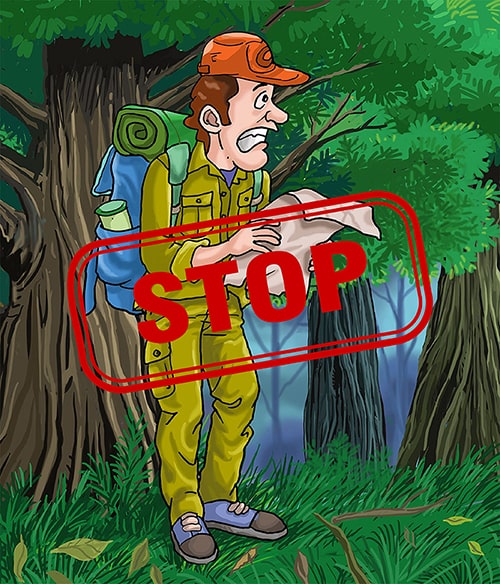
So, for that reason, in the event you get lost in the wilderness, you should adhere to this acronym: STOP.
The first letter S stands for STOP. The first thing to do when you think you are lost or find yourself off-course is to stop. Please don’t panic, stay calm. I know it is easier said than done. You should sit down and eat something. Because, if you let your anxiety take over, you won’t be able to think clearly.
This brings me to the second letter of the acronym, T, which is for THINK. Assess the situation and stay put while you are figuring things out. Ask yourself some of the questions below:
- What was the last landmark you saw?
- How long ago was it?
- What makes you think you are lost, is it the absence of a landmark on the trail?
For instance, you can track how long it takes you to get from one landmark to another, including but not limited to hillsides, ravines, river crossings, lakes, and so on. Doing so will give you some point of reference if you ever have to backtrack.
Then the third letter is O and stands for OBSERVE. Check your surroundings. Try to find some landmarks and match them to your map to figure out where you are.
Take a look at the time and consider the following: how long have you been hiking, how long before sunset, and how is the weather? Considering all these factors will help you elaborate on a plan of action, and what your next step should be.
The last letter is P, which stands for PLAN. Now, based on the first three steps, make up a plan of action.
Your plan could include retracing your steps and trying to find your way back if you have enough daylight left or staying put for the night and building a shelter and a fire. Or better yet, can you make a call, or send a text to let someone know that you are lost?
My last piece of advice is that if you are unsure of what to do, stay where you are, and wait for help.
Final Thoughts
I have outlined in this post my nine valuable tips to avoid getting lost while on a hiking excursion. If you follow these tricks, the chances of you getting lost in the wilderness are significantly reduced.
However, don’t get too cocky by thinking that you can’t get lost. It could happen to any hikers out there. Moreover, I would say that it happened at least once in a hiker’s life to get off the beaten path.
Therefore, when you get lost, remember the catchphrase: STOP to get safely back home to your loved ones.
If you have any questions about how to avoid getting lost or sharing your hiking stories, please leave them below, and I will get back to you promptly. I am looking forward to hearing from you!
GEAR EXPERT & FOUNDER

Sonia Zannoni
With over two decades of experience testing outdoor gear, I cut through the marketing noise to bring you honest, trail-tested reviews. My goal is to help you pack smarter and hike with confidence.
About the Founder

When venturing out, register on HelpLate. Should you not return on time, your emergency contact is sent an alert with GPS. No cost and confidential.
Thank you for sharing helpful information about this awesome app, HelpLate, another option to make sure you return home safely.
Being in the UK and within a relatively flat, mundane part of it, when I go out into local woods and paths with my kids, there is very little chance of this happening to us.
However, when we found a local quarry not far from us that is quite popular for walks and picnics, I discovered my arrogance got the better of me the first time! I thought as it was local and quite compact, we could just walk off any direction we like and ended up outside of the quarry and next to an unfamiliar section of the canal that runs near us.
Now I know to take things like this seriously as you can easily take things like this for granted. I cannot imagine what it would be like if I got lost (especially with the kids) in places you mention in this article!
Keep up the good work. I love your website!
Tony
I know what you mean, I did get lost once in the woods behind my house! I thought that I knew the area like the back of my hand, but I was wrong!
What happened is that since I know the area, I did not bother checking the weather forecast for the day, which forecasted heavy rain, fog. So because of the adverse weather, I got lost being unable to find my bearings in the woods. I was able to find my way back to my house after a while. I was drenching wet.
Since that misadventures, I always check the weather report and pack my hiking backpack with the ten essentials, which include a raincoat!
Hi Sonia – These are some great common sense tips on hiking. One crucial thing you mentioned when discovering that you are lost is to not “panic.” This is so important in any dire situation because nothing ever gets accomplished by panicking. It only exasperates the situation. Thanks for this opportunity.
I find that when you panic, no matter the situation but especially when lost in the wild, no good could come out of it. You are wasting precious that could be put toward finding your way back home. I know that for most people, the first impulse is to panic, but you need to get a grip and start applying the STOP method.
Also, I think you must share with someone a detailed map, itinerary, and for how long you will be gone. Because if you don’t get back as planned, people will know that something must have happened to you and will start the research. Your chances to be found safe and sound greatly increases if you let a friend or relative know of your hiking plans.
Thank you so much for sharing with us an excellent and informative article. The central theme of this article is 9 Tips to Stay Safe While Hiking.
Incredibly, you have illustrated this topic so well in your post. I have learned a lot by reading your article and gained a lot of knowledge about it. Of the points mentioned in your blog post, that I especially like is to Keep Track of Time.
I find that all the tips mentioned in your post are vital for hikers. However, it would help if you also bought a backpack to carry all the ten essentials needed to stay safe while hiking.
Finally, I enjoyed reading your article, and so I’d like to share your post in my Facebook group if you are happy with me.
Of course, go ahead, share my post, and tips to your Facebook group about how to avoid getting lost while hiking. I am sure that many of your Facebook friends will appreciate these tips, especially if they are hikers or outdoor enthusiasts.
Well, having a backpack is paramount to carrying your gear, which, as you mention, must include the ten items that I consider essential for all hiking outings. If you are looking to get a new hiking bag, take a look at my #1 recommendation before heading out to purchase your backpack.