
Best Hybrid Daypacks: The City-to-Summit Guide
Affiliate Disclosure: Some links on this page are affiliate links. If you buy through one, I may earn a commission at no extra cost to you. Commission never decides which products I recommend. Read the full disclosure.
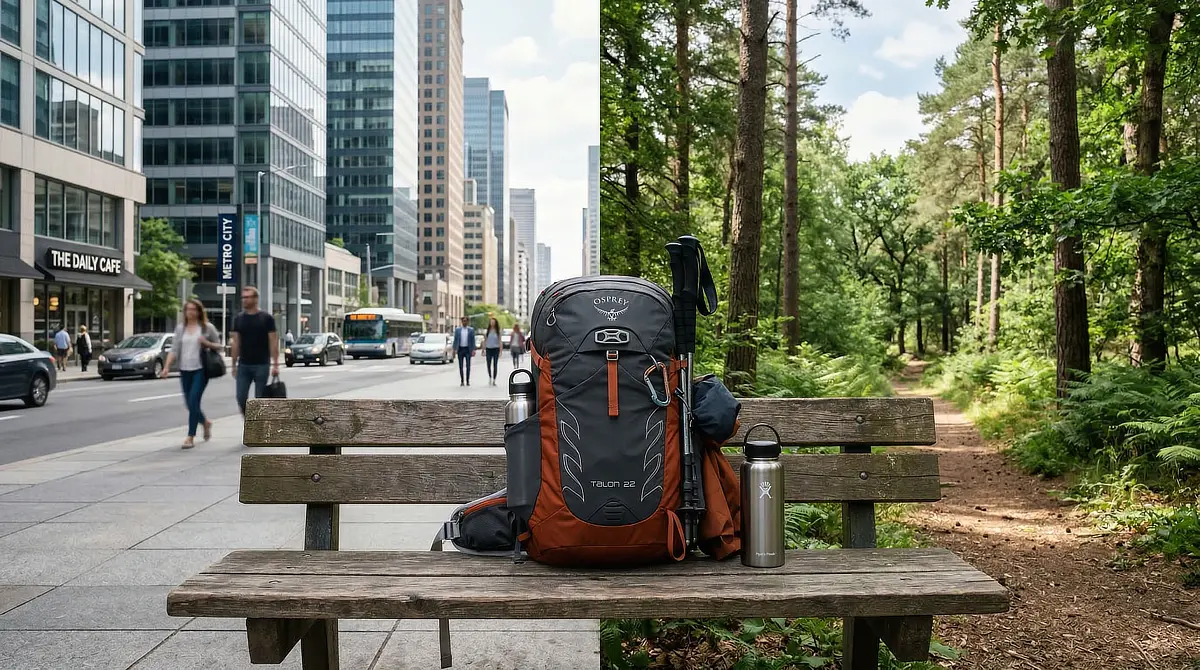
If you carry a laptop to work and a daypack on weekends, you probably know the two-bag shuffle. The tidy messenger bag looks fine at the office but pulls on one shoulder all day, and the hiking pack by the door carries well but feels out of place in a meeting. Sooner or later you leave the house with one bag and wish you’d brought the other.
A hybrid daypack tries to do both jobs: a padded laptop sleeve and office pockets, plus the ventilated back panel and shaped shoulder straps of a trail pack. The best hybrid daypacks each get that balance right for a particular kind of day, so the useful question is which one fits your commute and your hikes.
I chose the three packs below from the brands’ published specs, independent reviews and what owners report, not from my own testing. For each one, I’ll tell you who it suits, who should skip it, and where the evidence runs thin.
TL;DR: Best Hybrid Daypacks
- Hot commute or a heavy laptop: the Osprey Tropos 32L, for the most airflow and a bag that stands on its own.
- Unisex straps never fit you: The North Face Women’s Borealis 27L, with a harness shaped for women’s frames.
- Light loads and a slim look: the Gregory Rhune 22L, the lightest of the three.
Product Name
Best For
Key Strength
Main Tradeoff
Price Tier
Hot commutes and heavier tech loads
AirSpeed mesh back panel and kickstand
Heaviest of the three, about 2.8 lb
$$
A women’s-specific fit in mild weather
Shaped FlexVent harness
Foam back runs warm in heat
$
A light, low-profile commute
Lightest at 1.94 lb, recycled fabrics
One bottle pocket, no waist strap
$$
Osprey Tropos 32L
Best For: Hot commutes and heavier tech loads
Key Strength: AirSpeed mesh back panel and kickstand
Main Tradeoff: Heaviest of the three, about 2.8 lb
Price Tier: $$
The North Face Women’s Borealis 27L
Best For: A women’s-specific fit in mild weather
Key Strength: Shaped FlexVent harness
Main Tradeoff: Foam back runs warm in heat
Price Tier: $
Gregory Rhune 22L
Best For: A light, low-profile commute
Key Strength: Lightest at 1.94 lb, recycled fabrics
Main Tradeoff: One bottle pocket, no waist strap
Price Tier: $$
Price tiers: $ under $100 | $$ $100 to $249 | $$$ $250 and up
4 Features That Define the Best Hybrid Daypacks
Plenty of bags sold as work-to-weekend packs are ordinary backpacks with a laptop sleeve added. These four features are what to check before you trust one with both your laptop and a day on the trail.
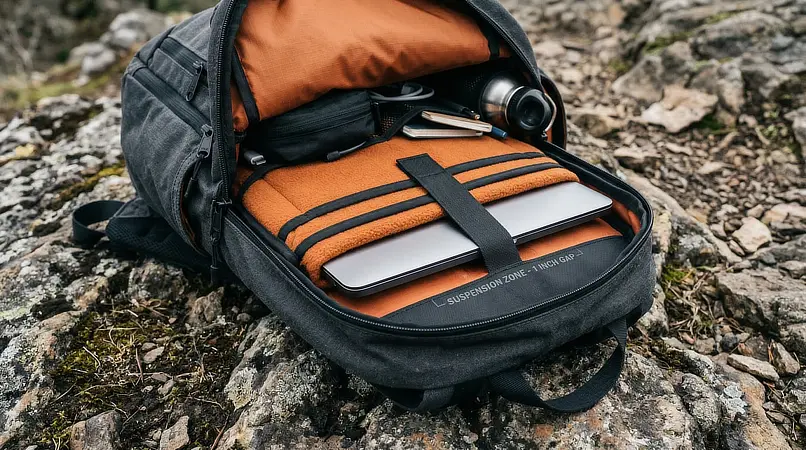
1. The Floating Laptop Sleeve for Drop Protection
A floating laptop sleeve stops an inch or so short of the bottom of the bag instead of resting on it. When you drop the bag on a concrete floor or a rocky trail, the base of the pack takes the hit rather than the edge of your laptop.
Not every commuter pack has one, so check the product page or photos of the empty sleeve. Look at the padding too: a sleeve padded only on the side against your back leaves the front and bottom edges with little protection.
2. A Back Panel That Breathes
Many laptop bags put a sheet of dense foam against your back. It looks tidy, but foam holds heat, so even a short walk in warm weather can leave your shirt damp. Hybrid packs handle this in two main ways.
Osprey’s AirSpeed panel on the Tropos is a tensioned mesh that holds the pack away from your back, leaving a gap for air to move.
Gregory’s AirCushion panel on the Rhune is a 3D woven mesh that Gregory describes as over 90% open air, so it sits against you but traps much less heat than foam. Neither stops you sweating on a hot day, but both give the heat somewhere to go.
3. A Waist Strap You Can Leave at Home
A hip belt moves weight from your shoulders to your hips, which helps on the trail once a pack is loaded. In a meeting, a padded belt hanging off your bag looks out of place.
Hybrid packs usually settle this one of two ways: a thin removable webbing strap you can take off for the workweek, or no belt at all. Neither carries weight the way a padded hip belt does, so a hybrid suits the light loads of a day hike, not a full overnight kit.
4. Empty Weight and Weather Resistance
A laptop sleeve, padding and extra pockets add weight, so hybrids tend to weigh more empty than a plain hiking daypack of the same size. The three in this guide run from about 1.9 to 2.8 pounds, according to the brands.
For rain, look for a durable water repellent (DWR) finish, the coating that makes light rain bead up and roll off the fabric.
All three use a finish made without PFAS, the long-lasting fluorinated chemicals brands have been moving away from for environmental and health reasons. PFAS-free finishes often need re-treating sooner, so plan to refresh yours once water stops beading.
A DWR finish handles a drizzle between the train and the office. It won’t keep a zippered daypack dry in steady rain, so if your laptop comes along on rainy days, a rain cover or a waterproof sleeve inside the pack is the safer bet.
Best Hybrid Daypack Reviews: 3 Top Picks That End the Shuffle
1. Osprey Tropos 32L: Best for Airflow and Heavier Tech Loads
Key Specs:
- Capacity: 32 Liters
- Empty Weight: 2.8 lbs
- Max Laptop Size: 16 inches
- Weather Resistance: PFAS-free DWR finish
- Best For: Commuters who want the most airflow, a bag that stands on its own, and plenty of separate pockets for tech.

If your commute ends with a sticky walk from the train, a foam back panel is the part that lets you down. It traps heat against your spine, and you arrive damp. The Tropos is built around fixing that.
Its AirSpeed back panel is a tensioned mesh stretched across a curved frame, so your back rests on the mesh and the main bag stays off it. Air moves through the gap, which foam can’t offer on a warm morning commute or a summer trail.
The Kickstand
Osprey builds a kickstand into the Tropos, so the bag stands upright when you set it down instead of slumping over. That’s handy on a train platform or under a desk when you need to dig out a charger. Osprey’s own product tour shows how it works:
The tradeoff of that curved frame shows up inside the bag. Because the back panel arches away from you, the main compartment curves with it, so flat items like a laptop, tablet and folders don’t sit quite as neatly as in a flat-backed pack. Expect to pack it with a little more care to use the full 32 liters.
If you’re not sure 32 liters is the right size for you, my guide to choosing the right daypack can help you narrow it down.
The Tradeoffs
The frame that lets the Tropos breathe and stand up also makes it the heaviest pack here, at about 2.8 pounds empty, by Osprey’s figure. Its organization is split into several slim compartments too, so if you like to throw everything into one open space, it may feel fussy.
Pros
Integrated kickstand keeps the bag upright when you set it down.
AirSpeed mesh back panel holds the bag off your back, giving the most ventilation of the three.
Plenty of organization for tech, plus two mesh water bottle pockets.
Cons
Heaviest of the three, at about 2.8 pounds empty, because of the frame.
The curved back and divided compartments make the 32 liters less flexible for bulky items.
Who Should Skip It:
Skip the Tropos if you’re short-waisted or small-framed and want a compact bag. It’s a tall, structured pack that comes in one size, so compare it with your own back first: measure from the bony bump at the base of your neck down to the top of your hip bones.
It’s also a poor match if you want a soft pack that squashes under an airline seat or into a small locker, because the frame keeps its shape.
Pick the Tropos if you commute in heat or carry a full laptop load and want the most airflow of the three, plus a bag that stands up on its own. If you’re smaller-framed or want something light and soft, one of the other two will suit you better.
2. The North Face Women’s Borealis 27L: Best for a Women’s-Specific Fit
Key Specs:
- Capacity: 27 Liters
- Empty Weight: 2.1 lbs (2 lbs 1 oz)
- Laptop Sleeve: 12.5 x 11 inches (check your laptop against it)
- Weather Resistance: Fluorine-free DWR finish
- Best For: Students, campus commuters and women who want shoulder straps shaped for their frame, in mild weather.

A laptop, charger, lunch and a full water bottle add up fast. If the shoulder straps run straight down instead of following the shape of your shoulders, they start to dig in long before you get where you’re going.
The Borealis answers that with a women-specific harness: shoulder straps shaped to curve around the shoulders and chest, a rounded back panel, and soft fabric where the straps touch your neck. If unisex straps tend to rub or slide on you, that shaping is the main reason to look at this pack.
The North Face says this FlexVent suspension is certified by the American Chiropractic Association. That’s the brand’s claim, and the label doesn’t tell you how the pack will feel on your back. It isn’t a promise that the pack will prevent or ease back pain. Fit and how much you carry matter more.
If you’ll carry it every day, my guide on how to wash a backpack will help you keep it clean without damaging it.
Note: The North Face also sells a standard Borealis (28 liters) with its own harness, if the women’s version doesn’t suit your frame.
One Thing to Know Before You Buy
The back panel is foam padding with an air channel down the middle, so it sits close to your back. That feels steady and comfortable, but it holds more heat than the Tropos mesh panel, so the Borealis suits mild weather and cooler commutes better than hot ones.
Pros
Women-specific FlexVent harness, which The North Face says is certified by the American Chiropractic Association.
Shoulder straps shaped to curve around the chest instead of running straight down.
At 2 lbs 1 oz, a little lighter than the Tropos, with a padded tablet sleeve and two bottle pockets that fit most 1-liter bottles.
Cons
The foam back panel runs warmer than mesh in hot weather.
The removable waist strap is thin and unpadded. Pack Hacker’s reviewers found it sat high and did little on the standard Borealis.
Who Should Skip It:
Skip the Borealis if you commute or hike in hot, humid weather and want the most airflow, because the foam back sits close to you. It’s also not the pick for heavier trail loads, since the waist strap does little to take weight off your shoulders.
Before you buy, check your laptop’s size against the 12.5 by 11-inch sleeve The North Face lists.
Pick the Borealis if you want a women’s-specific fit for campus days, commutes and light hikes in mild weather. If heat or a heavy laptop is your main problem, the Tropos is the better match.
3. Gregory Rhune 22L: Best for a Light, Low-Profile Commute
Key Specs:
- Capacity: 22 Liters
- Empty Weight: 1.9 lbs
- Laptop Sleeve: Padded, with outside access (Gregory doesn’t list a maximum size)
- Weather Resistance: DWR finish made without PFAS; recycled fabrics
- Best For: Commuters who want a light, low-profile pack made from recycled fabrics, for short, easy days on the trail.
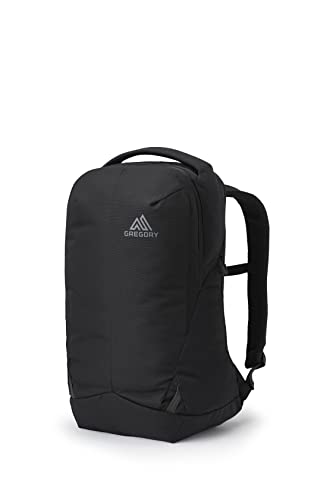
A bright technical hiking pack can look out of place in an office, and a work bag has no business on a muddy trail. The Rhune is for people who want one bag that looks at home in both.
It’s the lightest pack here, at 1.94 pounds by Gregory’s figure, with a clean, slim shape that reads more like a commuter bag than a hiking pack.
Gregory makes all of the Rhune’s fabrics from recycled content and says that cuts its carbon footprint by 57%. If sustainability is your tiebreaker, that’s a point in its favor. At 22 liters it’s also the smallest of the three, so it suits a laptop, lunch and a layer rather than a full day’s hiking kit.
The AirCushion Back Panel
Instead of foam, the Rhune’s back panel is a soft 3D woven mesh that Gregory describes as over 90% open air. Unlike the Tropos mesh, it sits against your back, but it lets far more air through than foam does, and its soft surface should be kinder to work shirts than a rough foam backer.
There’s no frame behind it, though. With nothing stiff to hold its shape, the pack carries best when the laptop and heavier items sit flat against the back panel, and you don’t overfill it.
One Real Tradeoff
To keep its slim profile, the Rhune has only one side stretch-mesh bottle pocket. If you like to carry a water bottle and a thermos or umbrella on the outside, one of them will have to go inside the main compartment.
Pros
The foam-free AirCushion back panel breathes better than foam and feels soft against clothing.
All fabrics are made from recycled content, per Gregory, including a 100% recycled polyester ripstop body.
Lightest of the three at 1.94 pounds, with a clean look that fits in at the office.
Cons
Only one side bottle pocket.
No waist strap or hip belt, so all the weight rides on your shoulders.
Smallest of the three at 22 liters.
Who Should Skip It:
Skip the Rhune if your hikes are long or rough enough that you want a strap around your waist to stop the pack shifting, or if you carry more than a laptop, lunch and a layer. It’s also not for you if you want two outside bottle pockets.
Pick the Rhune if you want the lightest, cleanest-looking pack here for commuting and short, easy trail days, and recycled materials matter to you. If you carry more, or need more airflow on hot days, the Tropos is the stronger choice.
Final Verdict: Which Hybrid Daypack Is Right for You
All three packs handle the switch from commute to trail, but each one solves a different problem. The right one depends on what bothers you most on a normal day: heat, fit or weight.
Choose the Osprey Tropos 32L if a sweaty back or a heavy laptop load is your main problem. It has the most airflow and a kickstand that keeps it upright, but it’s the heaviest and stiffest of the three.
Choose the North Face Borealis Women’s 27L if unisex straps never sit right on you and you mostly walk in mild weather. Its women-specific harness is the main reason to pick it, though the foam back runs warm in summer heat.
Choose the Gregory Rhune 22L if you want the lightest, slimmest bag and carry little more than a laptop, lunch and a layer. Recycled fabrics are a bonus, and the single bottle pocket and missing waist strap are the tradeoffs.
Before you order, measure your laptop and check it against each pack’s sleeve. When the pack arrives, load it with your real commute kit and walk around for a while with the tags still on, so you can return it if the straps or back panel don’t suit you.
Stuck between two of them? Leave your question in the comments with how you commute and what you usually carry, and I’ll help you think it through.
Founder & Gear Research Editor

Sonia Zannoni
I'm Sonia, the founder of Best Trail Backpacks. I don't test gear myself. For every pack I cover, I compare the published specs and sizing charts, read what independent testers found, and look for what owners report again and again.
Fit comes first, because a pack that doesn't match your torso and hips will hurt no matter what it cost. My goal is to help you choose a pack that suits your body, your trip and your budget, and to tell you plainly where the evidence runs out.
About the Founder